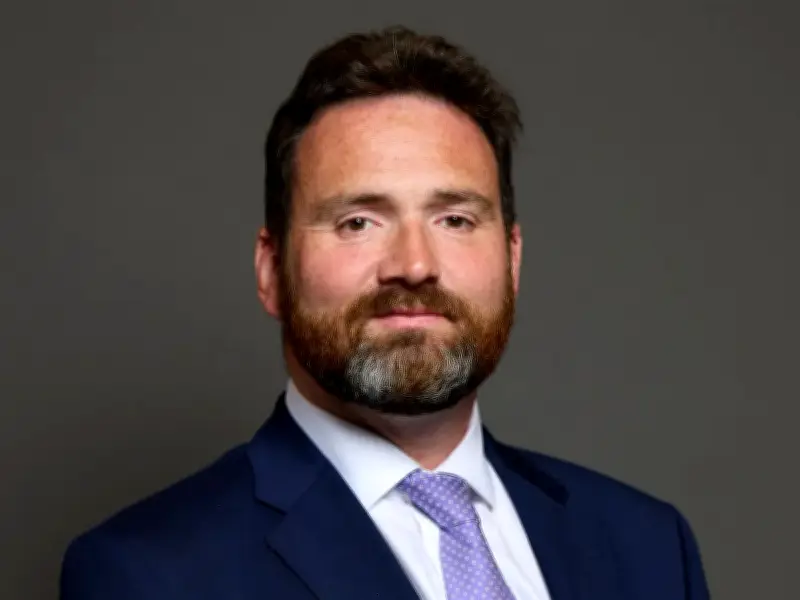
Livingston MP Gregor Poynton has accused the Scottish Government of undermining neighbourhood policing after new figures revealed the Lothians and Scottish Borders police division – which covers West Lothian – has lost local police officers while communities continue to face anti-social behaviour and other persistent local issues.
Officer numbers decline
New analysis of Police Scotland workforce data shows the number of local police officers in the Lothians and Scottish Borders division has fallen from 911 in 2017 to 880 today – a reduction of 31 officers (3%). The figures come despite an increase in the number of national police officers over the same period, leading to criticism that frontline neighbourhood policing is being hollowed out.
The Lothians and Scottish Borders division covers West Lothian, Edinburgh, East Lothian, Midlothian and the Scottish Borders, with West Lothian forming one of its four area commands.

MP highlights community concerns
Gregor said the figures reflected concerns he regularly hears from residents across the Livingston constituency, where anti-social behaviour, illegal off-road bikes and other nuisance vehicles, fireworks misuse, graffiti and vandalism remain among the issues most frequently raised during street surgeries, community visits and constituency casework.
Last year, Gregor launched a constituency-wide survey into illegal off-road bikes after hearing repeated complaints from residents about bikes being ridden dangerously through parks, green spaces and residential areas. He has also campaigned for stronger action to tackle the misuse of fireworks following overwhelming support from local residents for tighter controls, with the UK Labour Government now consulting on proposals to introduce further restrictions on their sale and use.
MP calls for more visible officers
He said: “Whenever I’m out speaking to residents across the Livingston constituency, one message comes through loud and clear, people want to see more visible police officers in their communities.
“Whether it’s tackling anti-social behaviour, dangerous off-road bikes, fireworks causing misery for families, or graffiti and vandalism, these are exactly the kinds of issues neighbourhood policing is there to prevent and respond to.
“These new figures show the police division covering West Lothian has 31 fewer local police officers than it did in 2017, while more officers have been moved into national policing roles.
“Neighbourhood policing matters because officers who know their communities are better placed to build relationships, prevent crime before it escalates and respond quickly when problems arise.
“I’ve consistently campaigned for tougher action on illegal off-road bikes, stronger measures to tackle fireworks misuse and practical action to tackle anti-social behaviour because these are the issues local people tell me have the biggest impact on their day-to-day lives.
“To seriously tackle these issues the SNP must properly resource local policing. The SNP Scottish Government cannot continue to hollow out neighbourhood policing while expecting communities across West Lothian to feel safer.
“People across West Lothian deserve to see more officers on their streets, not fewer.”
National trend
Across Scotland, local police divisions have lost 894 officers since 2017, while overall local and regional policing has fallen by more than 1,000 officers. Over the same period, the number of national police officers increased by 218, prompting Scottish Labour to argue that the SNP’s centralisation of policing has come at the expense of visible frontline officers in local communities.
Government response
In response, Justice Secretary Neil Gray said: “I thank police officers and staff for all that they do to keep Scotland safe.
“Since these figures were recorded on June 30, Police Scotland has welcomed a new intake of officers, with further recruitment planned throughout the year.
“We have invested more than £1.7 billion in policing this year, and Scotland continues to be a safe place to live, with more police officers per 10,000 people than England and Wales, while recorded crime has fallen by almost half since 1991.”