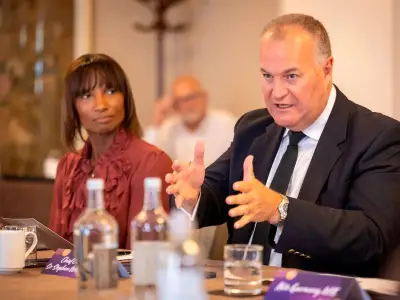
Liverpool's housing chief has condemned "fearmongering" about asylum seekers being used to "wind people up" over houses of multiple occupation (HMOs) in the city. Cllr Hetty Wood told the ECHO that while city leaders understood the need for tighter regulations around shared accommodation, misinformation from the far right had been "whipped up" about housing.
HMO plans and regulations
As part of its 15-year vision for development, Liverpool Council has outlined plans to curb the number of HMOs in communities. An HMO is a property where three or more tenants who are not related live together, usually sharing kitchens and bathrooms. Private landlords in England and Wales can convert a single dwelling into an HMO with up to six tenants without planning permission, though a licence is required for five or more people. Liverpool Council does not develop HMOs, and their usage does not form part of its housing targets.
Wood's response to concerns
Cllr Wood, who took over the housing brief last May, said it was likely that many people had lived in an HMO at some point, but she criticised far-right agitators for stoking animosity. She said: "I totally recognise that people have worries about HMOs and who is living in HMOs, but I think there’s a lot of misinformation going on out there. There’s a lot of fearmongering happening and there’s a lot of dogwhistle politics happening in terms of trying to wind people up. We’ve had HMOs across our city as long as anything. I mean, they were bedsits. I suspect a lot of people in the city have lived in a HMO, but probably not recognised that it was an HMO."

The council's local plan, to be adopted in 2027, covers development up to 2043 and includes plans to limit HMOs to just 10% of neighbourhood areas, retain more family dwellings, and prevent homes being "sandwiched" by shared occupancy properties. Cllr Liam Robinson, leader of Liverpool Council, described the authority's efforts as a "war." Data compiled by the Labour group shows 260 applications for HMOs have been rejected since 2021.
Local impacts and misinformation
In Tuebrook, residents have described the impact of HMOs and short-term rentals on long-standing residents, including incidents of violence, drunkenness, and anti-social behaviour. In Fazakerley, an 81-year-old nan was fearful of leaving her home after being left "sandwiched" between two HMOs. Cllr Wood said false messaging had contributed to concerns. She said: "I think people are concerned about people coming to the communities that they might not know, that they might not be there for a long time. I think there’s also a concern that the only residents that are going into HMOs are migrants, asylum seekers. One: that’s not true, but secondly, there’s so much fear mongering around migrants and asylum seekers that is totally incorrect and totally wrong and being whipped up by the far right to try and tell communities 'if you have asylum seekers in your community, you’re not safe' and that has been put together with the HMO fearmongering. We really need to look into how many asylum seekers are in our city, who they are and the fact that they’re coming from incredibly difficult places and they’re coming here for peace, for a safe life. They’re not coming for the reasons that are being whipped up by the far right."
The city council has asked residents to provide input on the location and potential impacts of HMOs across Liverpool, and how to manage this type of housing through tightening rules around permitted developments. Councils can use Article 4 Directions to remove or restrict the right to convert family homes to HMOs. Cllr Wood said this would help inform changes to the system through the local plan, which seeks to restrict HMOs to no more than three in a frontage.

She said: "People live in all types of housing across the city and HMOs absolutely form a part of that whether it’s for students, whether it’s for healthcare workers, whether it’s for people who need a smaller property. Keeping in mind things like when you’re under 25, the amount of housing allowance you get does not allow you to live in more than one bedroom if you’re a single person, so there’s all sorts of situations like that. We recognise that there are problems with it. We recognise things like a HMO will create more waste and more water usage and things like that than a property that is occupied by less people. I think that’s one of the things that we consistently for years have been lobbying the government on, landlords being charged business rates as well on properties to counter those elements as well. We also get properties being used for Airbnbs and I think in a lot of people’s minds, AirBnbs and HMOs are all the same. That that could be worrying and people like to know who their neighbours are, but it’s understanding that it’s not a big scary thing."
As part of the local plan, the city council is seeking to build more than 33,000 new homes, none of which would be HMOs. Cllr Wood added: "The housing targets that we’ve got are all for new build properties, and internal targets that we’ve got in terms of bringing empty properties back into use are completely separate as well. We don’t develop HMOs, developers develop HMOs and they do it under the planning framework and as long as they’re doing it legally under the planning framework, there’s very little we can do to stop that. That’s why we need things like the Article 4s or selective licensing to be regulating and controlling the quality and the standard and where they are better as well."