Latvian border guards have intercepted 15 people who crossed illegally from Belarus through a 10-meter-long tunnel, marking the first such case on Latvia's border. The discovery was announced by Interior Minister Jānis Dombrava on Tuesday, following the incident on Monday (August 10). The tunnel was found near the border fence in the Augšdaugavas region, and all 15 individuals were returned to their country of departure.
First tunnel crossing into Latvia
Mr. Dombrava wrote on X: "This is the first case in which a tunnel has been used for illegal crossing of the state border into Latvia. No signs of violations had previously been detected in this exact location, and no detentions of persons illegally crossing the state border had occurred there."
Authorities are continuing to inspect the area around the tunnel. The discovery comes amid concerns that Belarus is weaponising migration against the EU, with Belarusian ruler Alexander Lukashenko, a close ally of Russian President Vladimir Putin, supporting Moscow's war against Ukraine and taking a hostile stance toward the bloc.

Operation Werwolf launched
Latvia has launched Operation "Werewolf" (Vilkatis), announced by Prime Minister Andris Kulbergs, to strengthen border security. The operation integrates the military, police, and border guards under unified crisis management and is scheduled to run until the end of August.
Mr. Dombrava described illegal border crossings from Belarus as a "hybrid threat," echoing previous statements by Latvian authorities, who have said the tactic is designed to disrupt regional security and test European unity.
Border crossing attempts surge
The Latvian State Border Guard said authorities have prevented more than 9,000 illegal attempts to cross the border from Belarus so far this year. Last year, authorities prevented a total of 12,046 attempts. The number rises significantly during summer months, with around 1,000 attempts prevented in the first two weeks of July alone.
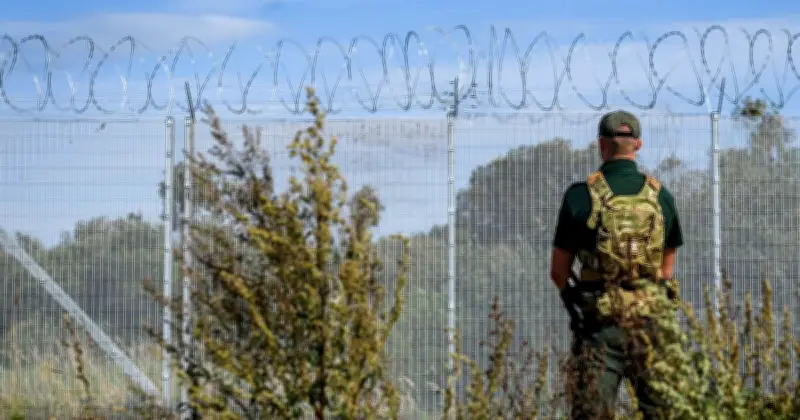
Latvia shares a 107-mile (173km) border with Belarus, which serves as an external frontier for both the EU and NATO. A double mesh fence topped with barbed wire spans the frontier, and major checkpoints like Silene have been shut down, leaving limited operational transit points such as Pāternieki, which face strict vehicle limitations.