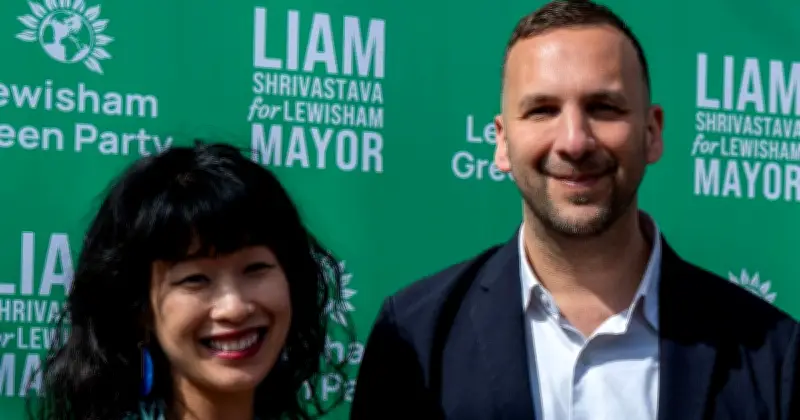
A Green Party councillor faces accusations of helping wanted criminals evade arrest after publicly sharing the location of a Metropolitan Police live facial recognition van. Hau-Yu Tam, Lewisham Council's cabinet member for sanctuary and healing, posted a map on social media on Tuesday pinpointing a police surveillance van deployed in Deptford.
The post, originally from the group Lewisham Anti-Raids, featured a red pin and arrow marking the vehicle’s position and warned: “Avoid the area if you can and warn others – if you can see the van, the cameras can see you.”
How live facial recognition works
Police use Live Facial Recognition (LFR) vans equipped with CCTV cameras and artificial intelligence to scan passers-by and match faces against a watchlist of people wanted for crimes, failing to appear in court, or breaching orders related to stalking, sexual offences and violence against women and girls.

Since the start of 2024, the Met has made more than 2,100 arrests using LFR, with 24% linked in some way to violence against women and girls. More than 1,400 of those arrested were charged or cautioned, including over 100 sex offenders. Sergeant Kevin Brown said the force arrested 574 wanted people in its first year of use in 2024, 1,135 last year and around 900 already this year.
Criticism from police and politicians
Former police superintendent and counter-terrorism expert Martin Gallagher called Ms Tam’s decision “shameful”. He said: “This councillor has overtly provided assistance to those who have committed, or are believed to have committed serious crime, to evade lawful arrest. She has effectively told murderers, rapists and burglars how to avoid the police.”
Shadow Home Secretary Chris Philp accused her of protecting criminals rather than catching them. He said: “Lewisham deserves a council more interested in catching criminals than protecting them. Live facial recognition has the potential to transform policing, as DNA did previously.”
Councillor's defence
Ms Tam defended sharing the post. She told The Telegraph there were “many reasons” people might not want their faces scanned without permission, citing limited notice from police, sparse legislation governing the technology and concerns about racial bias in a diverse borough like Lewisham. She said: “Policing in this country operates by consent. My priority is making sure people of all backgrounds are safe in our community.”
LFR was first trialled in the UK in 2015 and has since been adopted by more than a dozen forces. Home Secretary Shabana Mahmood has announced plans to expand the total number of mobile LFR vans nationally to 50.
Civil liberties concerns
Civil liberties groups remain concerned. Charlie Whelton of Liberty said: “Walking past a facial recognition camera is like showing your ID at a checkpoint.” He argued that privacy is a hard-won right that should not be surrendered for everyday activities.
Ms Tam defected from Labour to the Greens last year and was described as “brilliant” by Green leader Zack Polanski. She has previously faced criticism for deleted social media posts containing racial slurs and comments equating Zionism with Nazism. The episode has intensified debate over whether public officials should disclose the locations of police surveillance operations or whether such transparency risks undermining efforts to keep the public safe.