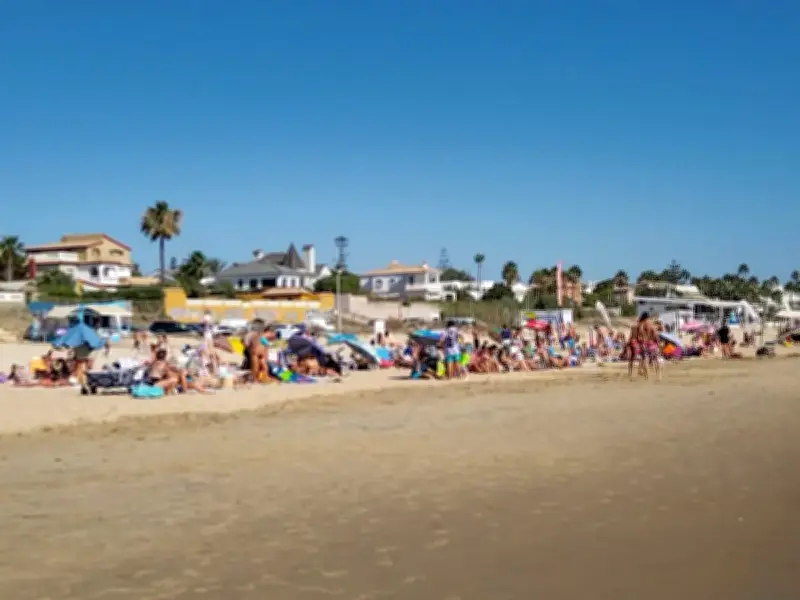
Five beaches along the coast of Cádiz province in southern Spain have been closed to swimmers after high levels of faecal bacteria were found in the water, posing a potential health risk.
The closures affect beaches in the Andalusia region, where samples showed evidence of harmful E. coli bacteria. Officials said that high amounts of “faecal contamination indicators” meant the popular bathing spots had to be closed.
Beaches affected and safety measures
Warning signs and red flags have been put up at the affected beaches. The beaches currently closed are Aculadero-Puerto Sherry and Fuentebravía, in the municipality of El Puerto de Santa María; Micaela, in Chipiona; La Cachucha, in Puerto Real; and Punta Candor, in Rota.

Officials are working to determine the cause of the contamination of E. coli and intestinal enterococci, with fears that bathers could catch “viruses of faecal origin,” local outlet Europa reports.
Investigation into contamination cause
The regional health ministry conducts fortnightly checks on water quality across 304 bathing areas between June 1 and September 30. The samples that led to the bathing restrictions were taken on August 24, before the closures were imposed on August 27.
On the day the Andalusian regional government took the samples, heavy rain had triggered overflow points in the sanitation system early in the morning. The systems are designed to relieve pressure on the sewer network during periods of intense rainfall. Juan Ángel Poyatos, manager of local water company Apemsa, suggested this could explain the unusually high bacteria readings.
He said: "it is very likely that it is due to the coincidence of taking samples during an episode of very intense rains in which the sewer overflow points were surely also activated for a few hours."
Health impact and next steps
Fresh samples were taken from the affected beaches on August 28 and sent for analysis, while further monitoring of the bathing water is expected to continue.
Escherichia coli (E. coli) can be contracted from drinking or swimming in contaminated water. Symptoms include diarrhoea, stomach pain, vomiting, fever, and bloody diarrhoea. Most people get better within 5 to 7 days but sometimes symptoms can last up to 2 weeks. However, in some cases E. coli infections can be deadly, leading to dehydration, kidney failure, and sepsis.