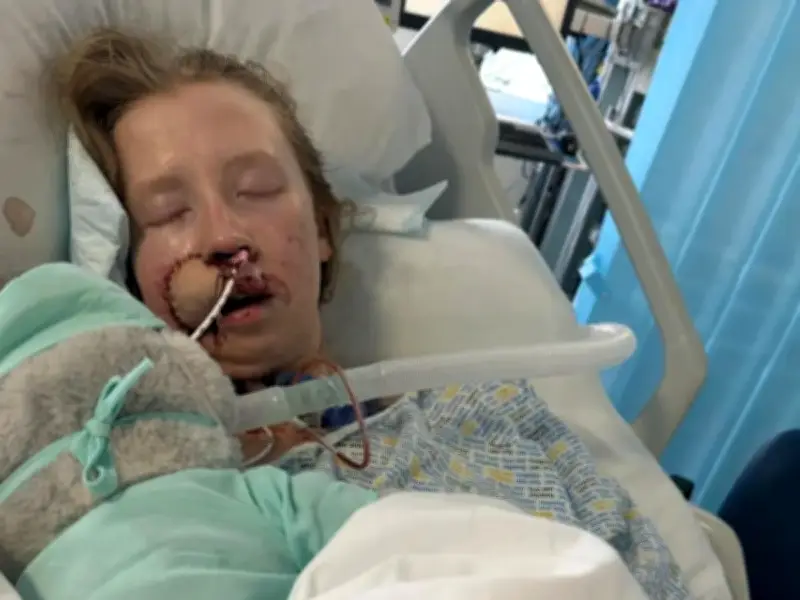
A young woman whose face was ripped apart by her friend's dog has called for animal licences to be reinstated in Scotland after attacks hit a record high.
Sam Redding, 20, slammed the new figures – which showed there were at least two attacks every day last year – as "shocking". The data shows that there were 880 police call-outs to dog bites and other canine crimes in 2025, a sharp increase from 744 in 2024. On average, around two thirds of all police responses resulted in someone being reported to prosecutors.
Attack left her needing facial reconstruction
Sam was left needing facial reconstruction following the attack at her friend's home in Falkirk in January. A two-year-old Spanish Mastiff-Akita cross, named Clyde, took chunks out of her face and left her teeth exposed through her jaw in a terrifying ordeal that lasted several minutes. Sam was left in agony, unable to feed herself or speak.
Sam told the Record: "These figures are absoloutley shocking. If the government doesn't address this, someone will end up dead and that could be a child."
"There seems to be no control over who can buy a dog, anyone from the street could go and pick up an XL bully puppy if they wanted to and if they had the means. These attacks are happening because there are no regulations on dog ownership."
"In some cases, people are buying dogs to use them as weapons. Action needs to be taken to ensure responsible ownership so people can be kept safe."
Calls for licensing and training
Sam called on the Scottish Government to reinstate a standard dog licence for pet owners. She wants to see mandatory training lessons for owners and for large pedigree breeds not to be crossed. Scotland, along with England and Wales, used to require a specific licence for keeping a dog. However, the law was abolished in 1987.
Sam said: "The only answer is to reinstate licenses to make sure only responsible people are able to own dogs. I also think mantatory lessons should be brought back in for new owners."
"Sometimes, people don't have a clue what they're doing with their large breeds and don't understand the importance of socialisation. I'd also like to see a ban on mixing large breeds."
"Large dogs shouldn't be bred together. When you mix pedigrees this way their temperments are less predictable. If you can't predict how your dog will behave or what its instincts are, then that becomes a problem."
Legal experts back mandatory insurance
Legal experts also fear the new figures, released through Police Scotland, show more needs done to tackle bad dog ownership. Digby Brown Solicitors investigated the number of dog attacks where owners do not have pet insurance. The firm backed calls for mandatory pet insurance as well as new licensing.
Sam said: "While I think having pet insurance is a responsible thing to have as a pet owner, I don't think it is the solution to this problem. It would allow victims to get compensation but I don't think it would prevent or deter attacks from taking place."
"The government needs to focus on having tighter ownership restrictions."
Robert Kernaghan, Partner at Digby Brown Solicitors in Dundee, said: "A record rise in police callouts around dog attacks and other crimes is a real concern because of what it means for public safety. Puncture wounds, permanent muscle damage and disfiguring facial injuries are common life-long injuries people can suffer after a dog attack, not to mention the psychological impact that many people, especially children, may carry for years or decades later."
"While some wounds can heal it would be better to prevent attacks from happening in the first place. Mandatory pet insurance and licensing is often discussed but very little action is ever taken over fears it unfairly affects families who are already responsible and adds to the already-expensive duty of keeping a pet."
"But when we see nearly 1,000 dog-related crimes every year, with most incidents also resulting in criminal action, it’s clear something needs to change. If authorities are not willing to tackle the issue head-on they at least need to have a provision in place to help victims get the support they deserve."
"Doing nothing on both fronts simply doesn’t work, is not fair and is not sustainable for a safer future."
Mr Kernaghan added: "The police data shows around 60 per cent of people face criminal action but bite victims don’t need a conviction to access support in the civil courts. The responsibility for a dog attack or dog bite will generally fall on the dog’s owner or whoever was in control of the dog at the time of the incident and damages are most commonly recovered from pet or home insurance."
"It’s dealing with the people who do not have any kind of insurance that’s the issue as it leaves the victim in an unfair position due to the challenges it presents in accessing the best medical treatment or counselling resources they should be entitled to."
The Record approached the Scottish Government for comment.