Even after two days of heated debate about Henry Nowak's death, it remains instructive, for those with a strong stomach, to review the court proceedings that ended with Vickrum Digwa's conviction for murdering the 18-year-old in Southampton. One key element was the footage Henry captured on his phone of the encounter that cost him his life. He was returning home from an evening with friends from the Southampton University football team at a nightclub when he encountered Digwa, who had been with his brother finishing a Deliveroo shift.
On the Snapchat video he sent to friends, we see Digwa carrying a large knife openly in a sheath outside his clothes. Nowak filmed himself cheekily asking Digwa if he was a bad man for carrying a knife. Digwa said he was and snatched Nowak's phone, ending the video. However, Digwa had his own phone. After stabbing Nowak five times, he filmed him scrambling over a garden fence and collapsing on a gravel driveway. He then called his brother, who phoned the police to say, 'We have just been attacked racially by some white person.'
When the police arrived, they handcuffed Nowak and arrested him for assault. They ignored his repeated statements that he had been stabbed, saying, 'I don't think you have, mate,' and that he could not breathe and needed an ambulance. It was only when he lost consciousness that they discovered he had indeed been stabbed, though he was already bleeding. Exactly one hour after the police arrived, Nowak died.

The Debate Over Police Response
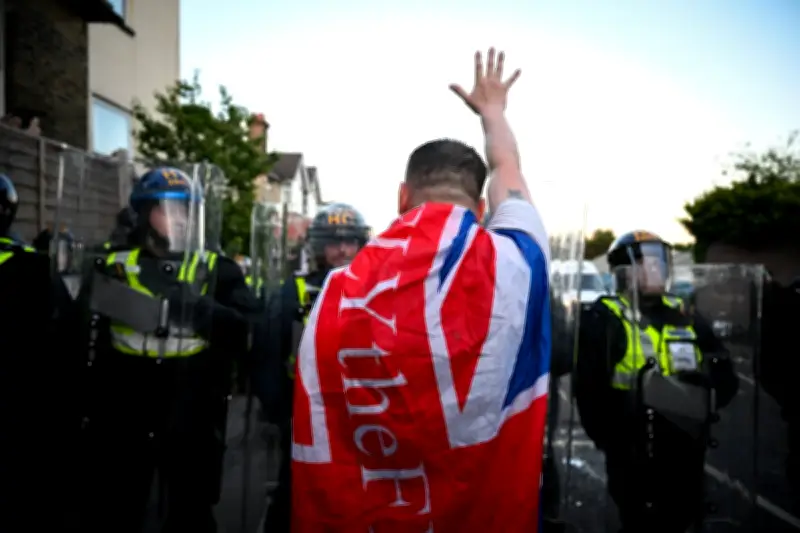
The discussion about what happened now focuses on disturbances in Southampton, where protesters threw missiles at police; two are under arrest. But for a moment, set aside the politics: whether Reform UK has hijacked the issue, whether Kemi Badenoch is right that it is a George Floyd moment, whether Reform is creating grievance and division, or whether Sir Keir Starmer should take the knee. It is grim that the Sikh community, over half a million strong and a model of integration, has been shamed by the actions of one of its members and his family.
However, there are important questions to consider. The most obvious is whether sustained accusations of racism against the police, such as Dame Louise Casey's denunciation of the Met as institutionally racist, have led to a disproportionate and damaging counter-reaction. Are the police now so obsessed with race that they cannot see a dying young man in front of them as the victim of an attack?
Why Did Police Ignore the Evidence?
Digwa's brother, primed by Vickrum, called the police to report a racist attack. What was it about the words 'We have just been attacked racially by some white person' that made them ignore all evidence, handcuff the victim within a minute of arriving, and disregard Nowak's condition? He gasped, 'I can't breathe,' as his chest cavity filled with blood, and said, 'I've been stabbed.' Why did they take the murderer to be the victim while the victim was gasping his life out? Did Digwa use those words expecting it would exculpate him? Was racism the obvious card for him to play?
The independent police body is already investigating. But pending the outcome, we are entitled to ask about the context. Did police training affect their perception of what they saw? A survey of Hampshire police published in The Times suggested that diversity training made some officers feel controlled and pressured to feel certain ways or fear being rejected for saying the wrong thing.
The Role of Anti-Racist Training
One element of this conditioning is evident in the National Police Chiefs' Council's Race Action Plan, which policing minister Sarah Jones has called a 'values document.' It states that 'policing is determined to become an anti-racist organisation.' Not non-racist, but anti-racist, and there is a difference. Obviously, the police should be non-racist; that goes without saying. But anti-racist is something more political. The explosive element of the policy has been identified by shadow home secretary Chris Philp: 'It does not mean treating everyone the same or being colour blind (racial equality).' Yet for most of us, fair policing, equitable policing, means exactly that.

The College of Policing says in its guidance that 'police officers and staff should respond positively to allegations, signs and perceptions of hostility and hate.' It adds that 'officers and staff should not challenge this initial perception.' So if police are called to the scene of what is billed as a racist attack, we can ask whether that training, that prioritising of ethnic and cultural considerations, affects how they treat actual cases.
Nowak died as no young man should die. It is up to police and politicians to explain why. Did police training make them respond as they did? If so, it is not just the Hampshire force that must be held accountable; it is a whole rotten mindset.