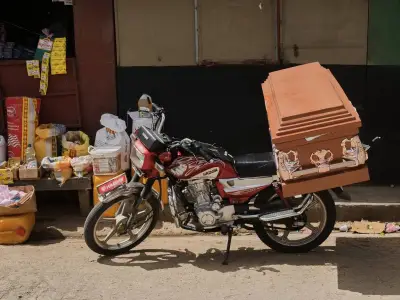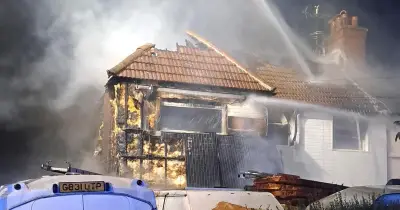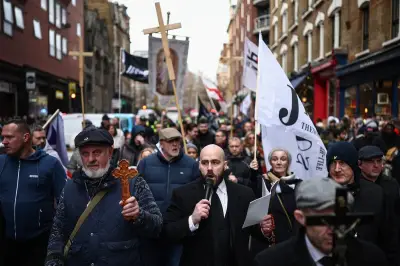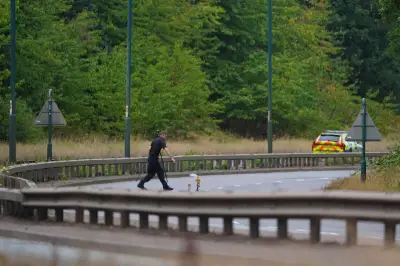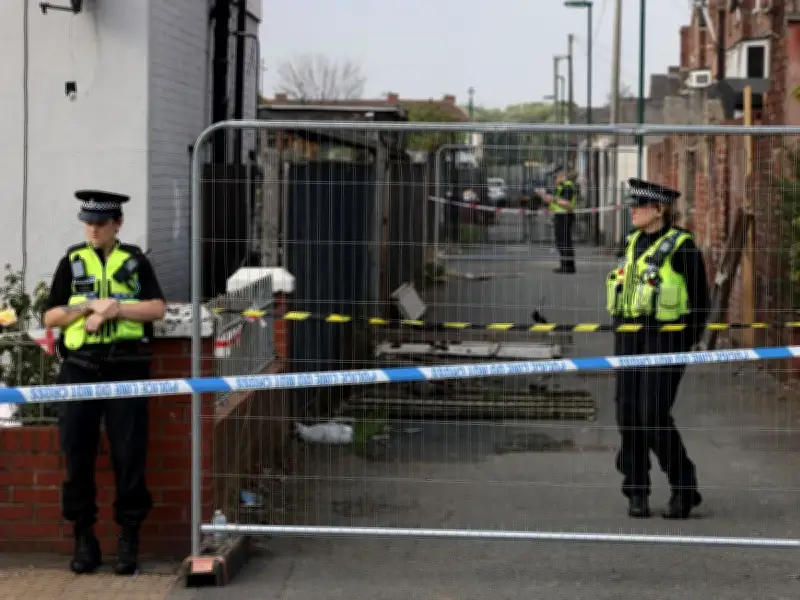
Local leaders say police funding cuts have put officers under intense strain as Cleveland Police tackles suspected gangland violence and disorder in Middlesbrough. The tensions follow a fatal car crash on the A66 that killed seven people, including two police officers.
Arrests and reinforcements
Cleveland Police has arrested 24 people, including seven men on Friday, as part of an investigation into organised crime. About 200 officers have been drafted in from other forces to support local ranks.
The scenes highlight the pressure on the force as Middlesbrough deals with disproportionately high crime levels. Cleveland has long argued that basing police funding on population rather than deprivation and recorded crime has had a crippling effect.

Mayor's call for fair funding
Middlesbrough Mayor Chris Cooke said: "They [the police] are doing extremely well, despite and in spite of the lack of the funding that they absolutely need. They are the police force that's been hardest hit [by cuts]."
He added: "The funding for police needs to follow need and needs to follow what the statistics are. It cannot just be based on population size as that serves no one well."
Mr Cooke said work was needed to intervene earlier, with a push for youth clubs and opportunities to break cycles of offending. He described the situation on the ground as tough but added: "We always bounce back, we are always persistent, we are always here."
MPs and officials speak out
Five Labour Teesside MPs – Andy McDonald, Chris McDonald (Stockton North), Luke Myer (Middlesbrough South and East Cleveland), Jonathan Brash (Hartlepool) and Anna Turley (Redcar) – called for more funding to address local pressures.
"These pressures did not emerge overnight," they said in a statement. "They have built up over many years and were made significantly worse by the savage cuts during the austerity period."
Last year Labour Police and Crime Commissioner Matt Storey claimed the force faced a £2.4 million shortfall in this financial year. He branded the funding farcical, noting Cleveland has the highest number of crimes per 1,000 population in England and Wales.
Crime statistics and officer numbers
Home Office figures show Cleveland recorded 123.4 crimes per 1,000 people in the year to March 2026, above West Yorkshire Police on 107.9 and the Met on 101. A third of neighbourhoods in the force's area are in the top 10% most deprived areas in England.
Cleveland Police lost around 200 officers due to austerity. Official records show the force had 1,724 officers in 2010; by the start of 2026, figures released under the Freedom of Information Act showed this had fallen to 1,524.
Cabinet Minister Bridget Phillipson called the scenes "shocking" and admitted more needed to be done to examine how forces are funded. She said her Houghton and Sunderland South constituency faces similar challenges.
"We saw over the course of more than a decade, resources pulled away from communities, in terms of policing resources," she said. "That has had really big challenges."
The Labour Party chair added: "Lots of people in communities like mine and places like Middlesbrough, over many years saw effectively a breakdown in law and order in their communities because of a lack of a police presence."
"We're putting that right, we're putting back neighbourhood policing into those communities. But I do recognise in the short term Cleveland need to continue to receive that support to deal with what they're facing."
Funding formula under review
A spokeswoman from the Police Federation of England and Wales told The Mirror: "More than 15 years of austerity combined with spiralling workloads means policing is broken."
"The service is being kept on life support because police officers across the country are having rest days cancelled, annual leave refused and seeing duties changed at short notice. This exploitation must stop and a fair funding formula has to give officers in Cleveland and beyond the resources they need to keep the public safe."
Money is allocated to forces using the police allocation formula (PAF), which considers factors including population density and the type of crime forces most commonly deal with. It divides up a national pot based on relative needs, not on how much cash each force says it needs.

A spokesperson for the NPCC said: "We are in contact with Cleveland Police during what is an exceptionally busy period for policing colleagues. The National Police Coordination Centre (NPoCC) has supplied a limited number of officers to assist with the wider policing operation, with the vast majority of mutual aid currently being resourced regionally."
A Home Office spokesperson said: "Our thoughts are with the victims, families and wider community after this terrible incident. The Policing Minister remains in close contact with Cleveland police and local representatives to ensure the force has the support it needs during this difficult time."
"We are reviewing the funding formula as part of our wider programme to reform policing, which includes restructuring of police forces. We will work with forces to build consensus around a future model."