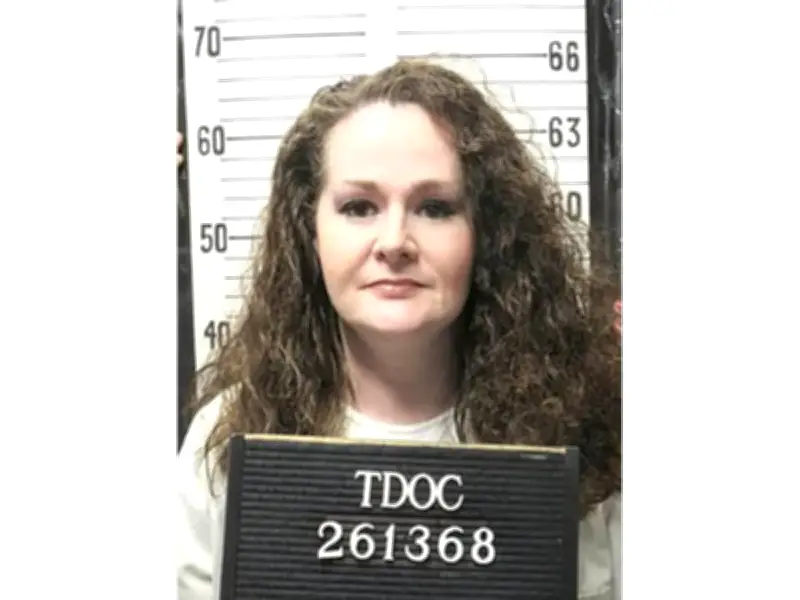
Newly released 911 recordings reveal that precious minutes elapsed as officials and emergency responders scrambled to establish whether a call for assistance following Christa Pike's botched execution was legitimate.
Pike was due to become the first woman put to death in Tennessee in more than 200 years last month. Aged just 18, Pike lured fellow student Colleen Slemmer to a remote area of the University of Tennessee campus and brutally killed her in January 1995, having suspected Slemmer of having feelings for her boyfriend.
Pike's partner Tadaryl Shipp and their acquaintance Shadolla Peterson were also convicted of involvement in Slemmer's murder.
Confusion Over Emergency Call
The 50-year-old Pike was due to be executed on Wednesday 30 September, but survived after receiving two lethal injections of pentobarbital. She was subsequently rushed to hospital, where medics fought to save her life.
However, it has now come to light that emergency assistance for Pike was delayed by confusion among first responders and Tennessee prison authorities following her failed execution, according to 911 dispatch recordings reviewed by The Associated Press.
The recordings show that vital minutes were lost while officials and responders struggled to verify whether an emergency call from the execution chamber was genuine. The first call came in at 8:40 p.m., and it took more than thirty minutes before prison officials confirmed it was authentic.
"Per supervisors here .... we have been informed it is a false call," one unidentified person says at 9:03 p.m. "There is no medical assistance needed at Riverbend Prison."
Four minutes later, a responder reported: "Somebody is outside the gate at the prison telling us that it's real and demanding us to go in. They say they are some sort of state official. I need somebody to get out to the gate and talk to those people."
The recordings reveal that it wasn't until 9:11 p.m. that prison officials confirmed the emergency call was genuine.
Pike's Condition and Legal Battle
Pike's legal team stated on Wednesday last week that the prisoner had been restrained to the hospital bed in a heavily monitored room and felt "confused and angry". Speaking to journalists outside the Tennessee courthouse, her solicitor Randy Spivey disclosed that Pike was "very aware that the state tried to execute her".
Spivey revealed that Pike's first words upon regaining consciousness were two questions: "Where am I and who are you?".
By Thursday, just days after coming round following her failed execution, she was reportedly mobile within her hospital room. It is believed that a ruptured vein caused most of the lethal pentobarbital drug administered to Pike to pool in her surrounding tissue.
This action would have prevented the chemicals from entering her bloodstream to complete the execution. Following her discharge from hospital on Saturday, Pike's legal representatives said: "She is grateful to the first responders and her medical team for their care in these extraordinary circumstances."
They went on to say: "She is continuing to receive medical care at the prison, and we will continue to track her recovery."
Pike's solicitors had been pushing for her to be taken off death row and for her sentence to be commuted to life imprisonment after the botched execution attempt.