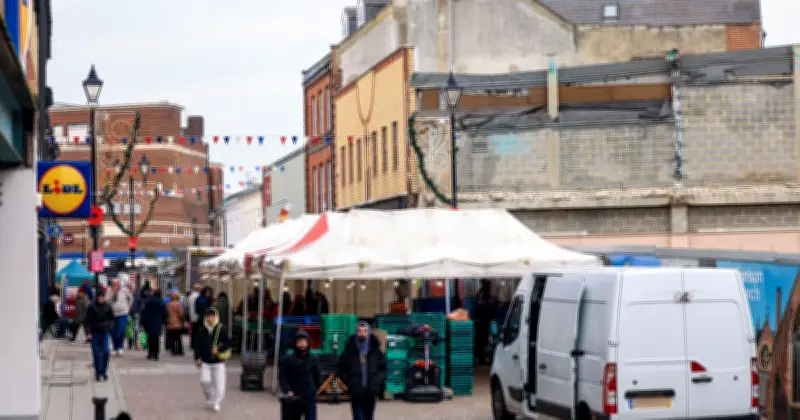
Aldershot town centre has been branded the worst area in the Rushmoor district for antisocial behaviour and violent assaults, with crime rates reaching 77.6 offences per 1,000 residents. Violence and sexual offences now make up the largest volume of incidents, running as high as 35 per 1,000 people, far outstripping wider Hampshire levels.
The mounting disorder has repeatedly forced police to impose Section 35 Dispersal Orders and Public Space Protection rules to clear violent troublemakers and street drinkers from the high street. Last year, the Sunday Times named the town the worst place to live in the UK.
Residents describe daily fears
One 35-year-old father, standing near the town centre with his partner and two young children in a pushchair, said their family avoids venturing out at night. “It's knife crime,” he explained. “I see shoplifters as well, all the time. They just take it. I’ve seen so many people with stuff in their pocket, but I just won’t say anything because you don’t know if they might have a knife.”
Rob Westwood, a father of two, said he nearly got mugged two weeks ago. “I was walking down there and a guy tried to grab my phone while he was on his bike. He was causing havoc on the roads, hitting people’s cars and stuff.”
His partner lamented the decline of the town: “You’ve got barbers everywhere. My car is broken at the moment, and my little man needed clothes, so I had to go all the way to Tesco. There's nowhere really in town for it. This used to be a nice ideal town, and now our biggest frustration is just trying to find a safe place for your kids to grow up.” She gestured towards the Union Yard redevelopment, a regeneration scheme featuring 100 residential units that opened in March 2025, asking: “Why start building new instead of regenerating what’s already here?”
Newcomers and returning residents on edge
Ragveer Kayr, 27, who is looking to move to the area, said she would still stay inside after dark. “I’m not going to go outside in the night-time. It’s scary. It will be safer for me to stay inside.”
Anne Hardy, 71, a former resident returning to the town, said she told her granddaughter not to leave the building unaccompanied while she sat for her driving theory test. “I lived here years ago, and I just feel there’s nothing here now. Normally I’d put my phone in my back pocket, but as soon as I got here today I thought, ‘No, I’m keeping it in my hand.’ I said to my granddaughter: ‘You stay there, phone me when you finish, and I’ll come and get you.’ I wouldn't want her walking around here by herself. You tend to see a lot of what look like drug users and homeless people, and there’s an intimidation factor that never used to be here.” Ms Hardy also pointed to a growing cultural divide on the high street, arguing that a lack of integration had created tension: “They want to live in their own culture, and they don’t like to live in ours.”
Visitors from nearby Guildford, Puja and Tare Pandey, said they remain on edge despite regularly shopping at Aldershot’s Asian food markets inside the Arcade Shopping Centre. “When we came here once, people were randomly fighting. We saw that two months ago.” They said they feel safe enough to walk around because of the presence of private security guards.
Private security steps in
Darren Davis, a security officer who has worked in the profession for 21 years and took over the central beat a year ago, described a constant motivation to stop crime escalating. “Back in the day it wasn’t good, but it’s better now - just from handling it, basically. When I first started, they were doing five days a week security. I’ve upgraded it to seven days a week. We cover from the back of Domino’s, all those shop fronts, down the main street, and all the way around the big square.”
He explained that proactive measures are crucial to curb alcohol-fuelled disruption and daylight shoplifting: “If you have proactive security, they take the load off the police. If you deal with issues directly in the middle of town, you don’t have to wait for someone to steal from a shop before anything gets done. It’s much quicker.”
Once night falls and the remaining shops close, most locals feel safest behind locked doors. The Express has contacted Rushmoor Borough Council for comment.