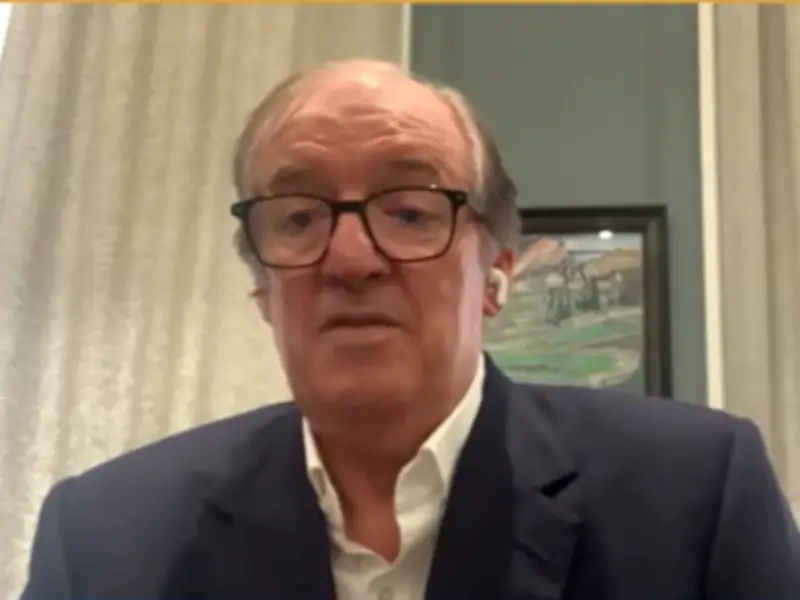
Former Rangers owner Sir David Murray has defended his decision to use the controversial EBT tax avoidance scheme during his time at the Ibrox helm. It comes after he was put on the spot by ex Crystal Palace chief Simon Jordan, who admitted he rejected the opportunity to use it during his time at Selhurst Park.
More than £47m paid in tax-free loans
During Murray's time in charge more than £47m was paid to players, managers and directors between 2001 and 2010 in tax-free loans. In 2017, the Supreme Court ruled in favour of HMRC in its fight with Rangers over the use of EBTs, in what became known as the "big tax case".
An independent commission appointed by the SPFL also found the Ibrox club guilty of failing to make proper disclosure of side-letter arrangements during 2000-2011, resulting in a £250,000 fine - but after the club had been liquidated.
Jordan quizzed Murray on the scheme
Murray appeared on the Graeme Souness Tackles podcast and was quizzed on it by Jordan, who said: "Can I ask you about these EBTs? Because I turned it down. When Palace got promoted to the Premier League, I had a look at it and I thought to myself, I'm not sure about this offshoring, image right structure, non-recourse loans.
"I could save £2m or £3m per year, but I am going to get HMRC at some point, because they don't like football. There is an unsecured creditor policy, and they don't like it because they have been removed as a preferred creditor. What was your thinking to take that?"
Murray then replied: "It was brought forward to me as a valid scheme and I rubber-stamped it for two reasons. Our auditors signed it off; the Rangers auditors signed it off in the accounts. It's a wee bit like coming back to BDO because that is where the idea came into my mind.
"But on top of that, Ernst and Young were our company auditors. So it was being audited at Rangers and audited at my head office at my company. So one would believe it is a valid scheme if you have gone through six different lots of audits."
Murray reflects on Rangers' financial collapse
Murray sold debt-ridden Rangers to Craig Whyte for £1 after the club had won three titles on the spin - and that led to the ruin of the club under his disgraced successor. Murray continued: "We had won three in a row at Rangers when I left and had started building up again. When Rangers got hit with the tax bill from HMRC of £85million, they started loading penalties onto us, which built up to about £130million.
"We were in trouble but on top of that, the biggest thing that hit me was that the Bank of Scotland went bust. So we had a charge of £130-140million and your bank has gone bust. It doesn't matter how clever I thought I was, there was no way out of it.
"But the ironical and really annoying thing to this day that still sticks in my craw is that they eventually found out that the penalties (imposed on us) were illegal. They shouldn't have charged us. The final figure was £33million. Rangers did not need to go bust but HMRC identified 'this is the target we are going to get'.
"It hurts me really badly. Okay, I am remembered for what happened (to Rangers) at the end but I'd like to think I'm also remembered for (Paul) Gascoigne, nine in a row and 35 trophies. The fact of the matter is and I have no doubt that Rangers were targeted to be used as an example for the schemes. Which brings us today to Man City. Is there a parallel? I'm not sure.
"I didn't really want to do another £50million rights issue but I found another £50million to keep it (Rangers) going. When you sit there with supporters groups, it's quite difficult and you do get caught up in it. There are cleverer people than me that got caught up in it.
"Rangers Football Club is a massive institution where there is pressure from the fans. But I do come back to it, Rangers were targeted. We could still be at the club today if those two factors had not hit us. When your bank goes bust you are up a cul de sac with nowhere to go. But yes, I made decisions that were (based on) vanity and not sanity."