
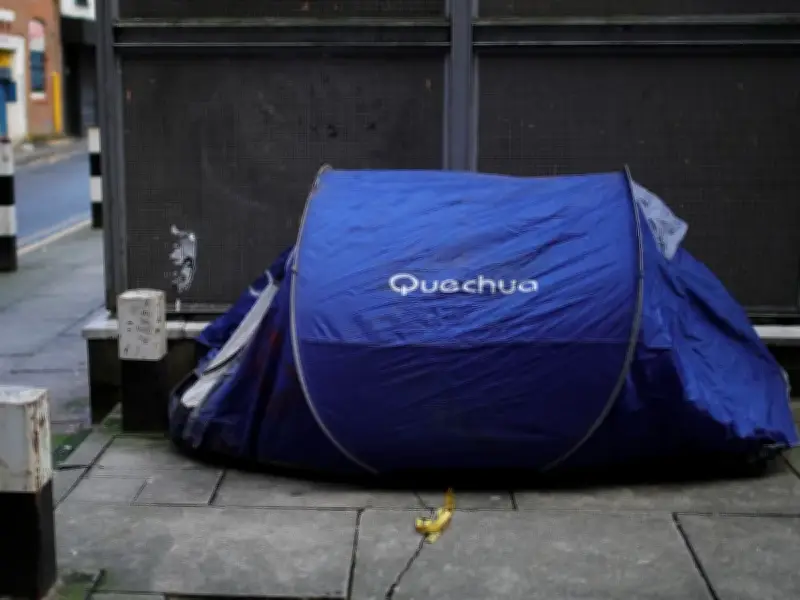
New figures from the Office for National Statistics (ONS) show that an estimated 52 people experiencing homelessness died in Greater Manchester last year, the highest annual figure recorded and an average of one death every week. The data comes as the government prepares to spend more than £400 million to get rough sleepers off the streets this winter.
Manchester accounts for most deaths
The bulk of Greater Manchester’s total comes from Manchester itself, with 20 homeless deaths in the city last year, compared to 15 in 2024 and close to the peak of 21 seen in 2019. Stockport had the next-highest number, with seven homeless deaths.
Elsewhere in Greater Manchester last year, there were an estimated five deaths in each of Rochdale, Tameside and Wigan. Four were recorded in Bury, two in each of Oldham and Salford, and one in each of Bolton and Trafford.
Trend has risen since 2013
The trend has risen in recent years. There were 19 homeless deaths in Greater Manchester recorded by the ONS in 2013, including eight in Manchester. By 2017 - the year that Andy Burnham was elected as the region’s mayor - that had increased to 44 deaths across the region.
That was reduced to 27 deaths in each of 2020 and 2021, before rising to the previous peak of 47 in 2022. The number of deaths began to fall in 2023 and 2024 before the increase to a new peak in 2025.
National picture and funding
Nationally, there were an estimated 974 deaths of people experiencing homelessness in England and Wales in 2025 - an average of nearly three people dying every day. The number of homeless deaths has increased by 77 per cent in the space of 10 years, with an estimated 565 deaths back in 2015. Males accounted for the vast majority of the deaths last year, 833 in total, with females making up 141.
In August, Mr Burnham's government announced a £442 million package to help rough sleepers off the streets in time for Christmas, with £121 million being paid in the first round, as part of a 'mission to end rough sleeping'. It has since been announced that £6.1 million is going to Greater Manchester in the first round of funding. The cash is designed to help local areas provide immediate accommodation and practical support for people on the streets this winter.
Coun Tracey Rawlins, Deputy Leader of Manchester City Council, told the Manchester Evening News: "These tragic figures illustrate a homelessness challenge which is national, and indeed Greater Manchester-wide. Manchester's figures are comparable to other big cities, which naturally attract people from other areas inflating that challenge."
"Even one death of someone experiencing homelessness would be too many, and we must never forget that each of these represents an individual story. Sleeping rough, in particular, has a direct and dramatic negative impact on people's health and is frequently entangled with other complex issues such as addiction or poor mental health."
Charity warns official figures could be higher
However, the Museum of Homelessness warns that simply moving people off the streets won't solve the country's homelessness problems. Director Jess Turtle said: "People are placed in unsafe, pay per night accommodation without support and left to fall through the gaps.
"We are pleased to see the motivation to tackle homelessness and investment in community solutions coming out of government. However, it must create high quality settings with relationships and consistent wrap around support to support healing, rather than hastily put together sit up services or isolated, dangerous placements.''
The charity has also warned that the number of homeless deaths could be much higher than official figures. Research by the Museum of Homelessness suggests that more than 10,000 homeless people have died since 2017, compared to the ONS estimate of 6,600 deaths during that time. The charity’s Dying Homeless Project says that 1,720 people - including 51 children - died while homeless in 2025. That’s 746 more than in the official figures.
The project uses information from coroners’ enquiries, media coverage, family testimony and freedom of information requests to get its figures. It found that 52 per cent of deaths were related to drugs, alcohol or suicide - but ONS figures suggest that 'accidents' are the most common cause of homeless deaths, with 39 per cent given this cause. The Museum of Homelessness is calling for 'compassionate, community led solutions to homelessness'. Director Matthew Turtle added: "We want the government’s energy to get people off the streets to be channelled in the right way, without the authorities resorting to punitive measures that increase social exclusion and risk to life."




