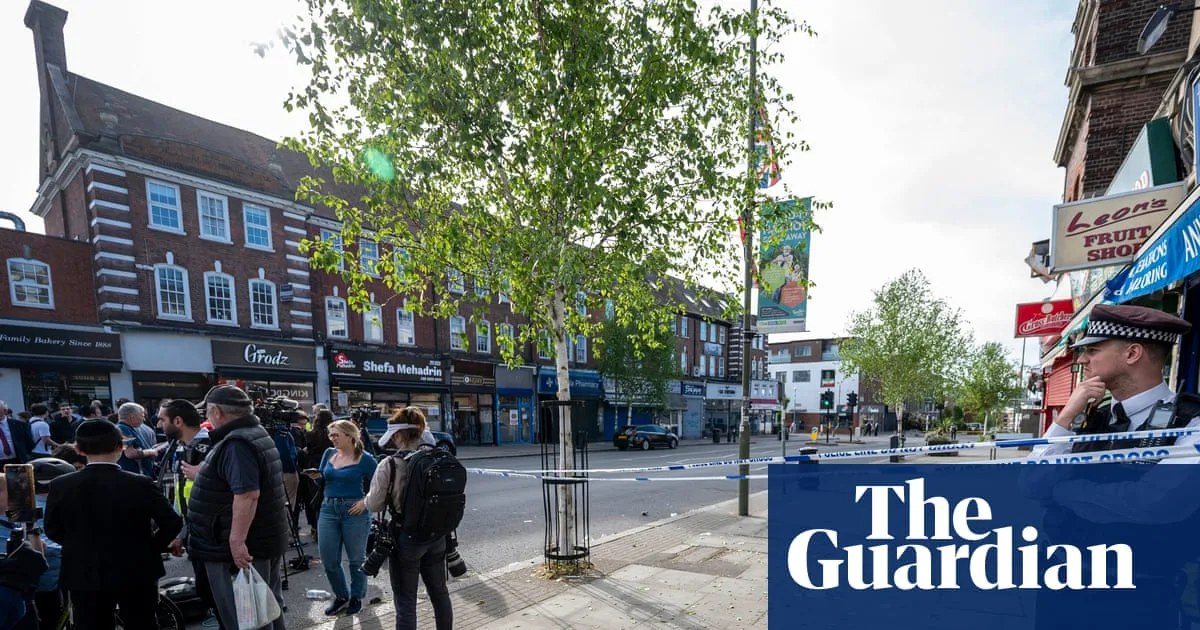
Prime Minister Keir Starmer has called for a “swift, agile and visible” response from the criminal justice system following a suspected terrorist attack in Golders Green, north-west London, in which two men were stabbed. Speaking after a meeting in Downing Street with senior ministers and criminal justice agencies, Starmer said it was “absolutely clear” that the victims were targeted for being Jewish.
Starmer described the attack as part of a series of incidents against the Jewish community in recent weeks, adding that there was a “very deep sense of anxiety” about security and safety. “An attack on our Jewish community is an attack on all of us,” he said, emphasising that the fight against antisemitism was “our fight as well”. The prime minister stressed the need to understand the “visceral feeling” among British Jews.
The government has announced an additional £25 million to increase security for Jewish communities, including enhanced police patrols and protection around synagogues, schools and community centres. Ministers also said legislation to create proscription-like powers against malign state-sponsored groups would be fast-tracked and included in the King’s Speech on 13 May.
Home Secretary Shabana Mahmood confirmed that the suspect, a 45-year-old British national born in Somalia, had a history of serious violence and mental health issues, according to Metropolitan Police Commissioner Mark Rowley. The victims, Shilome Rand, 34, and Moshe Shine, 76, remain in hospital in a stable condition. Mahmood pledged to “do everything in my power” to keep British Jews safe.
Local residents expressed fear and uncertainty. Baruch Stern, of Gross Butchers near the scene, said people were questioning whether the UK was still safe for Jewish people. Sue Siegel, a member of the Jewish Council of Scotland, said some community members were avoiding wearing visible Jewish symbols, comparing the current climate to feelings before the Holocaust.