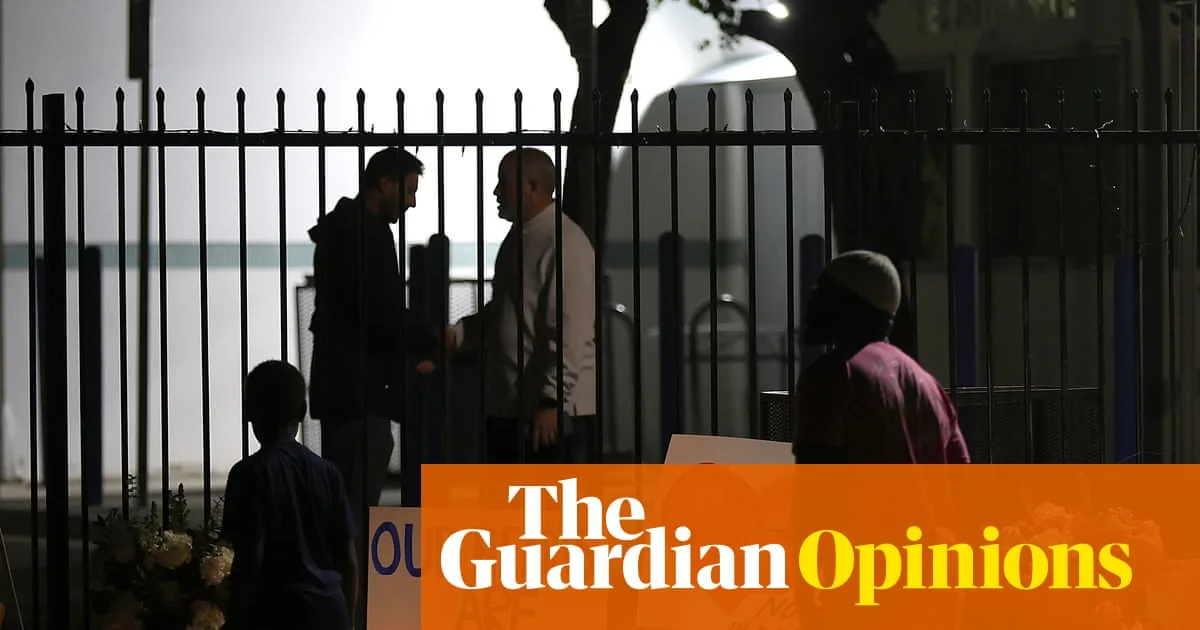
The recent shooting at a mosque and school in San Diego has forced Muslim Americans to confront painful questions about their safety, echoing concerns that Jewish communities have grappled with after attacks such as the stabbings in London's Golders Green. Over the past three years, antisemitism and anti-Muslim hate have surged across the West, yet these two hatreds are rarely seen as related dangers, according to Binairfer Nowrojee, president of the Open Society Foundations.
Nowrojee argues that the two forms of bigotry overlap even as Muslim and Jewish communities are pitted against each other. She points to the rise of far-right figures like Tommy Robinson, who led a rally in London calling for Muslims to leave the UK, and to Conservative politicians who denounced public Ramadan prayers in Trafalgar Square as 'intimidation'. The demonization of Islam, she writes, has been fuelled by politicians, media, and social media, portraying Muslims as a threat to Western identity and security.
Antisemitism, meanwhile, is rooted in conspiracy theories about hidden Jewish power, targeting figures like George Soros. These theories sometimes fuse with anti-Muslim narratives, as seen in the 'great replacement theory', which blames a conspiratorial elite—coded as Jewish—for replacing white populations with Muslim immigrants. Nowrojee notes that this theory was invoked by the Pittsburgh synagogue shooter and by white nationalists in Charlottesville.
Historical parallels are also evident, with today's anti-immigration campaigns echoing early 20th-century laws like the UK's Aliens Act of 1905, which restricted Jewish immigration. Far-right groups then, as now, scapegoated minorities for economic grievances. Nowrojee calls for confronting both hatreds together as a common threat to democratic societies.