Ilford Family Exploited Pandemic Support for £150,000 Fraud
A family of criminals from Ilford in east London funded their extravagant lifestyles by fraudulently obtaining £150,000 in Covid-19 Bounce Back Loans through bogus companies. The relatives, who exploited public money intended to support businesses during the pandemic, have now been sentenced, with two receiving immediate prison terms.
Systematic Fraud Against Government Scheme
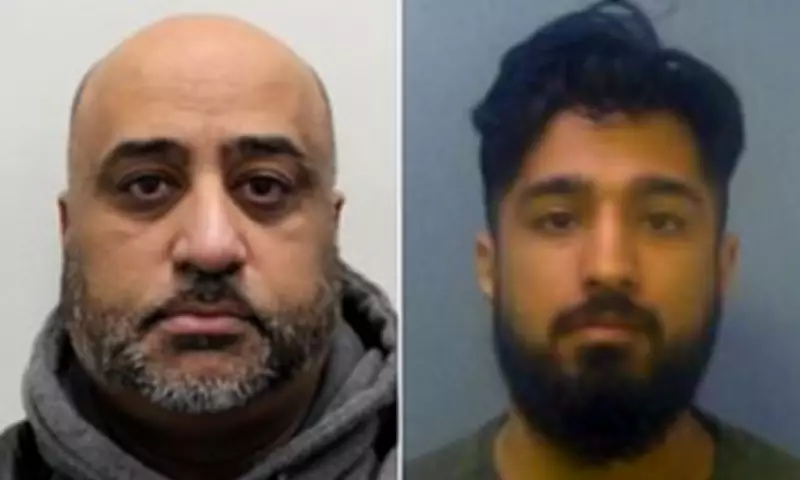
The illicit operation involved Kashid Rashid, 53, his wife Noreen Malik, 46, nephew Rehaan Mohammed, 32, and Rashid's brother Rizwan Haider, 61. They established or utilized fake businesses to apply for government assistance, falsely claiming their enterprises were adversely affected by lockdown measures. By inflating annual turnover figures, they qualified for maximum loans of £50,000 each time.
Instead of using the funds for legitimate business purposes, the money was diverted to pay for house renovations, private school fees, and transfers to other family members and controlled businesses. Voice notes recovered by the National Crime Agency captured Rashid discussing the creation of false invoices to support fraudulent applications.

Elaborate Deception Uncovered
Using three separate businesses, the group successfully secured three Bounce Back Loans totaling £150,000. Rashid further attempted to purchase another company in July 2020 with the intention of claiming an additional £50,000 loan, offering the owner £15,000 to facilitate the fraud through their business account. The owner declined to proceed.
A fourth application submitted by Mohammed was ultimately rejected because the company was dormant. Investigators discovered evidence of the frauds in documents found in Rashid's hire car, while fingerprint analysis identified Patric Ciwinski, 36, attempting to fraudulently set up a false Universal Credit claim under the name Robert Wright.
Additional Fraudulent Activities
Rashid was separately found to be fraudulently claiming Universal Credit under an alias, failing to disclose he had a child and never having lived at the address he claimed. He was arrested in August 2020, with NCA officers discovering he had legally changed his name nine times in ten years to frustrate financial institutions' credit checks.
Mohammed was arrested in April 2021 and declined to answer questions during interview. Malik attended a voluntary interview in June 2021, while Ciwinski did so in December 2021 and Haider in October 2022. All refused to answer officers' questions.
Court Proceedings and Sentencing
Rashid admitted one count of fraud by false representation related to the Universal Credit fraud but denied all other charges alongside his co-defendants. Following a five-week trial at Southwark Crown Court, a jury convicted them on November 28 last year.
At sentencing last Friday, Rashid received six and a half years imprisonment. With previous fraud convictions in the United States and Romania, he will be extradited to Romania after serving his UK sentence to serve a further four-year prison term. Mohammed was handed three years behind bars for his involvement.
Malik and Haider each received two-year sentences suspended for two years, while Ciwinski was given a 12-month community order. Rashid, Mohammed, Malik, and Haider were also disqualified from serving as company directors for specified periods.
Judge Condemns Exploitation of National Crisis
Judge Hale condemned the group for 'deliberately exploiting a government scheme which was set up to assist a national crisis', describing their offending as 'a systematic and repeated assault on the banks and the Bounce Back scheme'.
Following sentencing, Alistair Reid from the NCA stated: 'Bounce Back Loans were a vital tool for businesses to help them stay afloat during the Covid-19 pandemic. However, this family saw it as an opportunity to exploit the system when the country faced unprecedented challenges.'
'The money they fraudulently claimed was spent on their lavish lifestyles - funding car payments, house renovations and private school payments. All while Rashid was fraudulently claiming Universal Credit to further supplement his deceitful income.'

Broader Impact of Covid Fraud
Reid emphasized that fraud of this nature 'undermines trust in government initiatives, diverts essential funds from genuine businesses, and damages financial system integrity', with effects 'far reaching beyond immediate loss, harming local economies, jobs, and communities recovering from Covid lockdown'.
Fraud and error linked to Covid support schemes cost taxpayers an estimated £10.9 billion, with much unlikely to be recovered according to a December report. Tom Hayhoe, appointed Covid counter fraud commissioner in 2024, stated controls on pandemic spending were 'inadequate' initially.
His final report noted many lockdown decisions 'paid too little attention to fraud risk', though in some cases 'this was accepted as necessary to respond rapidly to the crisis'. Tasked by Chancellor Rachel Reeves with recouping public money lost to Covid fraud, Hayhoe's report admitted only £1.8 billion of the estimated £10.9 billion had been recovered.
Challenges in Recovery Efforts
The report warned 'much of the shortfall is now beyond recovery', though 'areas remain where investing in recovering incorrectly paid money is worthwhile'. Hayhoe noted prioritizing speed in delivering support led to 'high level' fraud risk, with significant losses also linked to PPE contracts.
Over 38 billion PPE items were purchased between February and July 2020, with approximately 11 billion unused by March 2024 and losses estimated at £10 billion. Recovery has proven difficult as evidence has 'degraded' and stolen funds have been dispersed and moved offshore.
The report highlighted limitations in fully understanding Covid-era spending details due to key decision-makers moving on and information being lost. It recommended the Government establish a scrutiny panel with senior officials to implement improvements and learn lessons from the pandemic response.