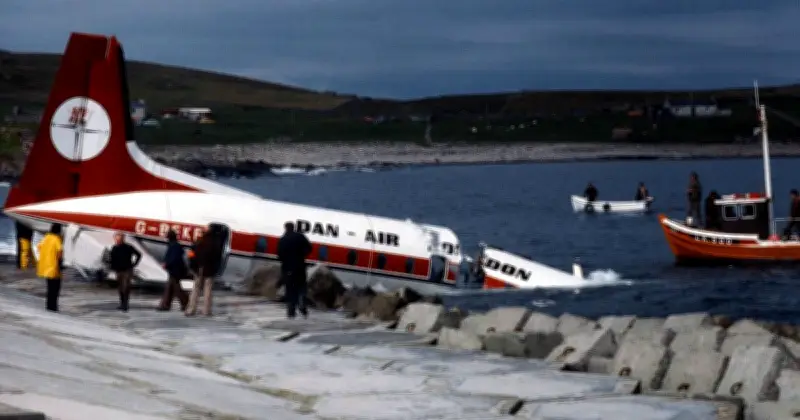
The 1980 crash of Dan-Air Flight 1008 into a mountain near Tenerife, which killed all 146 people on board, was triggered by a single missing letter in an air traffic control instruction, according to cockpit voice recordings and subsequent investigations.
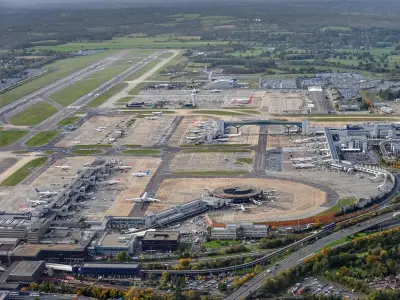
The flight departed Manchester Airport at 9.20am on 25 April 1980, carrying British holidaymakers bound for the Canary Islands. On board were three experienced pilots — Captain Arthur Whelan, 50, First Officer Michael Firth, 33, and Flight Engineer Raymond Carey, also 33 — along with five cabin crew members.
Descent into confusion
For three hours the flight proceeded without incident until the crew began their descent at 1pm local time. Unusually, winds were coming from the opposite direction to normal, meaning Runway 12 was in use instead of the standard approach.

Air traffic controller Justo Camin, 34, could not clear the standard descent procedure because another aircraft was already approaching Runway 12 ahead of Flight 1008. With no radar at the airfield, Camin directed each aircraft individually along a predetermined route.
Shortly after 1.18pm, Camin decided to place the Dan-Air crew in a holding pattern while the aircraft ahead landed. However, no holding pattern existed for Runway 12, forcing Camin to improvise. He instructed the crew to enter a left-hand holding pattern, saying: "Roger, the er, standard holding pattern overhead Foxtrot Papa is inbound heading one five zero, turn to the left, call you back shortly."
A fatal misunderstanding
The captain replied simply "Roger" without repeating the instructions. Camin had intended to say "turns to the left," indicating the direction the crew should navigate around the holding pattern. Without the "s," the crew interpreted it as a single instruction to "turn to the left."
Captain Whelan, baffled by the unanticipated instruction to enter a holding pattern absent from his charts, executed a single leftward turn onto a heading of 150 degrees. They had entered a mountainous area where the minimum safe altitude stands at 14,500 feet.
One minute and six seconds before the crash, one of the pilots is heard saying: "Bloody strange hold, isn't it?" before adding, "It doesn't parallel with the runway or anything." The cockpit voice recording captured the crew's growing anxiety, yet nobody challenged the controller's instructions.
Final moments
Controller Camin, believing the aircraft was over the sea, authorised the plane to descend a further thousand feet. He was unaware the aircraft was amid the mountains. Captain Whelan voiced his misgivings, saying "I don't like that," to which his co-pilot replied, "They want us to keep going more round, don't they?"
The automatic ground alarm then warned "pull up, pull up!" Captain Whelan abandoned his leftward turn for a sharp rightward manoeuvre, convinced he could evade the terrain by banking right. The conventional response to the alarm would be to climb as steeply as possible.
Co-pilot Firth, studying the chart, recognised this was the wrong course of action and put forward alternatives. Flight Engineer Carey is heard saying "Let's get out of here" and later warning "Bank angle, bank angle!" before the cockpit voice recorder cut out.
Impact and investigation
The aircraft ploughed into the face of La Esperanza at 5,450 feet, just 92 feet (28 metres) short of the summit. The impact obliterated much of the aircraft, sending wreckage cascading across the mountainside. The tail section continued for several hundred metres before tumbling into a ravine and breaking apart.
Rescue teams found that none of the 146 passengers had survived. Not a single intact human body was recovered, and many remains could not be conclusively identified.
Spanish investigators attributed all responsibility to the Dan-Air crew while acknowledging the controller's error. British investigators argued the controller should have recognised the separation problem earlier and should not have issued an unpublished holding pattern, though they accepted the crew did not challenge the instructions. They also condemned Camin's decision to permit descent to 5,000 feet, noting the minimum altitude should have been 7,000 feet.

The crash inquiry prompted a renewed focus on clear, standardised protocols across flight operations, including holding patterns, and highlighted the critical importance of unambiguous communication between air traffic controllers and pilots — and the requirement for pilots to repeat instructions to eliminate misunderstandings.
Dan-Air recovered from the disaster and continued flying until 1992, when it was taken over by British Airways. Despite being the deadliest accident ever involving a British airliner, Flight 1008 is not as widely remembered as it deserves to be on its 45th anniversary — nor are the 146 individuals who perished that day.