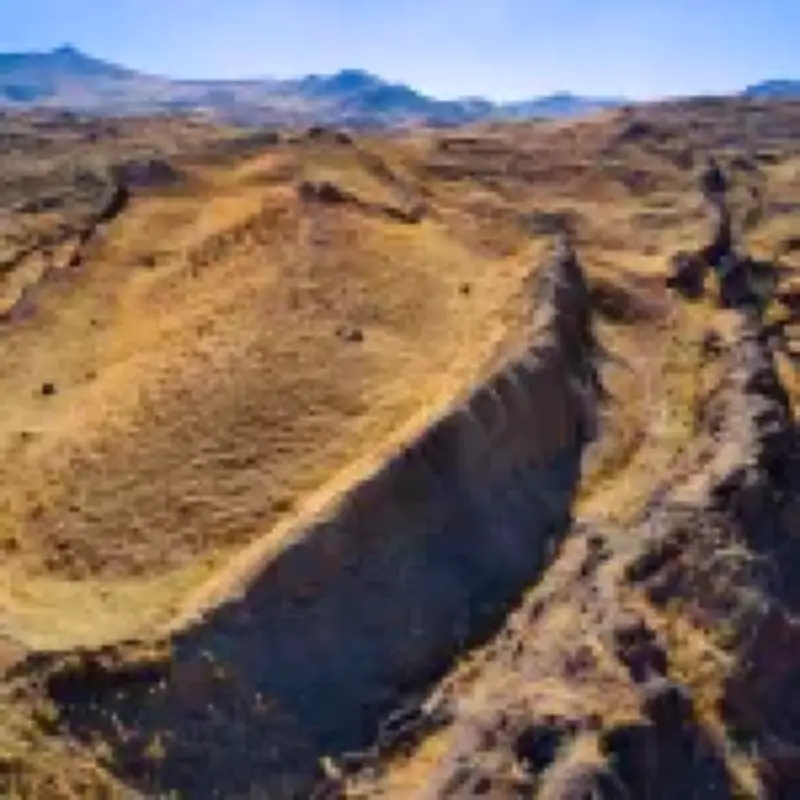
A new study at a site long claimed to be the final resting place of Noah's Ark has pointed to a man-made structure hidden underground, according to a preliminary report by the research group Noah's Ark Scans.
The team, which has been investigating the Durupinar Formation—a boat-shaped geological structure near Mount Ararat in Turkey—used ground-penetrating radar to discover what they describe as 'a man-made object' beneath the surface. The 515-foot long mound has been at the centre of Noah's Ark claims for decades.
Radar Reveals Corridors and Chambers
Dr Khosrow Bakhtar, an engineer who has previously worked for US defence agencies, carried out the research using his own system, BakhtarRadar, to scan beneath the mound's surface. In the initial report, he said the findings indicate not just a man-made structure, but one with corridors, hallways and chambers.
'Whatever the object is beneath the surface is extraordinary,' Dr Bakhtar said in a statement to the Daily Mail. 'In forty years of this work, I have never seen anything like it. It could be a ship. It could be a spaceship.' He added: 'What I can say from the radar is that it is organized, it is structural, and a solid geological mass would not have returned such a strong signature.'
Previous Findings and Future Tests
The internal features of corridors, passageways and hallways did not align with the idea of a natural geological formation, adding to speculation it could be a ship built to withstand a flood. 'A solid geological mass would not have returned this signature,' Dr Bakhtar said.
The full radar scan is expected to be published in November, with further tests set to focus on whether animal DNA exists inside the structure. Samples collected outside the formation in 2024 showed high levels of potassium in the surrounding soil as well as decomposed lumber.
Andrew Jones, an independent researcher with Noah's Ark Scans, said at the time that the tunnels found below the surface level of the mound led to a hollow central chamber, linking the find to the Bible's description of the ark. 'God told Noah to bring the animals in. And so these animals would have stayed there, plus Noah and his family,' Jones explained. 'What's interesting is that these voids are lining up below the ground—and they're not just random. These tunnels also follow a pattern.'
Further research that year revealed angular structures up to 20 feet underground, which it's thought could represent rooms below a deck. Another researcher, William Crabtree, said a tunnel runs from the top of the formation towards the middle—and that it's large enough to walk through. Speaking to Patterns of Evidence, he said: 'The ultimate goal is not just soil test, or GPR scans, but to get inside the ship somehow. Core drilling, getting samples deep inside of it to where we see the substructure, these voids, put a camera in it. This is an opportunity coming up that possibly will allow us to do that.'