
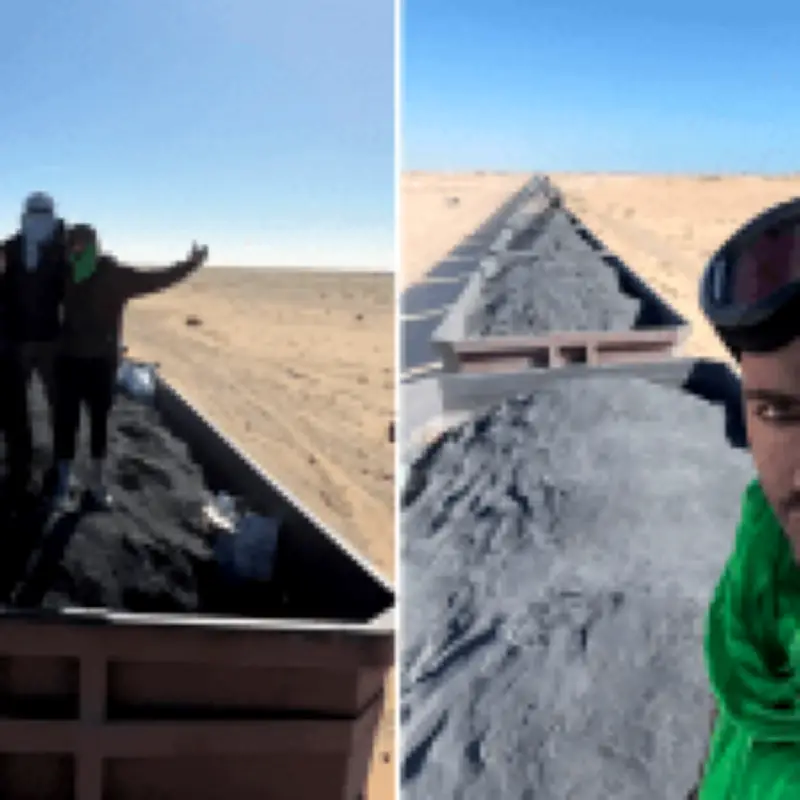
A British content creator who rode the world's most extreme train across the Sahara desert says it took four to five days of constant cleaning to feel human again after being covered in toxic iron ore dust.
Riding the Iron Ore Train
Tom Ruck, 29, fulfilled a lifelong dream by hitching a ride on Mauritania's iron ore train, one of the longest and heaviest in the world, stretching up to 3 kilometres long. The train hauls tens of thousands of tonnes of minerals from the mining town of Zouérat to the Atlantic port of Nouadhibou, a 17-hour journey across one of the harshest landscapes on Earth.
'It's an extreme traveller's fairytale, great for anyone who wants to create some unbelievable dad lore while they still can,' Ruck told Metro. He has travelled to 103 of the 195 countries officially recognised by the UN.
The Journey Begins
Ruck flew from the UK to Spain, then to Dakhla in the occupied Western Sahara, before crossing into Mauritania by 4x4 and minivan. In the remote settlement of Choum, he found a local 'train wizard' who helped him navigate the unofficial system. There are no tickets or timetables — just trust in locals.
The train was due at 8pm but never arrived. Ruck and his friends were woken at 3am at their homestay and rushed to the tracks with a five-minute window to board. 'We were tired but super excited, kind of nervous, kind of a weird butterflies feeling because it was so high on all of our bucket lists,' he said. 'It felt like we were robbing a bank.'
Life on the Train
Passengers climb a ladder onto open carriages with no seats, shelter, or bathrooms. Ruck wore ski goggles and a turban to protect against the dust, which he said gets into every orifice. The group brought dry snacks, bananas, protein bars, and plenty of water. A 'toilet corner' served as the only facility.
'At sunrise, it's just unbelievable. It's barren, but the sheer size of it, and the train bending around, is crazy to see,' Ruck recalled. Daytime temperatures were brutally hot, while nights could drop below freezing from December to February. The group passed time taking photos and dancing, eventually falling asleep on mounds of black soot.
The Aftermath
At the end of the line in Nouadhibou, Ruck was covered head to toe in iron ore dust. 'It took a good four or five days of cleaning consistently to feel human again,' he said. 'The train itself isn't scary, it moves quite slowly, but if you do want to do this, I would say you need to be at a place in your life where you're happy to be covered in iron ore for several days.'
Darecations on the Rise
Ruck is part of a growing trend of 'darecations' — physically punishing adventures in tough environments. Pinterest reported a 75% increase in searches for adventure tourism in 2026, forecasting a boom among Gen Z and Millennials. SportsCover Direct saw a 182% increase in travellers taking out sports travel insurance over the past two years, with strong growth in trekking, mountaineering, and marathon travel.
Experts recommend packing ski goggles, a headscarf, water, layers, a headlamp, and rubbish bags to protect valuables for such extreme journeys.




