Jeffrey Epstein's death was not a suicide but was most likely a 'homicidal strangulation', according to a respected forensic pathologist who reviewed the evidence. Dr Michael Freeman, a fellow of the Royal College of Pathologists in London, said the financier's body showed injuries 'consistent with an assault and a struggle' rather than suicide. He suggested the death could have been 'staged' as a hanging, with numerous injuries pointing to 'blunt force trauma'.
Expert Findings Presented in London
Dr Freeman announced his conclusions at a talk in London after receiving the complete medical examiner's file from Epstein's brother, Mark. The pathologist, a former chair of forensic and legal medicine with the Royal College of Physicians, stated: 'These injuries didn't occur from a suicidal hanging… By exclusion of the impossible, we end up saying homicide is the only remaining explanation for the pattern of injuries, given what we know.'
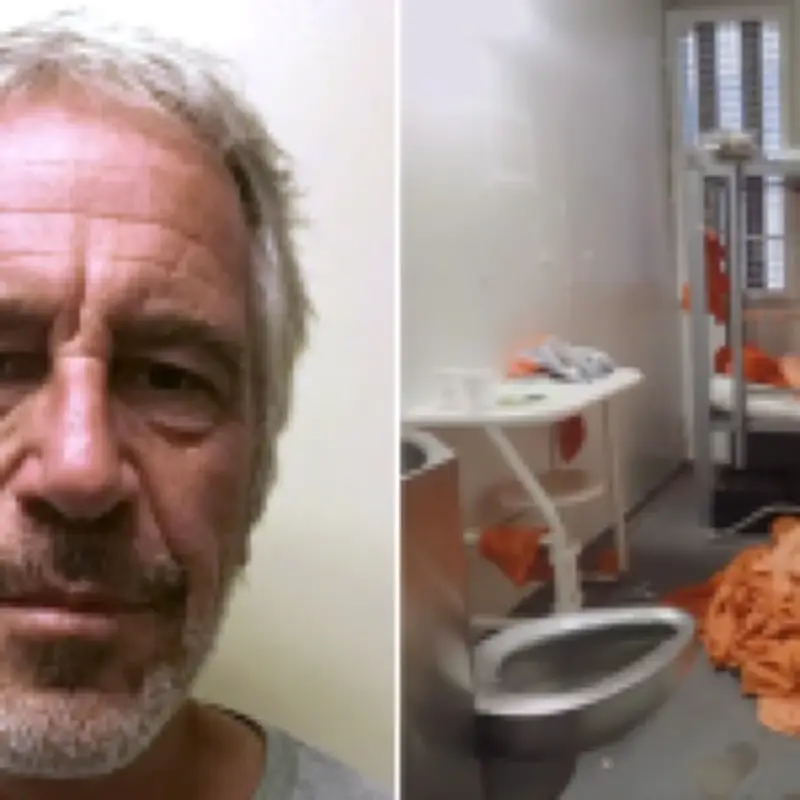
The pathologist has also released the complete medical file, including portions not previously public. Epstein was found unresponsive at 6.33am in the Metropolitan Correctional Center in Manhattan on August 10, 2019, while awaiting trial. A guard reported discovering him hanging with an orange-coloured strip of material around his neck in a near-seated position.
Evidence Points to Homicide
The New York chief medical examiner's office had ruled the death a suicide, a finding later supported by a Department of Justice review in 2023 and FBI findings. Dr Freeman said he is the first person trained in forensic pathology to review all the evidence, including the entire autopsy files, since that determination.
His team compared the injuries found on Epstein's body with a reconstruction of the 'hanging position' based on the guard's testimony. During the presentation, hosted by the Honourable Society of the Middle Temple in London, Dr Freeman said only a small number of marks were explained by the hanging scenario, while other neck injuries were 'completely unexplained' by a ligature.
He detailed injuries including an injury above the left shoulder consistent with 'blunt forced trauma', cuts and darkened tissue on the lips 'consistent with blunt forced trauma to the face', and 'very likely fingernail marks' above the ligature on the neck. He said these tallied with a 'homicidal strangulation from behind'. In one theory, a double-knotted ligature from strips of fabric could have been used, explaining a bruise at the back of the neck.
Criticism of Authorities
Dr Freeman suggested the hanging could have been 'staged', explaining: 'If we believe the guard's sworn statement, then the only explanation for the hanging is that it was staged, likely using the same ligature.' He cautioned: 'If we don't believe [the] statement, then there is no reason to even consider hanging as being any aspect associated with the finding of the body.'
He also criticised the authorities who handled Epstein's body and the scene, saying the cell was not properly preserved or treated like a crime scene and that key physical evidence was mishandled. The New York Medical Examiner told Metro their 'office stands by the determination', adding: 'Cause of death: Hanging, Manner of death: Suicide.'
Epstein's brother Mark previously told Metro the report would be 'game-changing', stating the independent group has been 'properly studying the autopsy results for months'. He added: 'They are not doing this on my behalf. I am not paying for this.'