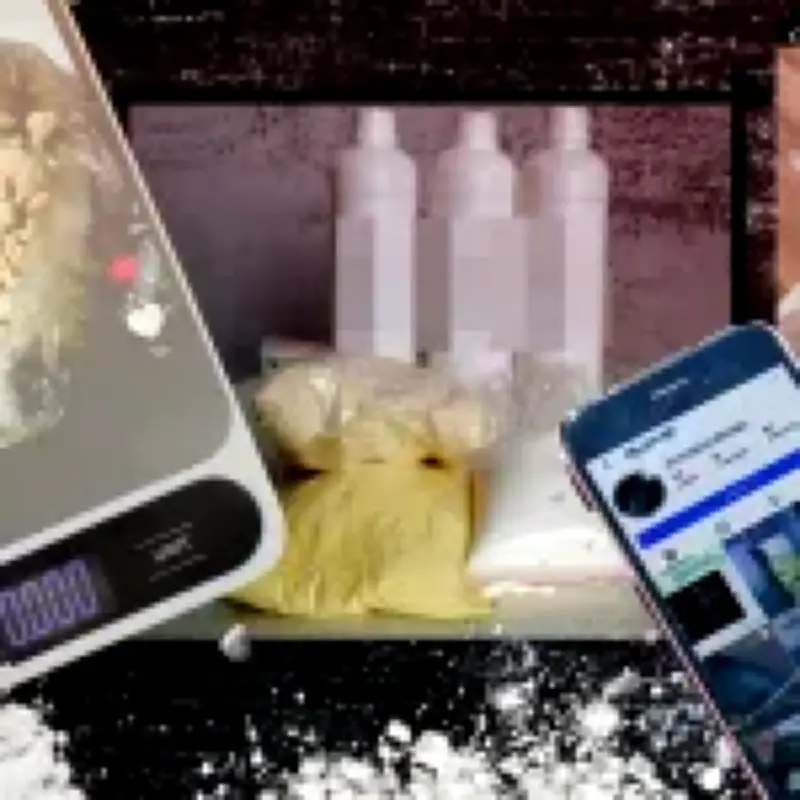
A Metro investigation has found that foreign gangs are selling 'Do It Yourself' kits for the synthetic cannabinoid spice on TikTok and Instagram, exploiting legal loopholes to supply UK dealers. The kits contain the chemical 'ingredient' materials for spice, which are not covered by government bans on psychoactive substances, allowing dealers to produce the drug in the UK.
Deadly drug growing in popularity
Spice contains man-made chemicals designed to act on the brain similarly to THC, the compound that causes the high in cannabis, but it is far more dangerous. Official statistics released last week show that deaths from spice in the UK more than doubled in 2025, rising from 44 to 95. The drug can also cause seizures, heart attacks, organ damage, and mental health problems such as anxiety and paranoia.
The cheap drug is rapidly becoming popular among school-age children, with up to a quarter of vapes confiscated in classrooms containing the drug. Spice was primarily made in clandestine labs in China before Beijing cracked down on it in 2021. Now, gangs in China have turned to selling DIY kits, which include instruction manuals for making spice in the UK before it is sold on by drug dealers, including to children.
Social media platforms used to sell kits
Metro uncovered dozens of accounts on TikTok and Instagram advertising spice kits to dealers, easily discoverable using a euphemism for the drug. Videos and pictures show piles of raw materials and the chemical process dealers can carry out at home. Some sellers use phone numbers connected with China, while others are connected to British dealers and provide +44 numbers.
Professor Christopher Pudney, a leading expert on online illicit drug markets who works with police forces across the UK, said the kits were one of the main ways 'the drug is distributed and supplied in this country.' He is part of a team of researchers behind a new study on spice products sold via TikTok, which found 370 primary accounts linked to spice, with 90,573 followers, across the platform. The majority of accounts linked to European countries were targeting the UK and Germany.
Concerns over school children and cheap production
While spice was historically associated with prisoners and homeless users, concern has shifted increasingly to school children. Prof Pudney, who has tested for spice in vapes in secondary schools alongside police forces, said 'the overwhelming molecules we see are the ones sold in the kit form.' He added that they have also 'see[n] the precursor chemical in many of the vapes,' which, while not guaranteeing the spice vape came from a kit, is 'pretty strongly indicative that that's the case.' His 'social media analysis' has shown that 'Chinese dealers selling the kits are tightly associated with accounts in the UK selling spice vapes.'
Prof Pudney estimates that £1,000 can purchase a kilogram of starter material, which can produce £1,000,000 of product. A number of the accounts selling kits found by Metro had existed for years, and it was only when the newspaper informed TikTok and Instagram of the findings that the pages were removed and at least one common keyword was blocked.
Platforms and regulators respond
Fiona Spargo-Mabbs, founder of drug education charity the Daniel Spargo-Mabbs Foundation, said social media platforms were not doing enough to stop drugs being sold online. Mabbs, who is also Chair of the national Drug Education Forum, told Metro: 'It is absolutely not difficult for the platforms to find these accounts. They need to use all the tools at their disposal to make sure that this is not getting on their platform at all. These channels are reaching vulnerable young people who are making decisions without knowing what they're actually putting their money toward. I do not understand why platforms can't work harder to make their spaces safe.'
The Online Safety Act 2023 places clear legal duties on online platforms to prevent users from encountering illegal content and to ensure that such content is swiftly removed. According to a TikTok spokesperson, 99.8% of videos that violated their policies on regulated goods, including illegal drugs, were removed proactively. The company insists they prohibit the trade, marketing or provision of illegal drugs and unregulated substances, and have launched a search intervention this year, meaning users who search terms such as 'Vapes' are directed to a page connecting them to professional support helplines.
Meta told Metro they do not allow the sale of illegal or unapproved drugs on their platforms and have removed content that violates their policies, insisting that over 94% of content violating drug content policy was removed proactively. Meta also said they are constantly working to improve detection and urge people to report anything they think violates their policies.
An Ofcom spokesperson said: 'The sale and promotion of illegal drugs online can have devastating consequences. Under the Online Safety Act, social media platforms must assess and mitigate the risk of UK users encountering criminal content, and take down illegal material swiftly when they become aware of it. We've shown we'll take action if evidence suggests companies are falling short.' Ofcom said they have launched investigations into more than 100 platforms in the first 18 months since the Act came into force, and added that 'insights from academics like Professor Pudney are crucial to our work in enforcing the Act, and we remain open to receiving further evidence on this matter.'
A Home Office spokesperson said: 'We are alert to the threat of illegal drug supply and are determined to prevent dangerous substances from reaching our communities. It is a criminal offence to produce controlled drugs, and anyone caught doing so will face the full force of the law. Social media platforms also have a duty to remove illegal drugs content as soon as they become aware of it. Those that fail to comply face enforcement action.'