Early Life and Criminal Beginnings
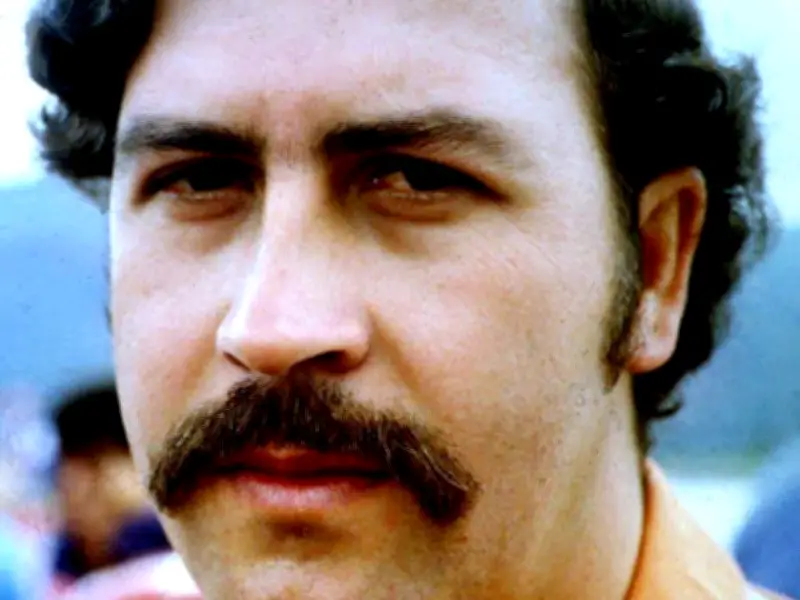
Pablo Escobar was born in 1949 to a farmer father and a teacher mother, one of seven siblings. He dropped out of school to sell fake diplomas but later attended college to study law, dreaming of becoming a politician or even president. However, he abandoned that path for a life of crime, starting by stealing stereo equipment and trading looted tombstones. His first arrest came in 1974 for stealing a car.
Rise of the Medellín Cartel
Escobar quickly escalated to drug dealing and smuggling, involving himself in kidnappings and murders. He once had a kidnapped businessman killed despite already receiving a huge ransom. In 1976, he founded the Medellín cartel, based in the city of the same name. Using bribery, intimidation, and violence to evade jail, the cartel smuggled tons of cocaine daily via planes and even submarines, eventually supplying 80% of the cocaine reaching the United States and raking in £330 million per week.
Violence and Terror
At home, the "King of Cocaine" was responsible for at least 4,000 deaths, including 200 judges. His hit men received bonuses for killing police officers, and he ordered the assassination of a presidential candidate. The cartel set off dozens of car bombs, led a mass shooting at a football match, and bombed an airliner in 1989, killing 107 people. Escobar once had a servant drowned in his swimming pool while guests watched for stealing silverware.

Personal Life and Wealth
At 26, Escobar married 15-year-old Maria Victoria Henao, with whom he had two children. Despite his affairs—including with TV journalist Virginia Vallejo, three beauty queens, and a volleyball player—she remained loyal until his death. He hid cameras in bedrooms and bathrooms and had a former lover murdered after discovering she was an informant. Escobar is considered the wealthiest criminal ever, with a fortune estimated at £55 billion in today's money. He owned a fleet of over 100 planes and helicopters, a vast car and yacht collection, and spent £2,000 a month on rubber bands for his cash. Much of his money was eaten by rats or remains buried in secret locations.
Hacienda Nápoles and Eccentricities
Among his properties was the 7,000-acre Hacienda Nápoles ranch, featuring a bullring, six swimming pools, and an airstrip. He also established a private zoo with 200 animals, including elephants, lions, giraffes, and hippos. Despite his crimes, Escobar was dubbed "Robin Hood" for spending millions on hospitals and housing for the poor. By the late 1980s, he was so rich he offered to pay off Colombia's $10 billion national debt in exchange for exemption from extradition to the US.
Prison and Escape
In 1991, Escobar negotiated a special agreement with the government to serve a five-year sentence in a custom-built luxury compound called La Catedral, which had a football pitch, casino, and bar. Agents from the US Drug Enforcement Agency later found a stash of lace negligées and sex toys there. When the government tried to move him to a more secure facility in 1993 after he killed cartel members from prison, Escobar simply escaped out a back door and went on the run with his family. At one point, he burned over £1 million in cash to keep his sick daughter warm.
Death and Legacy
On December 2, 1993, authorities tracked Escobar to a property in Medellín, leading to a shoot-out. He tried to flee across rooftops but was hit in the leg and torso, with one bullet entering his head. Some believe he shot himself. A staggering 25,000 people attended his funeral. His exploits were later chronicled in the Netflix series Narcos. Hacienda Nápoles was turned into a theme park, but descendants of his hippos have become so numerous that the government plans a cull. Escobar's family was granted asylum in Argentina. His wife remains haunted, saying: "Pablo's ghost won't leave us alone."