
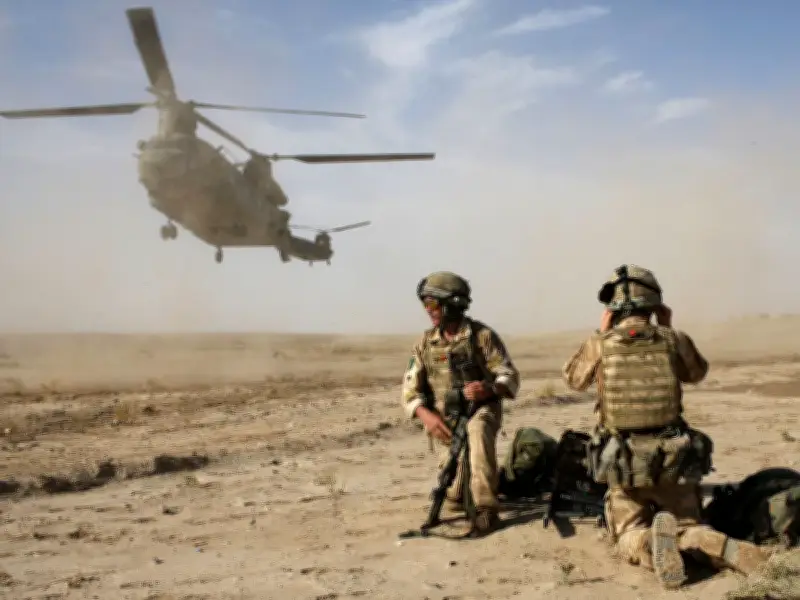
The father of a former Afghan interpreter for the British Army was tortured by the Taliban after a Ministry of Defence data breach leaked names. The interpreter, who asked not to be named as he still has relatives in Afghanistan, said the Taliban raided his parents' home and threatened to take one of his sisters if he did not send them money from the UK.
He worked for the British Army in Helmand Province in 2012. “I worked for them because I hoped they would help the Afghan government improve my country,” he said.
Escape from Afghanistan
After British forces ended combat operations in 2014, the interpreter stayed in Afghanistan to be near his parents and seven sisters. But in 2021, as the Taliban captured provinces, he said: “I knew I couldn’t live in that country anymore. I was receiving threats.”
He applied and was accepted for resettlement in the UK with his wife, but before they could leave, the Afghan government collapsed on August 15. He waited at Kabul airport until he boarded a flight on August 24, leaving his family behind.
Data breach and threats
Once in the UK, he applied for his family to join him, receiving confirmation at the end of 2022. By then, a data breach had accidentally released the names of 18,000 people, putting them at risk from the Taliban.
“I do not know if the Taliban had my data or not, but they know who my family was. Our house was looted and searched by the Taliban many times,” he said. “My father was arrested and tortured for two weeks. They were asking for money. They wanted me to send money or they would take one of my sisters. For my father, a 65-year-old man, it was not easy.”
Family resettlement
His parents and three of his sisters were eventually resettled in the UK in May 2024. Another sister had already been allowed in with her husband, who also worked with the Army. His three other sisters remained in Afghanistan with their husbands.
He said: “They are here now, but it cost three years of depression and trauma. It has affected my mother very badly. They were calling me saying ‘why are you not doing anything?’ All I could say was ‘I’m trying, it’s not in my control’.”
Others still at risk
The interpreter said he still knows people who helped British forces and remain in Afghanistan. He cited one person who worked in anti-corruption who arrived in the UK, but another who is still there. He also said he knew former Afghan special forces soldiers – known as the “Triples” – who fought alongside the British military but had not been allowed to resettle.
The interpreter spoke as the cross-party defence committee released a damning report into the data breach. Chairman Tan Dhesi said: “This inquiry began with a data breach, but became about the real lives affected by delay, secrecy and flawed decision-making. The government must now explain how it will protect eligible Afghans who cannot safely, lawfully or affordably reach a third country for UK entry-clearance checks.”
Sara de Jong, co-founder of the Sulha Alliance, which helps former interpreters and their families in the UK, said: “I welcome the Report’s critical assessment of the Government's actions and its recognition of the human costs for Afghans affected by the data breach. These human costs, from physical threats to psychological harm, are more significant than the Government initially accepted, as I know from daily contact with affected Afghans and from our survey research among 231 Afghans affected by the data breach, conducted with the NGO Refugee Legal Support.”
De Jong, also Professor of Politics at the University of York, added: “We are currently in contact with several desperate Afghan interpreters and Triples who are still at risk and abandoned in Afghanistan, because they don’t have the financial means to self-move. So we are grateful that the Committee has demanded that the Government explains how it will protect eligible Afghans who cannot safely, lawfully or affordably reach a neighbouring country for their UK visa processing. Almost 5 years since the withdrawal in August 2021, it is time to finally finish this mission of bringing those who stood by the British Army to safety.”




