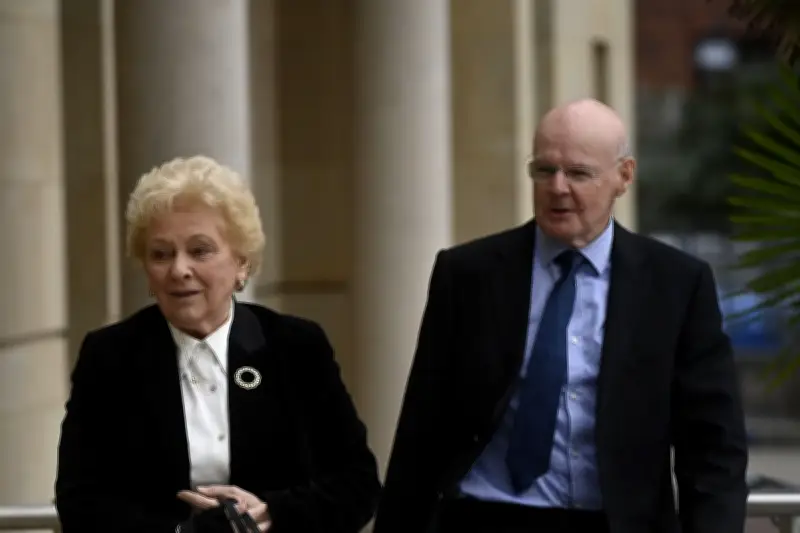
Baroness Nuala O’Loan has told the Omagh Bombing Inquiry that obtaining sensitive information from police in Northern Ireland about the Omagh bomb investigation was almost like “pulling teeth”. The former police ombudsman said her team experienced “astonishment” over difficulties in receiving intelligence reports from the RUC about the Real IRA atrocity.
Evidence at the inquiry
Baroness O’Loan was giving evidence in the public inquiry into the dissident republican car bombing in Omagh on August 15 1998 which killed 29 people, including a woman who was pregnant with twins, in the worst single atrocity in the Troubles in Northern Ireland. The inquiry, chaired by Lord Turnbull, is holding evidential hearings in Belfast.
The latest phase of hearings, which will last for several weeks, is concentrating on the period before and after the bombing and will examine how it was carried out and who was responsible. The inquiry was set up by the previous government to examine whether the explosion could have been prevented by UK authorities.
Investigation into RUC probe
Ms O’Loan, who was Northern Ireland’s first police ombudsman, launched a probe into the original RUC investigation into the atrocity following a report in a Sunday newspaper in 2001. The article in the Sunday People had contained claims that undercover agent Kevin Fulton had told his RUC handlers that a car bomb was being prepared three days before the attack in Omagh.
Baroness O’Loan told the inquiry that she wanted to ensure that her investigation did not cause more trauma to the Omagh victims and their families. Lead counsel to the inquiry Paul Greaney KC asked if the investigation needed to be progressed as a matter of urgency.
She said: “It needed to be done as a matter of urgency, but it needed to be done properly.” Mr Greaney said: “Why, in your judgment, did it need to be dealt with as a matter of urgency?”
She said: “We were not investigating the Omagh bomb, but the work which we were doing was related to the investigation of the Omagh bomb, and when you’re investigating a criminal offence, the further you get from the date upon which the offence was committed, the more likely you are to lose witnesses, to lose investigative opportunities, to lose forensic opportunities.”
Difficulties with intelligence access
Asked if she felt supported by the Northern Ireland Office, Baroness O’Loan said: “Not particularly, no.” Asked about support from politicians in Northern Ireland, she said there was a “significant amount of outrage among certain members of the unionist parties”.
She said her investigation team spoke to Kevin Fulton and there was “nothing to indicate he was unreliable”. Baroness O’Loan said she had understood that “all relevant material” would be made available by the RUC. She agreed with a suggestion that the information initially provided to her team was incomplete.
Mr Greaney said: “When you discovered that it was incomplete, was that a source of disappointment for you?” She said: “Yes.”
Baroness O’Loan said her team received information in September 2001 that the RUC had previously ordered a review of its investigation into Omagh which had been carried out by Chief Superintendent Brian McVicker. She said she later became aware there was also a separate Omagh intelligence report.
The former ombudsman told the inquiry that when she sought a copy of the McVicker review, she was told there was only one copy, it was in the safe of a senior officer and was not likely to be made available. Mr Greaney said: “Did you regard that as an acceptable state of affairs?” Baroness O’Loan said: “No.”
Mr Greaney referred to the use of the word “astonishment” in her statement to the inquiry. She said: “We were now nearly six weeks into an inquiry. We had asked for all the intelligence, and we haven’t even been told about this very significant document. So, astonishment was the appropriate word.”
Baroness O’Loan said a copy of the McVicker review was later delivered to her personally by then RUC chief constable Sir Ronnie Flanagan. Mr Greaney asked if she continued to “experience certain difficulties”.
Baroness O’Loan said: “When we received intelligence in the beginning, it was redacted, and really you can’t conduct an inquiry on the basis of redacted intelligence. And then we couldn’t get access to the police database for handling intelligence, so there were arguments about that. That was eventually granted.”
She added: “I have to say that it really was profoundly difficult… we were trying to almost draw teeth in terms of getting information out of the police.”