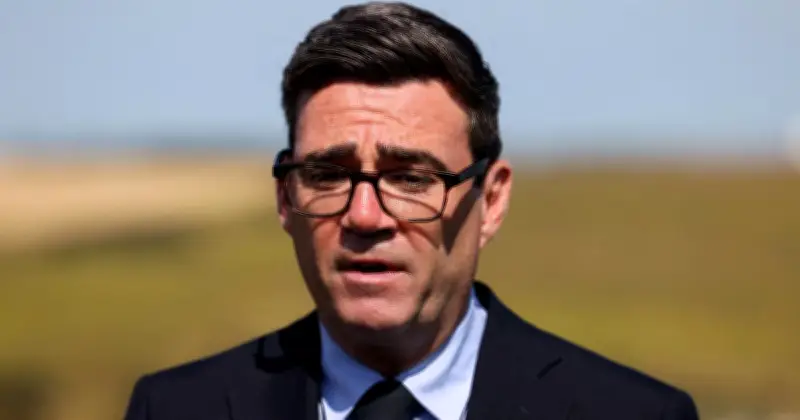
More than 9,000 domestic abusers could be released from prison before the end of this Parliament under Labour's early release scheme, according to Conservative analysis. The figures have prompted fresh warnings from victims' groups, opposition politicians and Labour MPs, who raise fears survivors could face renewed dangers if offenders return to local communities before completing their sentences.
Revised scheme excludes some offenders
The Prime Minister approved changes to the early release scheme this week after calling for rapists and the most serious child sex offenders to be excluded from the policy. Andy Burnham had previously halted the plans after it came to light that two of the men convicted over the killing of PC Andrew Harper would be eligible for early release.
Despite those changes, the Conservatives estimate that 9,371 domestic abusers could still be released before serving their full sentences by the end of Parliament in 2029, with around 3,000 offenders leaving prison each year. Those released would be subject to stricter licence conditions, including electronic tags designed to monitor their movements and alert authorities if they enter prohibited areas.
Political criticism mounts
Shadow Justice Secretary Nick Timothy said the Government had still failed to go far enough, reports the Daily Mail. "Labour had to be dragged into this U-turn on [excluding rapists from] early release after campaigning from victims. But it clearly does not go far enough and is putting victims' lives at risk. The clock is ticking... Labour need to ensure the remaining sex offenders and other serious criminals are excluded."
Reform UK's equality spokesman Suella Braverman also criticised the policy, accusing Labour of "throwing thousands of traumatised victims to the wolves" by allowing violent domestic abusers to qualify for early release. She added: "Not only is it deeply traumatising for these victims to know their attackers will be free to roam the streets nearby – many will be literally fearing for their life."
Victims' groups call for transparency
Domestic Abuse Commissioner Dame Nicole Jacobs called for greater clarity over the scale of the planned releases. She said: "If these figures are anywhere near the level of abusers set to be let out, then it is critical the Government is transparent about the scale of releases, so we can be confident the right level of resource is in place to keep victims safe."
The proposals have also drawn criticism from Labour backbenchers. Allison Gardner, Labour MP for Stoke-on-Trent South, said: "For survivors, the prospect of an abusive partner being released early is frightening, and their safety must come first." Sarah Champion, the Labour MP for Rotherham, added: "With patchy rehabilitation in prisons, and less time served, there is no reassurance that these manipulative aggressors will have changed."
PC Harper case sparks review
The Prime Minister paused the reforms last month after learning that two men convicted over the death of PC Andrew Harper would benefit from the changes. PC Harper, 28, was killed in 2019 after responding to reports of a burglary when he became caught in a tow rope attached to a getaway vehicle and was dragged along a road. Following widespread criticism, Burnham suspended the reforms while ministers carried out what the Government described as an urgent review to ensure public safety remained the overriding priority.
This week, however, PC Harper's family were informed that two of the men convicted over his death remain eligible for early release under the revised policy. Aileen O'Connor, chairman of the Thames Valley Police Federation, described the decision as a betrayal of the officer's legacy and pledged to launch a legal challenge.
Warnings of life-threatening risks
Conservative peer Baroness Bertin, who co-chairs the All-Party Parliamentary Group on Domestic Violence, warned that "lives will certainly will be lost if this [scheme] isn't thought through properly". She added: "The threat abusers can pose to victims on release can't be underestimated."
Under the changes, which are due to come into force in October, offenders previously required to serve two-thirds of their sentence before being considered for release will instead become eligible after serving half. Less serious offenders will qualify for release after serving one-third of their sentence rather than half.
Alice Russell-Harris, from domestic abuse charity Refuge, warned: "The PM took on the mission to halve violence against women. This decision risks undermining that commitment." Because domestic abuse is not classified as a standalone criminal offence, calculating exactly how many offenders could benefit is difficult. The Conservatives based their estimate on Ministry of Justice data covering offences including breaches of restraining orders, stalking, controlling or coercive behaviour and intentional strangulation.
A Ministry of Justice spokesman said: "This is a speculative figure. It wrongly assumes prison population and sentencing patterns will remain unchanged throughout Parliament, while also counting people who have not yet committed offences."