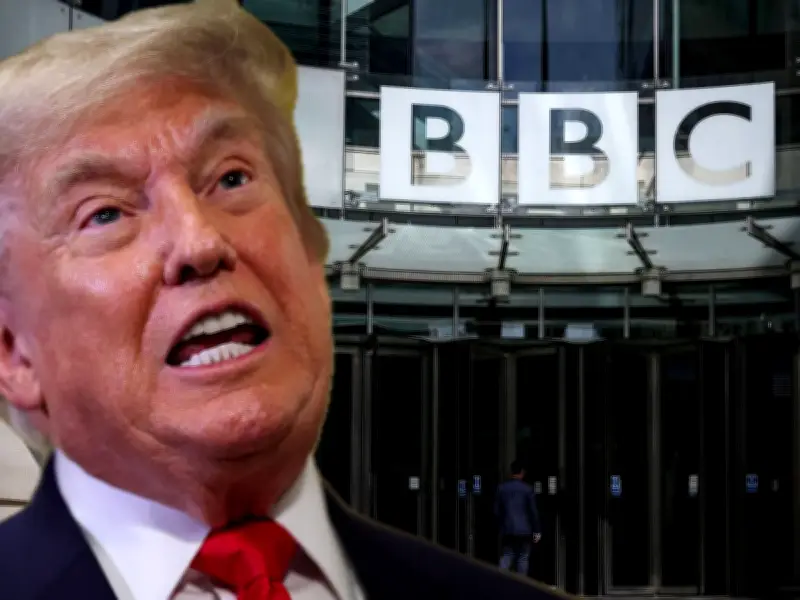
A judge has ordered Donald Trump to hand over financial records sought by the BBC in his $10 billion (£7.5 billion) defamation lawsuit against the broadcaster. The US president's legal team had argued the request was 'premature, improper, and especially burdensome'.
Court Ruling on Disclosure
Judge Enjolique Lett approved the BBC lawyers' request for information from the Donald J Trump Revocable Trust, which holds the president's business interests and is overseen by his eldest son. The ruling can be appealed.
Mr Trump is suing the BBC over the editing of a 2024 Panorama documentary about the US Capitol riots, claiming it caused reputational and financial harm. The BBC had dismissed accusations of a 'fishing expedition', stating the details were needed to evaluate the financial impact of the programme.
Legal Arguments
Court documents state: 'Defendants have requested information from these entities only because plaintiff alleges without limitation that his financial interests have been impacted by defendants' actions and because plaintiff is the sole beneficiary of a trust that owns or is associated with nearly 400 entities.'
The trust, represented by Mr Trump's legal team, had resisted the demand, arguing: 'Although plaintiff has alleged that his businesses have suffered damages as a result of the documentary, that alone does not give defendants carte-blanche to obtain sweeping financial discovery from hundreds of non-parties.'
Background of the Case
Mr Trump claims the Panorama episode, aired just before the 2024 presidential election which he won, inflicted reputational and financial harm. The documentary was criticised for creating the impression that he incited supporters to invade the Capitol on January 6 2021 after losing to Joe Biden.
The allegations prompted then-BBC director-general Tim Davie to resign. BBC chairman Samir Shah apologised for an 'error of judgment', acknowledging the editing gave 'the impression of a direct call for violent action'.
The broadcaster is seeking to have the case dismissed, warning of a 'chilling effect' on 'robust reporting on public figures and events'. It has also questioned the Florida court's authority, as the programme was never broadcast in the state or the US.