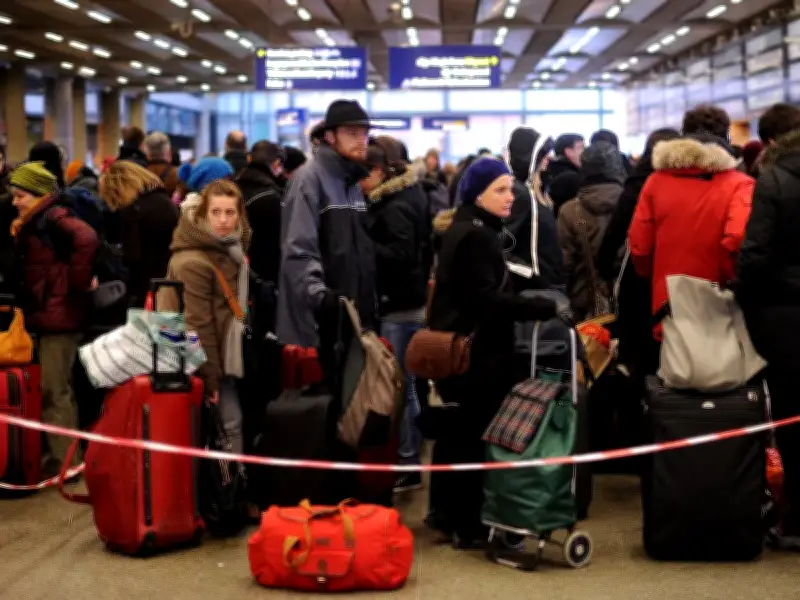
Leaked Department for Transport files, revealed by The i Paper, warn that Russian cyber operatives could bring Britain's train network to a halt by 2028 in a week-long attack costing the country £1.8bn. The documents suggest that a major hit on signals and communications would paralyse key routes, leaving millions of commuters stranded.
Economic impact of a week-long disruption
Research by KPMG predicts that a full seven days of disruption would cost the economy £1.8bn, including £281.3m in delay-related losses. The files indicate that UK railways are seen as vulnerable to foreign spies ready to cause travel chaos.
Fears are rising that Moscow is preparing to target UK transport as part of its "grey warfare" tactics across Europe. Defence chief Sir Richard Knighton highlighted the seriousness of the threat, saying: "We're talking about targeted assassinations, we're talking about sabotage, we're talking about cyber attacks. These are very real, real things."
Expert warnings on rail vulnerabilities
Professor Raj Rajarajan, director of the Institute for Cyber Security at City St George's, University of London, believes rogue states will "definitely try" to target trains. He told The i Paper: "I expect by 2028 there will be one." He added: "You can launch localised attacks," noting that an attack would "cause a lot of economic damage because you pretty much have to stop the system [to fix it]."
Dan Bird, former Ministry of Defence chief technology officer and now field CTO at Horizon3, said: "Railways depend on communications to work safely. Break those communications, and you break the railway. All digital communication systems are susceptible to some degree to error, interference or failure." He warned the systems were not designed "to withstand a determined [cyber] attacker," cautioning: "For those actors that seek widespread harm, rail is an attractive target."
Recent incidents and calls for action
The warning follows a wave of bogus bomb scares that grounded flights across Europe, as well as cyber attacks targeting supermarket fridges and blood bank freezers. Dr Marius Muench, from the University of Birmingham, said online saboteurs could interfere with trains remotely or physically break into systems to send fake signal orders and trigger emergency brakes.
Phil Tonkin, an expert at Dragos, said operators must address the threat before it escalates. He said: "Many of the measures needed to reduce these risks are already well understood, but their effectiveness depends on operators applying them consistently and ensuring they are regularly tested, rather than simply recording lessons after an incident."