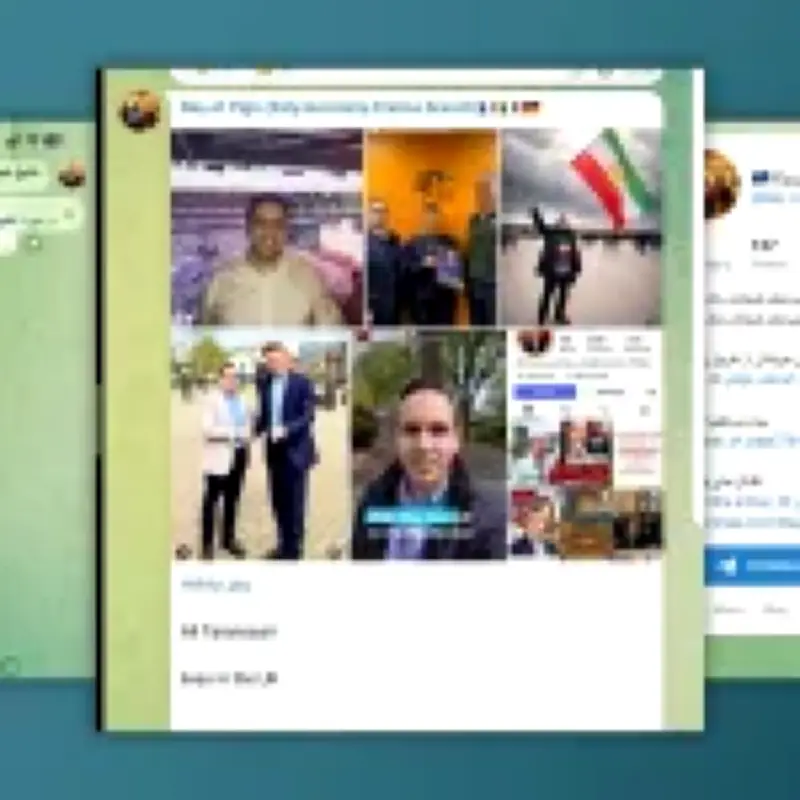
A pro-Iranian Telegram network known as 'Bay of Pigs' has resumed publishing personal details of British-Iranian activists, according to a report by Metro. The accounts, which had been quiet for months, are again targeting individuals described as 'traitors' and mocking criticism of their threatening activity.
Security sources and victims told Metro that the level of detail and professionalism in the operation suggests those behind the accounts could be taking direction from Tehran. The pages are also asking Iranians to submit personal details about other 'traitors' they know.
Activist's details exposed
Ali Taranssari was first doxxed in April but discovered last week that his personal phone number and date of birth had been published. The activist, who has reported the page to counter-terror police, said: 'It is a kill list. They want to target us and the regime finds anybody through the dark web and asks them to go and target whoever they like to.'
Mr Taranssari claimed: 'I have had the phone number for 20 years. It's for close friends and family. The other people that would have that number is the [Iranian] embassy in London. I can't say for a fact that nobody from 10 or 15 years ago may now be working with the regime and decided to give my number.' He has since received a string of messages 'wishing death' on him after the Telegram post.
In May, Metro first revealed that the 'Bay of Pigs' were targeting anti-regime activists. Their main page stopped functioning soon after, but following a hiatus, smaller regional accounts posting about 'traitors' have emerged. Taranssari's details were posted on two pages focusing on areas in Europe, which he speculates could show the admins are trying to get around the UK's designation on support for the IRGC.
Wider targeting across Europe
Metro has seen examples where the addresses and movements of overseas activists across Europe have been doxxed by the Telegram accounts. The admins have also exposed which universities and workplaces the activists attend.
One expat in Europe whose account was doxxed by the Bay of Pigs said the Iranian regime is using fear 'to silence its own people' and was 'attempting to export that same repression beyond Iran's borders'. They added: 'My family fled Iran to escape precisely this kind of persecution. The idea that I should now be intimidated into silence on British soil is extraordinary. We didn't escape repression only to allow it to follow us into the very democracy that gave us refuge.'
The Bay of Pigs admins have also posted Metro's article about them in their Telegram channel, showing they are aware of outside scrutiny of their actions.
Security experts weigh in
UK counter-terrorism specialist Roger Macmillan has been monitoring the Bay of Pigs Telegram accounts for months and said they have changed their method of operating. He explained: 'Some of the sites are behind walls that you've got to request to join. The accounts for different regions mean that they can cross-post. They are increasing their digital resilience by having multiple sites to target various individuals.'
While it is impossible to know who is behind a Telegram account due to the site's privacy protections, Macmillan said it was 'quite possible an activist group within Iran or Europe is running it'. He added: 'It is highly likely they are taking direction and guidance from Iran. This is another form of a transnational digital repression technique.'
The security expert explained that the personal details being released could be uncovered by 'very skilled' hackers. Macmillan continued: 'People reuse credentials on multiple sites. At some point, these details are going to be breached. This is what people are exploiting. It is a call to action. It puts the fear levels up. Activists become scared. They become nervous. They're not quite sure who's a friend and who isn't.'
Jonathan Hackett, a former American intelligence operator and expert in Iran's covert operations, told Metro: 'The Islamic Republic has long viewed Iranian dissidents and anti-regime Iranian voices outside Iran as a primary target for harassment, coercion, and even violence. The doxxing of people like Taranssari follows exactly the regime's playbook. This is not new.' He added: 'Regime-connected Telegram accounts are likely capitalizing on this fear to further intimidate Iranians abroad.'
Official responses
Iran has already faced criticism for its activity in Telegram channels in the UK. Metro revealed in April that the Iranian embassy in London attempted to recruit expats to become martyrs and 'sacrifice their lives for the Homeland'. The Iranian Ambassador was then summoned to the Foreign Office over the embassy's 'unacceptable and inflammatory' social media comments.
A Counter Terrorism Policing spokesperson said: 'Any allegations relating to possible terrorism or national security related offences are passed to officers within Counter Terrorism Policing, who will assess the details and take any further action as appropriate. More broadly, we do not comment on who may or may not be subject to any investigation.'
A Home Office spokesperson said: 'We take the threat posed by Iran incredibly seriously, and will continue to back the police with the tools and powers they need to keep the public safe. We have introduced a comprehensive set of additional measures aimed at countering threats posed by the Iranian regime, including sanctioning the IRGC in its entirety, as well as more than 550 Iranian individuals and entities. The IRGC has been designated as a security threat under landmark new powers, equipping the police and intelligence agencies with more powers to disrupt and prosecute those supporting them or working on their behalf.'
The Iranian Embassy in London denied having any role in the doxxing of expats and called allegations of that nature 'baseless'. The Embassy stressed that 'it carries out its diplomatic and consular functions in both diplomatic and consular fields in accordance with the Vienna Convention on Diplomatic Relations (1961) and relevant laws and regulations of the sending and receiving states.'