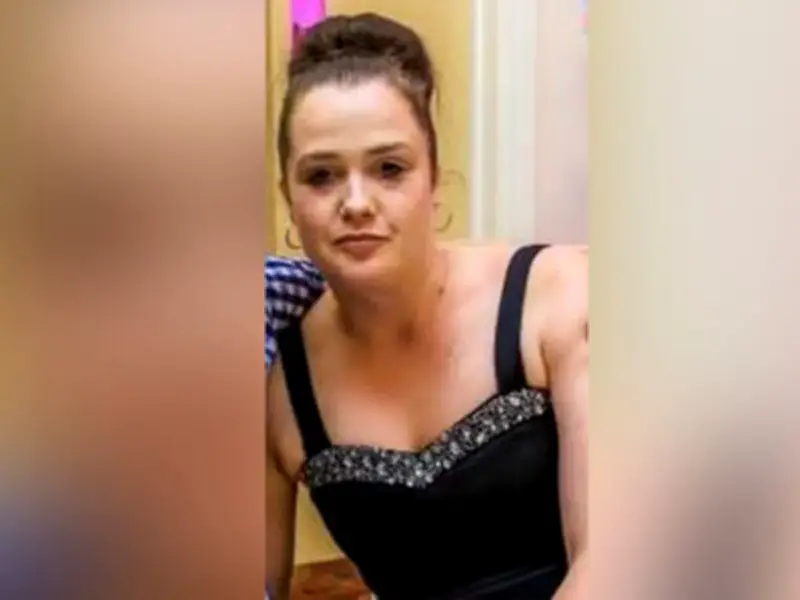
Michelle Pearson, a victim of the Walkden firebombing, suffered amid 'confusion' over which hospital she should be taken to after being discharged from a care home, an inquest has been told. Her family has raised concerns about the care she received following the arson attack.
Background of the attack
Zak Bolland and accomplice David Worrall threw petrol bombs into the family's home on Jackson Street in the early hours of December 11, 2017. The blaze claimed the lives of Ms Pearson's children Demi, 15; Brandon, eight; Lacie, seven, and Lia, three. Ms Pearson survived but suffered 68 per cent burns.
She spent 15 months on the specialist burns unit at Wythenshawe Hospital before being discharged to 3L Care, a nursing and residential care home in Atherton, in March 2019. Around 10 weeks later, Ms Pearson was taken by ambulance to Salford Royal Hospital, before being transferred back to Wythenshawe, where she died on August 25, 2019.
Transfer details and testimony
An inquest into the five deaths is ongoing at Bolton Coroners' Court. On Monday (November 9), the court heard evidence from two of those involved in Ms Pearson's transfer from 3L to Salford Royal on May 21, 2019. Staff at the home rang an ambulance and reported they no longer felt able to 'continue to meet her requirements'.
North West Ambulance Service (NWAS) paramedic Lee Hardman, the leading clinician during the transfer, said he found her 'in quite a bad mental and physical state' when he arrived at the home on Bee Fold Lane at 12.49pm. He said she was 'very upset' and told him she was 'suicidal'. The decision to take her to Salford Royal had already been made before his arrival, confirmed by an advanced paramedic amid 'confusion'.
Upon arrival at Salford, recorded at 3.44pm, Mr Hardman recalled emergency medicine consultant Dr Eimear Quinn initially 'refusing to accept' Ms Pearson and described her as 'quite hostile' and 'quite irate' during their conversation. He said she asked why they had 'by-passed' Bolton Hospital. Dr Quinn was 'very reluctant in treating', and there was a 'significant delay' in Ms Pearson receiving pain relief, Mr Hardman added. He believed the delay was 'half an hour to an hour at least', possibly 'potentially longer than an hour'.
"I think the whole journey had been uncomfortable for her; she was in so much pain... she was definitely suffering," Mr Hardman said. He said a staff member did try to insert a cannula, which was initially unsuccessful. He said he 'didn't understand why Wythenshawe wasn't chosen', but that he wasn't involved in the decision.
Family concerns and doctor's response
Ms Pearson's loved ones previously told the inquest, in a letter read to the court, that what happened that day was 'absolutely disgraceful', 'unprofessional', and showed a 'complete neglect of care'. Ms Pearson was aware of the 'conflict between hospitals', which left her 'crying and confused' as to 'why no one [would] treat her or look after her', sister Claire Pearson said in a statement. Claire said Ms Pearson was 'happy with her care at Salford', but the family didn't believe staff could 'meet her complex needs' and believed she should have been taken to Wythenshawe 'straight away'.
The family's barrister, Anna Morris KC, told the hearing that Claire Pearson and her brother Chris, both at the hospital with their sister, recalled Ms Pearson was 'off the ambulance quite quickly' but spent 'some time waiting on a corridor whilst clinicians went back and forth'. Senior coroner Timothy Brennand asked Mr Hardman if 'this kind of unseemly delay is something that is common?'. "I have not come across it before," he responded. "It was definitely a one-off in my experience."
Giving evidence, Dr Quinn said she initially believed the decision to take Ms Pearson to Salford must have been a 'misunderstanding' and described phoning Wythenshawe to speak to staff there herself. She said there were no burns specialists at Salford Royal at that time, adding: "I was very aware no one in the hospital was going to be able to manage those wounds to the extent Michelle needed." Dr Quinn said she was told by a member of staff at Wythenshawe 'they would not accept her directly'. She then spent 'in excess of 20 to 30 minutes' on hold before she 'eventually put the phone down', making 'several' further unsuccessful attempts.
Dr Quinn said Ms Pearson was in a 'lot of distress' and she didn't want her moved off the paramedics' trolley without adequate pain relief. She also wanted to avoid her being moved back, or waiting hours for another ambulance, if a decision was made for her to go to Wythenshawe. Records showed Ms Pearson was triaged at Salford Royal at 4.10pm, with observations taken at 4.24pm. Dr Quinn told the court she believed efforts to give pain relief began around this period.
She said she was 'perhaps distracted having phone calls and conversations with colleagues at Wythenshawe' but that there was 'no active withholding of any treatment'. "As a doctor, that's not something I would ever do," she said. "I regret it took as long as it did," she added, but insisted she believed at all times she was acting in Ms Pearson's 'best interests'. She said she always 'advocated' for her patients, including that they receive 'the best care by the right people'. Dr Quinn said she 'regretted' how Mr Hardman had 'perceived' their conversation, adding: "I think I was probably a little bit stressed that Michelle had ended up at what I believed was the wrong hospital to meet her needs." She said no one was 'able to offer a reason as to why Salford was chosen as the destination'.