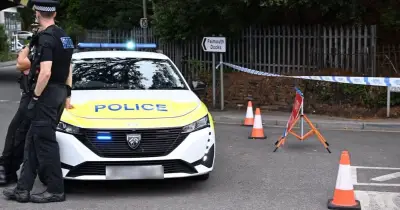
The trial of three convicted killers accused of murdering a prisoner at HMP Wakefield began this week. Double murderer Mark Fellows, nicknamed 'The Iceman', is on trial alongside David Taylor, 64, and Lee Newell, 57. They all deny murdering Kyle Bevan, 33, who was found dead in a cell at the high security West Yorkshire prison on November 5 last year. Bevan, jurors have heard, murdered his stepchild.
Prosecutors allege the trio, who all deny murder, worked as a 'team'. Bevan, Leeds Crown Court has heard, was followed into his cell before being stabbed 25 times.
Key Allegations
Taylor was allegedly heard by a nurse to shout, in the vicinity of Newell: "Nice working with you and The Iceman." Jurors heard Fellows was a contract killer who murdered two 'gangland kingpins', Paul Massey and John Kinsella, and that Taylor allegedly referred to Fellows as the 'Wakefield Dexter'.
Bevan had been convicted and sentenced for the murder of his stepchild in 2023, jurors were told. He was serving a life sentence with a minimum term of 28 years.
On Friday (June 12), jurors were told Fellows told officers at the beginning of his police interview: "I'm just going to sit here in silence." Jason Pitter KC, prosecuting, claimed the alleged murder of Bevan may have been committed amid a 'desire to be transferred'.
Day One: June 10
As the trial began on Wednesday (June 10), jurors were told convicted murderer Taylor was heard to shout 'nice working with you and The Iceman' after child killer Bevan was found stabbed to death in prison.
Bevan, the court heard, had been convicted and sentenced for the murder of his stepchild in 2023 and was serving a life sentence with a minimum term of 28 years. He was a 'vulnerable [at risk] prisoner' in the jail, where there had been 'tensions' between that category of prisoner and the other, 'main' prisoners, it was said.
Prosecutors alleged the three defendants worked as a 'team' and moved to Bevan's cell in the jail, where he was said to have been stabbed with an improvised weapon or weapons. Jason Pitter KC, prosecuting, claimed the alleged murder of Bevan may have been committed following a 'desire to be transferred'.
Mr Pitter said that when he was being transferred out of the prison, Taylor was allegedly heard by a nurse to shout, in the vicinity of Newell: "Nice working with you and The Iceman."
Mr Pitter told jurors: "'Iceman' being a nickname for Fellows. What was the work that they had done together with The Iceman? We say that was the killing of Bevan and them operating together to do so."
Jurors heard Taylor allegedly referred to Fellows as the 'Wakefield Dexter'. Opening the case for the prosecution, Mr Pitter showed jurors CCTV footage which he claimed portrayed the defendants entering Bevan's cell in the prison, one by one.
Mr Pitter said: "The prosecution say they followed him in there with real purpose. This case is about what that purpose was. He was stabbed 25 times around the neck and body with a sharp weapon."
"They then left him for dead, one after the other. Not before though, putting him to bed. Not our phrase, but a phrase we anticipate you will hear later in the evidence."
"Leaving him as if asleep. There it was that he on his bed, bled out, bled to death. His body then not discovered until the roll call in the prison the following morning."
Mr Pitter said there had been 'particular issues' in the prison at the time of the killing of Bevan. He described the jail as a 'high secure' prison housing some of the 'most high risk prisoners'.
He told jurors it houses criminals who have committed the 'most serious' and 'morally offensive' crimes, including murder, 'gangland and organised crime' and those who have committed offences against children.
"Those are people who have chosen not to follow the rules and norms of society," Mr Pitter said. "They have committed offences warranting prison sentences."
At the time the prison was made up of 77 per cent vulnerable prisoners and 23 per cent 'main prisoners', the jury heard. The main prisoners had become of a 'different calibre', Mr Pitter said, in that there were more prisoners involved in 'more serious offences such as gangland offences and violence including murder'.
Jurors heard that vulnerable prisoners and main prisoners would mix on the same wing at Wakefield prison, and that there was an 'open door policy' for cells during association times, in comparison to other cells which had a 'closed door policy'. He said there was 'tension' between vulnerable and main prisoners.
Mr Pitter said: "Main prisoners indicated that they didn't want to be housed in the same wing as vulnerable prisoners, particularly those who were sex offenders or those who had committed offences against children. There was also bullying of vulnerable prisoners." He said there was an 'element of fear' among some vulnerable prisoners.
Mr Pitter said that in the weeks before, another murder took place in the prison. He said a number of vulnerable prisoners had 'expressed concerns' about their safety and 'didn't want to be there. He said that some main prisoners also 'didn't want to be there either'.
Mr Pitter said Bevan was a vulnerable prisoner. He had been convicted and sentenced for the murder of his stepchild in 2023, jurors heard. He was serving a life sentence with a minimum term of 28 years, and was housed in A wing of the prison, on the fourth floor.
Mr Pitter said Bevan kept 'himself to himself' and often stayed in his own cell. Lee Newell was 'in prison for life for murder' and was also on A wing, on landing two in cell 4. He had expressed 'dissatisfaction' with being at HMP Wakefield and a desire to be moved. He had 'expressed a dislike of vulnerable prisoners', jurors heard.
Jurors heard Mark Fellows was a category A prisoner serving a life sentence for 'two offences of murder and a conspiracy to cause really serious harm'. He was also on A wing, on landing two, in cell 5.
Mr Pitter said: "You may hear of some issues he had and his health difficulties. Nothing though that would have stopped him interacting with his co-defendants and involving himself in the killing of Bevan. He had placed a formal application to be moved out of Wakefield, because of his dissatisfaction with the regime there, not long before the killing of Bevan."
Fellows had spent time in an adjacent cell to Newell when they were at another prison. They were known to socialise and interact with each other, and also with Taylor, the third defendant when he joined them at Wakefield.
Taylor was also on A wing, on landing two in cell 25. Mr Pitter said: "He was also a category A prisoner and had recently been transferred to Wakefield Prison in relation to offences of murder of an associate which he had plead guilty to and attempted murder of a police officer whilst he was in custody, which he was subsequently convicted of."
Mr Pitter added: "The three of them together would sometimes interact but rarely on any landing other than two, which is where their cells were. None of them would readily associate with vulnerable prisoners, and had no obvious connections or dealings with Bevan."
The prosecutor said that on November 4, there was 'increased interaction' between the three defendants. Mr Pitter said: "It is following this that all three defendants move together. First to Taylor's cell before making their way a few minutes later, up to landing four. The prosecution say that you will be able to conclude in due course that was the three of them were readying themselves for action."
"That would include potentially arming themselves at some point. We will come back to that because whilst weapons were more prevalent within the prison, Taylor was someone who had ready access to makeshift weapons, and was to make boasts to that effect." He claimed that the defendants moved to Bevan's cell as a 'team'.
Mr Pitter said: "As soon Bevan left and made his way to his own cell the three defendants followed him in, only seconds behind. As we say, with real purpose."
Mr Pitter continued: "That was the last that Bevan was to be seen alive. As we began, it was four minutes and 39 seconds later that those three left Bevan's cell together, as if nothing had happened. Bevan did not. In short, whilst the three of them were in that cell with him, he was violently killed."
"That involved him being stabbed and injured over 30 times with at least one, and probably more than one, weapon. They had left him in such a way that he appeared to be asleep in his bed." The prosecutor claimed the three defendants left 'as if nothing had happened'.
He added: "Considering what had happened in that cell, you may conclude that there was something of a satisfied, job done mood amongst the three men which you will be able to discern from their actions in the few minutes after the fatal attack as they made their way back to their usual place on landing two."
Jurors heard that an item of Fellows' clothing had become stained with blood and was disposed of. Blood was on Newell's hands, jurors were told. Mr Pitter said that Bevan was left 'face down partially covered on his mattress' and 'left deliberately to look as if he was asleep'.
The prison was placed in 'lockdown' after he was discovered during roll call on the morning of November 5. It was found that Bevan had been dead for 'some time'.
A pathologist found there had been 25 stab wounds and 'multiple other puncture wounds'. Mr Pitter said: "There were no real defensive injuries. Indicative of him not putting up any, or any real resistance to that knife attack. Unsurprising, as he was outnumbered."
He says that an investigation was launched. Mr Pitter said: "On the search of Fellows' cell, items were already boxed and tidied away. Not just in anticipation of the investigation, but in anticipation of being transferred out from Wakefield or that wing as each of them inevitably were. That may be of significance in considering what was behind their actions."
He added: "Bevan's blood was discovered on items worn by each of the defendants which assists to place each of them in the cell when he was bleeding, if it was not obvious already. In particular, the jogging bottoms that had been discarded by Fellows were also found to have Bevan's blood on. Therefore, it can be safely concluded that it was deposited there during the time when Bevan was attacked and killed."
Mr Pitter said that an improvised weapon, a 'folded piece of metal from the back of a television fashioned into a point', was discovered and found to have Bevan's blood on it.
He added: "Further weapons were recovered secreted in a container of chilli sauce from Taylor's cell. Those weapons could not be matched to the injuries but could not be scientifically excluded from having been used in the attack."
"At the very least it demonstrates the easy access of both of those defendants to weapons and is consistent with Taylor having an item in his waist band on entry into Bevan's cell."
The prosecutor claimed that Taylor made a number of remarks after the alleged killing. He was said to have told a police officer following his arrest, after being shown CCTV, that it 'could have been anyone'.
Taylor allegedly told the same officer that he could 'make a shiv [an improvised weapon] out of all sorts'. Mr Pitter added: "On his transfer out of the prison, he was heard to shout by a nurse in the vicinity of Newell 'nice working with you and The Iceman'.
Mr Pitter claimed that Taylor also referred to Fellows as the 'Wakefield Dexter'. "We will wait to see the significance of that name," the prosecutor said. He also said he would be 'not guilty all the way', jurors heard.
Prosecutors also claimed that Taylor made a 'sinister but telling' remark to a prison officer after being transferred to HMP Manchester. Mr Pitter said: "He [Taylor] complained that mains and vulnerable prisoners should not mix as they [the VPs] will get 'done in'. It may be that in conjunction with a desire to be transferred from that wing is what this was about."
"Whilst the prosecution do not have to and do not try to prove a motive, that would be a logical reason given their behaviour, their actions before and after and the words of Taylor. In essence them operating together for their own satisfaction and benefit in that regard."
The prosecutor added: "He went on to say that he witnessed an incident where a prisoner was 'put to bed' and he had watched them from across the landing and that he had looked in afterwards and the person looked to be asleep."
"He went on to say that he had congratulated the assailants. We agree with that and from their behaviour after, that included self-congratulation."
Concluding his opening address, Mr Pitter told the jury: "We will wait to see what it is said about precisely what occurred in that cell and why it is that the defendants are not guilty. It may be, we understand, suggested that there may have been some lawful reason and that Bevan was somehow the aggressor."
"That has to be considered in the context of their actions before and after and the extent of his fatal injuries. The prosecution say there is no evidence of that. There is evidence, though, clear evidence of three of them following Bevan's to his cell. A cell they had no business at."
"Evidence of the three of them going in there together. Evidence of the three of them leaving together. Evidence that three of them had left him 'as if asleep'."
Day Two: June 11, Morning Evidence
Jurors were told Fellows was a 'contract killer' who murdered 'gangland kingpins' Paul Massey and John Kinsella. It came as prosecutors called their first live witness.
At the time of the alleged murder, Stephen Hoe was a custodial manager at HMP Wakefield and was in charge of A wing, where Bevan and the three defendants were housed.
Under questioning from Mr Pitter, he agreed that the prison is a 'high secure' jail which can house 'some of the most high risk prisoners'. He said this includes category A prisoners and 'high risk' category A prisoners.
'High risk' category A prisoners could be 'somebody that would either be high profile', or have the potential to escape, Mr Hoe said.
He said categories run from category A to category D, and that these are decided due to the offence the prisoner has committed, the 'level of risk' they pose and the amount of time they have served in their sentence.
Mr Hoe agreed that vulnerable prisoners are inmates who 'face a risk from other prisoners', and that these can include those who have committed offences against children, and sex offenders.
He said that vulnerable prisoners and the rest of the prisoners, known as the 'mains', would be housed separately due to the potential risk presented to vulnerable prisoners.
But Mr Hoe agrees in Wakefield there was a 'mixed cohort'. There were 'several hundred' prisoners in Wakefield prison at the time, and around 77 per cent were vulnerable prisoners.
Mr Hoe agreed that he found that the profile of mains prisoners had changed, and they became a 'different calibre of prisoner' including 'gangland murderers and the like'.
He agreed that it caused a 'particular dynamic' within the jail. He said it became 'segregated' and the 'mains would not mix with the VPs'.
There were 'tensions' and the 'mains didn't like the VPs', he said. He told jurors that vulnerable prisoners generally would not apply for roles within the prison, such as cleaning jobs.
Asked why, Mr Hoe said: "The reason probably in my opinion is the fact that most of the work was undertook by mains prisoners, they didn't want to work with the mains prisoners for fear."
Mr Hoe said that prison officers would unlock cell doors at association times and when prisoners were collecting meals. This would mean prisoners could enter other cells.
This was in contrast to other prisons who had a 'closed door policy', which Mr Hoe said was when cell doors are opened and then locked again during those times.
Mr Hoe said there are four floors on A wing, with the landings known by their floor number, such as the twos, threes and fours.
Mr Hoe said he knew that Newell was a category A prisoner serving a whole life tariff, meaning he would be imprisoned for the rest of his life. Newell was in prison for the offence of murder, jurors heard.
He worked in the servery area of the prison where food was handed out. Mr Hoe said that Newell spoke to vulnerable prisoners on a 'needs must' basis, and agreed he thought the defendant was a prisoner who was 'happy spending time by himself.
Jurors heard that Newell had previously been 'attacked by another prisoner' and had lost an eye. Mr Hoe said that Fellows was a 'high risk' category A prisoner. He says he believes this was due to the offences he had committed.
He said he understood Fellows was a 'member of an organised crime gang'. Asked if he was known as 'The Iceman', Mr Hoe said: "Only in media outlets."
He said he believed he was known by that name because Fellows had 'killed two gangland members'. He agreed he believed Fellows was 'in effect a contract killer'.
Mr Hoe told the jury Fellows got on with staff and a 'select few prisoners' but he wouldn't associate with 'sex offenders or any vulnerable prisoner'. He said he was aware that Fellows had wanted to transfer prisons.
Mr Hoe said Taylor had not been in Wakefield prison long and that he 'didn't know much about him at the time'. He agreed that there had been 'another killing' in the prison. Ian Watkins died at the jail on October 11 last year, the jury was told.
'More and more' mains prisoners were 'expressing negative views' about the prison and vulnerable prisoners had fears for their safety, jurors heard. Mr Hoe told the court that he didn't know Bevan until the day of his death.
He said the prison was put into lockdown for about three days following the discovery of his body as searches took place. Mr Hoe said that at one point he heard a 'loud clang' on the floor, and discovered a piece of metal appeared to have been thrown from inside the prison.
Jurors heard it was later discovered to contain Bevan's blood, and the item was seized. Mr Hoe said it would not be unusual for items to be thrown.
Mr Hoe was then questioned by Joe Stone KC on behalf of Newell. Mr Stone said Newell was serving a whole life order, which means he will never be released from prison. He said Newell lost vision in his left eye after being attacked by prisoner Gary Vinter in 2014, who was also on a whole life order.
Mr Hoe said Wakefield prison's decision to mix mains and vulnerable prisoners was 'extremely unusual'. Asked if he agreed if this was an 'odd decision', Mr Hoe said: "I'm not party to that decision making process."
He said he was aware the Prison Inspectorate 'heavily criticised' Wakefield prison for the 'way the regime was run' in a report five months prior to Bevan's death. Nick Johnson KC, for Fellows, then questioned Mr Hoe.
Mr Hoe said he agreed that the killing of Watkins had 'significant effects' within the prison. Watkins was a prisoner who had committed offences against children, jurors heard.
Following that incident, vulnerable prisoners were 'particularly worried about their safety', Mr Hoe agreed. Mr Hoe said he agreed that he knew Fellows had 'murdered two gangland kingpins, your phrase, in the North West area'.
"Were you aware of their names?," Mr Johnson asked. "Paul Massey and John Kinsella," Mr Johnson continued.
"No, I remember Paul Massey but not John Kinsella," Mr Hoe said. "Paul Massey, a Salford gangster?," Mr Johnson asked.
"Yeah," replied Mr Hoe. Mr Hoe agreed that Fellows was serving a whole life order as a result. Jurors hear that Fellows worked in the servery in the prison. He wouldn't serve meals but 'did the menus', the court hears.
Mr Hoe agreed that Fellows had dealings with mains and vulnerable prisoners in his jobs. Fellows had 'trusted' roles within the prison including cleaning staff areas and Mr Hoe's office, the jury heard.
Jurors were told that Fellows was 'vocal in his thoughts' about vulnerable prisoners but had contact with them as part of his jobs. Mr Hoe agreed that Fellows had issues with 'germs and cleanliness' and believed he had 'very severe OCD'.
The court was told that Fellows has a colostomy bag fitted and was 'concerned about potential infection'. Mr Hoe said Fellows and Newell would 'sometimes talk' but 'didn't seem particularly to be friends'.
Day Two: June 11, Afternoon Evidence
A prison officer told the trial of the moment he found Bevan dead. Justin Barrett said his job that morning was to unlock the cells for prisoners who needed to go to their jobs. He said he went to Bevan's cell.
The witness said: "I was informed by one of my colleagues that there was something wrong with him [Bevan]. I didn't know exactly what it was. He asked me to go and do a wellbeing check on him."
"He was given intel by another prisoner that there was something wrong." Mr Barrett said that upon looking into the cell: "It looked like he was asleep. He was lying on his stomach with his face facing the side."
"I couldn't quite see his face. I could just see his head tilted. He was clothed. The sheet was covering half of his body, from his waste down to his legs."
He said there did not appear to be anything 'unusual'. Mr Barrett then said he opened his cell and shouted his name, receiving no response.
He said: "First I grabbed his foot to give it a shake and he still didn't respond. I was calling his name at the same time."
As he got closer Mr Barrett said he could see his face. He said: "It wasn't a good colour, it was blueish, white blueish. It definitely wasn't a normal colour."
Mr Barrett said as he got closer he could see 'blood around his neck'. He then said he saw dried blood on his top and on the bed.
The witness said: "His body was very stiff as I lifted him. From what I could see he appeared to be dead." Mr Barrett said he had known Bevan for a couple of years prior.
He described Bevan as being 'very reserved' and someone who 'kept himself to himself'. "He didn't cause many issues with the officers, he just did his own thing," Mr Barrett said.
Earlier in the trial, jurors were shown a CCTV clip which was said to show the three defendants following Bevan into his cell the previous evening. Bevan was only discovered the following morning.
Day Three: June 12
On the third day of the trial on Friday (June 12) Mr Pitter read from a number of witness statements, starting with Richard Green who worked as a prison officer at HMP Wakefield.
He said on the night of November 5, whilst doing his regular checks, he spoke with Fellows who was in his cell. He said Fellows 'thanked him for being quiet'. "I found it peculiar that he spoke to me as he normally speaks to me in the day," he said.
He said as Fellows was a category A prisoner, he is checked hourly. At midnight he said he checked on Fellows, and he was lay in his bed either 'looking at his TV or looking at the ceiling'.
Mr Green said he checked on Bevan and said he saw him lay on his front. He said Bevan was category B and checks were on roll call. He said Taylor and Newell were checked three or five times a night.
He said Newell was on the CSC (close supervision) unit because he was 'unsafe to himself and others'. "I know he does not like sex offenders or offenders against children, neither does Fellows," he said.
"I would say they [Newell and Fellows] are sociable and friendly together."
A statement from another prison officer on duty during the 'lock-up' said they had checked on Bevan and he appeared to be asleep with 'no sign of a disturbance'.
Another prison officer, who was working the morning Bevan's body was found, said that whilst in the process of dispensing medication to other prisoners, one prisoner said to her: "I heard Bevan might be dead."
Giving evidence, prison nurse Hannah McCrump said she responded to the 'code blue alarm' after Bevan's body was found. She said he was 'stiff, cold and a blue-greyish colour'.
She said she knew that the three defendants had been separated from others after the incident and she was aware Taylor was moved to a different prison after.
Ms McCrump said she had made checks on Taylor before he was to be transferred. "He was shouting to other people in the unit," she said.
Asked by Mr Pitter who he was shouting to, she said: "Lee Newell and Mark Fellows." Asked what he said, she continued: "'Nice working with you and The Iceman'."
She said he also referred to one of them as the the 'Wakefield Dexter'. "He said 'not guilty all the way'," she added. "He was shouting. He seemed cocky."
PC Nadeem Kazi, who works on a response team, also gave evidence regarding events on November 6 when he was on duty at Elland Road police station in Leeds.
"He [Taylor] made reference to something along the lines of 'my legal team will make minced meat of this b******t'," he said. "I can't remember anything else, except he said something along the lines of he can make a shiv out of anything."
Referring to his statement, he said Taylor said he had watched CCTV of the incident showing him 'walking into a cell' and leaving after five minutes with 'nothing in his hands'. He said Taylor then said of the body found: "It could have been anyone."
Jurors were read a number of facts which have been agreed between the prosecution and defence. It was said that Fellows, Newell and Taylor were separately arrested on suspicion of murder.
Fellows declined legal advice and gave no reason for this. Taylor declined a solicitor and Newell made no comment during his police interview, it was said.
The court heard Fellows told officers at the beginning of the interview: "I'm just going to sit here in silence like you [inaudible]." He made no further comment and sat in silence. Taylor made no comment in his police interview, the court heard.
Fellows (15/9/80) of no fixed address; Taylor (26/4/62) of no fixed address; and Newell (5/10/68) of no fixed address all deny murder.