
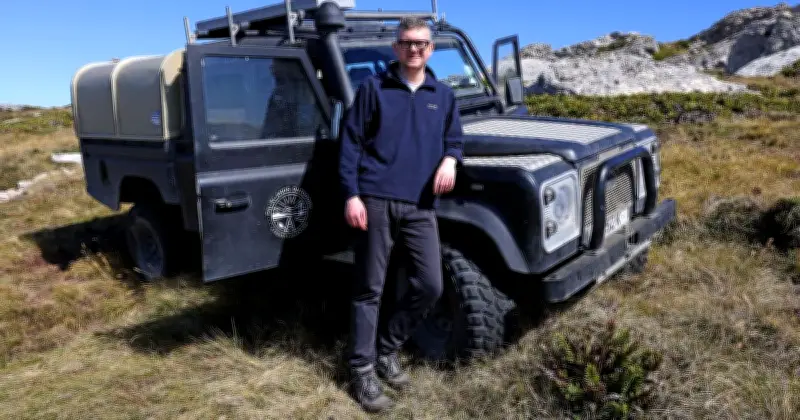
Express reporter Adam Toms visited the Falkland Islands earlier this year and was shown around key sites of the 1982 conflict by Dan Biggs, who runs Falklands Outdoors. The thing that blew my mind, he writes, was that remnants of the war are still there for people to see today.
During the tour, Dan pointed out rusted feeding stations at Mount Tumbledown used by Argentine soldiers, many of whom were 18-year-old conscripts. He also showed the remnants of an Argentine CH-47C Chinook and a Puma destroyed on Mount Kent.
A British outpost in the South Atlantic
The Falkland Islands feel unmistakably British, with Union Flags flying proudly and residents happy to invite visitors into their houses for a cup of tea. A bust of Margaret Thatcher stands next to Stanley's war memorial, looking out into the bay. "Rejoice!" the then-Prime Minister commanded after news arrived that the Argentines had been ousted from the islands in June 1982.
Islanders still treasure their freedom today, Toms said. To get the lay of the land, he embarked on the battlefield tour upon arrival in the Falklands.
Landscape and key battle sites
The landscape is rather desolate, with bursts of red and purple among long green, yellow grass and stones. Rocks burst through the surface as if they were the spines of massive creatures buried beneath. Dan pointed out edible flora, including wild strawberries and scurvy grass.
The tour included breathtaking views from the top of Mount Tumbledown, reached while dodging bomb craters during a bumpy off-road drive. From one spot, Toms could see a line of important places: Mount Longdon, Two Sisters, Mount William and Goat Ridge. He noted that the capital, Stanley, could be observed from Tumbledown, making it a strategically important location.
Reminders of the conflict
Daniel Filmus, former Argentine secretary for affairs concerning the Falklands, told Toms that the landscape more closely resembled that of his country. Toms suggested it might resemble the Scottish Highlands and islands such as Shetland, Orkney and the Outer Hebrides.
The debris left behind serves as a reminder that, although Argentina's President Javier Milei insists he wants to acquire the islands diplomatically, the Falklands are and would be defended if the need arose, Toms wrote.
A changing visitor
Tony Smith, 64, of Discovery Falklands, told Toms that "a lot" of Argentines have been visiting "with a political agenda" and "looking for any opportunity to display Argentine flags". But he added that "more recently there seems to have been an increase in younger Argentines visiting more independently, and some of these are more open-minded and do not seem so obsessed with the Argentine claim on the Falklands".
This was before Argentina's football players held up a banner declaring that the islands belonged to their country after their victory over England in the World Cup, and it was reported that the United States could review its support of British sovereignty over them. The debate over the Falklands, it seems, shows no signs of stopping, even more than 40 years after they were liberated.




