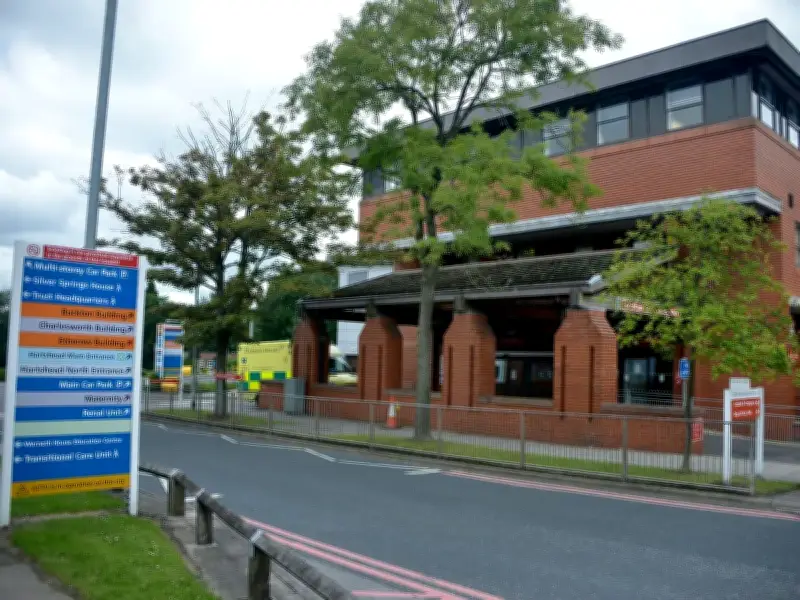
A coroner has warned that more patients could be at risk of dying at Tameside Hospital after an 87-year-old woman was sent home from the emergency department, despite abnormal blood results.
Judith Marsland died from sepsis days after she visited Tameside General Hospital with abdominal pain and bleeding. A Prevention of Future Deaths report has raised concerns about the care the 87-year-old received and warned that action is needed to prevent further deaths.
A spokesperson from Tameside and Glossop Integrated Care, which runs Tameside Hospital, said the Trust is "truly sorry" that the patient did not receive an adequate standard of care. They said the hospital is "continuing to implement actions" to reduce the risk of similar incidents in future.

What happened during the hospital visit
Mrs Marsland, from Tameside, died in hospital on November 14, 2025, after developing sepsis from a urinary tract infection a coroner said was likely already present when she attended A&E eight days earlier.
According to a coroner's report, sepsis was considered by medics while Mrs Marsland was in the emergency department, but she was not managed on a sepsis pathway.
She was transferred to the gynaecology hub for further assessment, where blood tests showed acidosis - where too much acid builds up - and elevated inflammatory markers. However, the results were not reviewed and acted on by the gynaecology clinical team, the coroner found.
Discharge and deterioration
Mrs Marsland was discharged from hospital without antibiotics, the report states. Five days later, Mrs Marsland returned to A&E with increased pain.
She was found to be in septic shock with multi-organ failure and was started on antibiotics. Her condition deteriorated and she died in hospital two days later.
An inquest into Mrs Marsland's death was held on June 9, 2026. Delivering a narrative conclusion, assistant Coroner Anna Morris found that the patient died from a "complication of sepsis, which developed from a urinary tract infection which had likely been present since at least the 6th November 2025, and having been discharged from the hospital on the 7th November during which time an infection was not identified or treated."
Coroner's concerns and Trust response
Her medical cause of death was recorded as urosepsis and congestive cardiac failure, with ischaemic heart disease and severe coronary arterial atherosclerosis also recorded. She also had chronic kidney disease, hypertension and chronic obstructive pulmonary disease, the inquest heard.
During the inquest, the coroner heard evidence from the lead investigator of a patient safety incident investigation carried out by the Trust. The investigation concluded that all of Mrs Marsland's blood results should have been reviewed and acted upon by the clinical teams who saw her. It also concluded that she should not have been discharged home.
The coroner also raised concern over whether changes identified following the investigation had actually been put in place. Ms Morris said she heard evidence that key aspects of the patient safety investigation's action plan, intended to reduce the risk of future deaths, had not yet been implemented by the Trust.
In particular, the coroner highlighted the need for a "structured cross-team handover" between emergency and specialist teams, according to the report.
Summarising the concerns identified in the inquest, the coroner said: "Mrs. Marland's deterioration and death followed an error in not escalating the abnormal blood results that were available for clinical review during her admission to Tameside Hospital on 7th November 2025. Key aspects of the PSII action plan that are intended to mitigate the risk of future deaths are yet to be implemented by the Trust."
The Prevention of Future Deaths report was sent to Tameside and Glossop Integrated Care NHS Foundation Trust on June 10. The Trust was required to respond to the coroner by August 5, but this report has not yet been made public.

A Tameside and Glossop Integrated Care NHS Foundation Trust spokesperson said: "We offer our sincere condolences to Mrs Marsland's family. We are truly sorry that Mrs Marsland did not receive the standard of care she should have. We acknowledge the concerns raised by the coroner and the findings of our own investigation, which identified failings in the review and escalation of abnormal blood results and areas where further improvements to processes were required. We are continuing to implement actions to ensure patients are appropriately escalated, strengthen patient safety and reduce the risk of similar incidents occurring in the future."