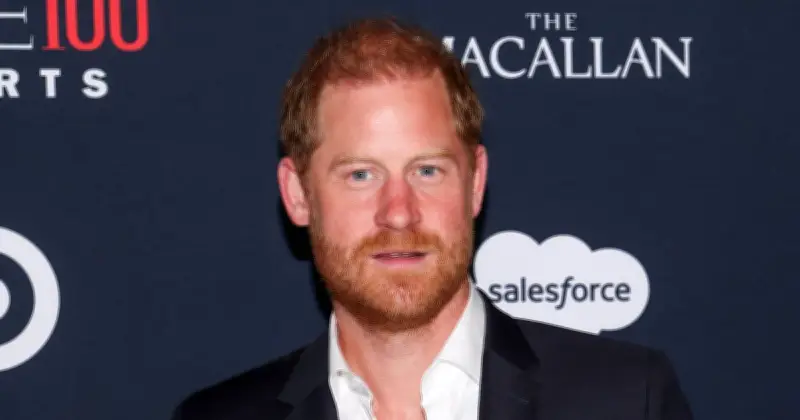
Prince Harry lost a landmark court case against the publisher of The Daily Mail and The Mail on Sunday earlier this month, a defeat estimated to have cost £50 million. The Duke of Sussex denounced the ruling as a 'complete and obvious whitewash', sparking concern that he had criticised the judiciary, which acts in the name of his father, the King.
Harry and six other claimants suffered a comprehensive defeat, as their case was rejected in its entirety. They had claimed that journalists had used illegal means to acquire information.
Judge's Dismissal Called 'Comprehensive'
Private Eye journalist Adam Macqueen explained the significance of the ruling in the magazine's Page 94 podcast. He said: 'I have plowed through all 436 pages of Mr Justice Nicklin's judgment, which came out last week, sort of desperately combing for a single crumb in there that might have given some comfort to Prince Harry and his fellow litigants. There really isn't one.'
'It is the most comprehensive dismissal of all of their claims I've ever seen, I think, in a legal judgment.'
'You've Taken the P***'
Colleague Helen Lewis said the Judge 'was so unimpressed with them that he could then essentially say, "You should never have brought this [case]"... You've taken the p***, essentially, and I'm going to make you pay a lot of money to the Daily Mail beyond what your insurance will cover.'
Adam agreed, saying: ''You've taken the p***' essentially is in slightly more legalese what he said.'
Cost Hearing and Consequences
He added that there is a cost hearing to come, which the Judge described as the 'consequentials hearing'. Adam suggested that this sounded as if he were saying 'there will be consequences'.
The judgment summary stated: 'The Court accepted that, given the nature and age of the allegations, the Claimants' cases often depended on inference. But suspicion, even where understandable, was not enough. The Claimants had to prove that the information complained of had been obtained unlawfully.'
'The Court rejected the argument that, simply because information was private, and because Associated could not positively explain how it had been sourced, the relevant article must have been unlawfully sourced.'
It added that 'the Claimants failed to prove their pleaded allegations of UIG'.
The document also read: 'The Court rejected the attempt to prove the claims by broad inference where there remained a legitimate and realistic possible lawful source pathway, or where the article-specific evidence did not prove that the relevant information must have been obtained unlawfully.'
As regards next steps, the court said a hearing will take place on July 30-29 'to hear argument on any points of dispute as to the consequential orders to be made following the Judgment'.