A nurse has told the Sandie Peggie employment tribunal she felt “ambushed” by fellow union members who branded her a 'bigot' and 'racist.' The slurs were aimed at her during a session to discuss the Supreme Court’s landmark gender ruling on the legal definition of sex.
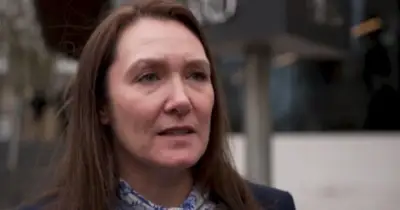
Jennifer Willmott, a member of the Royal College of Nursing (RCN), is bringing her own, separate legal case against the union, and was giving evidence on the second day of Ms Peggie’s case against the RCN on Thursday.
Online session after Supreme Court ruling
The nurse took part in an online member engagement session held by the union in June 2025 after the UK Supreme Court unanimously determined that the terms “woman” and “sex” in the 2010 Equality Act refer only to biological women. The session was open for RCN members to voluntarily attend to discuss the implications of the ruling for nurses.
Ms Willmott said session attendees were invited to speak about their feelings on the ruling. She told the session she was the founder and director of Scottish Lesbians, which had been involved in drafting one of the three interventions submitted to the Supreme Court case.
“I said I actually felt relieved by (the ruling),” Ms Willmott told the tribunal. “I said it gave a very clear definition of what a lesbian actually is – you can’t opt into it. I also said that I appreciate that (the ruling) might have some difficulties for nurses. All I meant was that many NHS trusts have policies that allow people to self-identify into whatever ward or unit they want to.”
Allegations of name-calling in chat
She said she felt it was frontline nurses that would be impacted by the decision because they would have to tell people they needed to be admitted to units and wards based on biological sex. Ms Willmott said a transgender union member spoke after her contribution and “fundamentally disagreed” with her views. In the chat, she said other attendees were upset she had been allowed to speak.
Ms Willmott said she was called a “bigot” in the chat, and she claimed one of the other RCN members wrote: “Are we going to invite Tommy Robinson (a far-right political activist) to speak next?” Ms Willmott claimed the same union member later compared her to a “racist” and a “bigot”, and described her as an “exclusionary type of person”.
She told the tribunal the session facilitator said they “recognised the potential for harm” in what Ms Willmott had said, which is why the chat function had been closed. “What I took from that was that they had closed chat because of my words, which I should say had been extremely reasonable,” Ms Willmott said.
Further evidence and legal claims
“I didn’t know what to expect (when signing up… but) I did expect that when they described it as a ‘safe space’ where we could discuss things, then that would be the case – that differing viewpoints would be accommodated,” she told the tribunal. “I expected a way would be found for all voices to be heard. I certainly didn’t expect it to descend into name calling. I felt I’d been ambushed. I felt I’d had quite the kicking.”
The tribunal also heard evidence from Pauline Fox, a retired RCN member who attended a different but similar union session following the Supreme Court ruling. Ms Fox said the session she attended was “essentially being used as an opportunity for people identifying as trans or trans sympathisers to ventilate (their) upset” about the ruling.
She said a transgender RCN member used words like “horrific” to describe the ruling and Ms Fox said union facilitators gave “kind of an affirmation it was horrific what was happening”. Ms Fox told the tribunal: “I didn’t recognise what was going on in front of me. I felt alienated by the whole performance.”
As a result of the sessions, Ms Willmott and Ms Fox are bringing their own legal claims against the RCN. The claims are being denied and defended by the union. RCN lawyer David Hay KC raised a legal question about whether the union can be held liable for the actions of its members rather than its staff. The tribunal, taking place before employment judge Melanie Sangster in Dundee, continues.