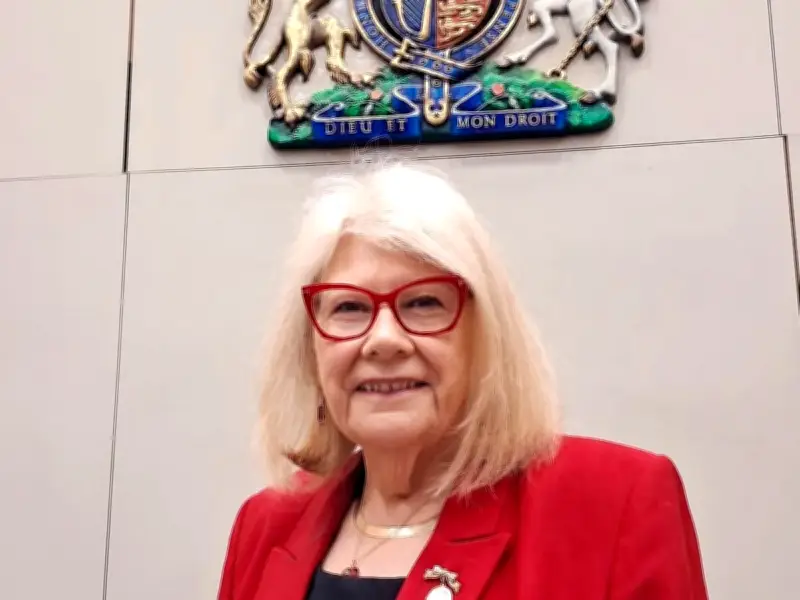
Dorothy Winter, the North East's longest serving magistrate, is to retire in February at the age of 75 after 42 years of voluntary service. The daughter of a County Durham miner, she was encouraged to become a magistrate by a HM Land Registry colleague in 1984 and is now urging the next wave of magistrates in the region to come forward.
A career inspired by community values
Coming from a traditional background, with a father who worked as an overman in the local pit and a mother who was a housewife, Dorothy felt strongly that the magistracy should include people from all walks of life. She was 32 when she was appointed and had the impression that being a magistrate was for older people, and not for someone like her.
She said she was under the misapprehension that she would need legal qualifications, but explained that legal advisers in court advise on the law. "I wanted to give something back to the community, and still do," she said. "I thought, and still think, that if I had to go to court, I would want to be dealt with by people who understand my circumstances and know and understand the community where I live, work and socialise."
Why she stayed so long
Dorothy said she has stayed so long because she still strongly believes in the judicial system with local justice for local people. "I find the work I do interesting, challenging and like working as a member of a team," she said. Magistrates identify the dates when they are available to attend court, for a minimum of 26 half-day sittings a year, so at least 13 days in total. Usually three magistrates sit together, making decisions which they know impact on the lives of everyone who comes before them.
Reflecting on retirement, she said it feels strange to know that, come February, she will no longer be doing this valuable work. She will also retire from her employment tribunal work, where she helps to settle legal disputes between workers and employers and serves as a lay assessor. These roles have a compulsory retirement age of 75. "I truly don't know where the last 42 years have gone," she said, adding that she plans to do more travelling, meet family and friends more, and probably have some late mornings relaxing.
Memorable cases and changing times
Dorothy recalled a few particular moments, including when there was a big focus by the police on people who had not paid their fines, noting that a lot of money was recouped but it was tough. She also remembered her first case in the Family Court, when she had to award custody to one particular parent. "It was the right decision but is always hard," she said.
In the past, magistrates were also responsible for alcohol licensing of premises, which is now done by local authorities. At one stage, every year, they had to do what was called a Brewster session, when licensees had to renew their licence. A bonus of being on the Licensing Panel was that they went round pubs and clubs to undertake an inspection, but they were told that they were not allowed to accept even a cup of coffee as this could be considered a bribe.
On the qualities a magistrate needs, Dorothy said it is important to have trust and confidence in yourself. No legal qualifications are required and full training and support are provided. People can become a magistrate from the age of 18, and a mentoring scheme supports all newly-appointed magistrates, providing someone who will advise, assist and befriend them through the early stages. "Magistrates come from all walks of life. I am from an ordinary person and if I can do this, then anyone can," she said.
Asked whether the role has been rewarding, Dorothy said some people said she could say goodbye to promotion with her career when she was appointed, but this was far from the case. She acquired skills as a magistrate which she was able to transfer back into her work and wider life, and it enabled her to have the knowledge, skills and understanding to move into different areas of work. "It will help release your full potential. Anything is possible," she said.
Reflecting on changes over 42 years, Dorothy said there are now sentencing guidelines to ensure consistency throughout the country, meaning that if the same offence was in court in either Newton Aycliffe or Nottingham, the same considerations would apply. Once a provisional sentence is arrived at, the court can now also take into account factors that may make the offence more serious and factors which may reduce seriousness or reflect personal mitigation. She added that they are now much better at explaining all the different elements that have led to their conclusion, including any facts in dispute and the evidence they have based their decision on. "This means that when the decision is announced, while everyone in the court may not agree, at least we've shared all the rationale and information that led us to it," she said.