An unidentified man, whose partial remains were found in weighted bags in the River Stour in Suffolk, was unlawfully killed, an inquest has determined.
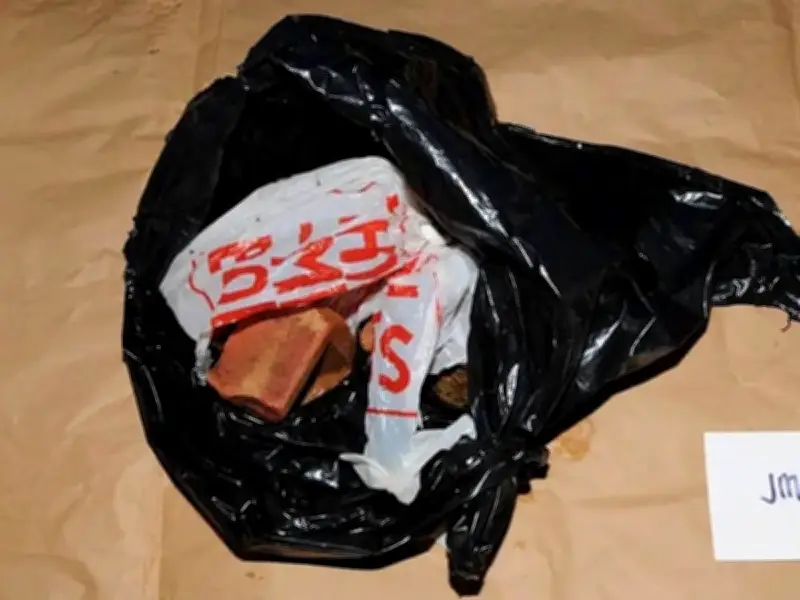
A dog walker discovered two mummified legs and feet alongside two mummified arms without hands, all contained within black bin bags, in the river at Sudbury on August 27, 2020. Two days later, police divers recovered skull fragments, facial bones and two loose teeth inside a thin blue plastic bag located 150 metres further downstream.
Inquest concludes unlawful killing
An inquest into the death of the individual — referred to throughout proceedings as the Croft Man, after the area of Sudbury where his remains were found — took place in Ipswich on Tuesday. Suffolk's senior coroner Nigel Parsley concluded that the Croft Man had died as a result of a "violent assault".
He confirmed that searches had been carried out against national and international databases for missing persons and criminal activity, but no matches had been identified.
The coroner noted that radiocarbon dating indicated the man was born before the early 1950s and died somewhere between 2008 and 2012, leading to the estimation that he was in his late 60s to 70s at the time of his death.
Removal of hands and head injuries
Mr Parsley observed that the removal of the man's hands and the injuries sustained to his head and face "appear to have been an attempt to hamper his identification". He concluded it was "more likely than not the Croft Man was unlawfully killed".
"We must remember that the Croft Man was somebody's son," Mr Parsley remarked. "He lived for 60 to 70 years. He may well have had family, he almost certainly had friends. It's a tragedy we cannot identify him as there must be some loved ones somewhere wondering where their loved one is."
Discovery by dog walker
Dog walker Julie Dunn-Beechin, in a statement read out at the hearing, recalled discovering two black bin bags in the water along a section of the River Stour near the water meadows on August 27, 2020. She observed that her dogs showed unusual interest in the area and that the bags "didn't seem right to me".
Park ranger Samuel Morgan, who was contacted by Julie, said: "She said she didn't know if she had been watching too many Midsomer Murders and had a concern about what could be in the bags." He described the bags as being weighed down with rocks and bricks, alongside "what looked like a Toilet Duck soap that had partly dissolved".
Mr Morgan reported seeing "through a small hole in the bag what I thought looked like mummified skin and bone" and what appeared to be the ball joint of an arm, which led him to alert the police.
Police investigation
Superintendent Mike Brown, of Suffolk Police, estimated the bags had been discarded between August 13 and 19. He referenced a volunteer litter picker, who regularly canoes along that stretch, confirming the location was clear on August 13. The bin bags were first spotted on August 19, though this was not reported to police at that time.
An extensive search of the riverbed took place, and on August 29, a dive team uncovered further human remains contained within a thin blue bag. Mr Brown confirmed that the "remains from the first deposition site and the second deposition site are the same person", a conclusion verified through DNA testing.
He disclosed that the air fresheners discovered within the black bin bags were manufactured at a facility in north Wales which ceased operations in early 2012. He observed that the bricks, which date from the 1970s, were "very common", with millions having been produced.
"The biggest challenge we have is we do not know the identity of our victim so we're unable to work around the associations they would have had and then look at those wider lines of inquiry," he explained.
DNA and forensic analysis
DNA analysis indicated that the individual was a white northern European male, probably born with blonde or light hair that may have darkened naturally over time, along with blue or green eyes, he said.
"The most likely and preferred hypothesis is that there's a criminal element," he stated, noting that injuries found on the skull lent weight to this theory. The method by which the body was dismembered might suggest someone with "skill in butchery", he added.
"Our victim has likely met a violent and unnatural death," he declared. He continued: "Because of the length of storage the individual could have been found in a state by somebody who doesn't want to come to the attention of police and has tried to dispose of them by throwing them away."
Home Office pathologist Dr Ginni Fitzpatrick-Swallow disclosed that the limbs found inside the black bags had become mummified, while the skull fragments retrieved from the blue bag by police divers showed no remaining skin.
With regard to the skull fragments, she stated there were "at least 14 linear cuts" which could have been inflicted by a "heavy weapon with a sharp edge" such as a meat cleaver, axe or machete. She confirmed there had been "multiple blows to the head". "The appearance is consistent with repeated strikes in rapid succession due to their uniformity," she said.
She went on to explain that it remained unclear whether the skull injuries had been sustained during life, given that no soft tissue had survived. "To completely destroy a skull like that seems from a dismemberment point of view unnecessary," she said.
She further noted that "to remove the hands and destroy the facial features" can be associated with attempts to conceal the identity of the victim. The pathologist suggested that some of the remains "may have been frozen" and could have been wrapped in plastic for a period of time.
She recorded the medical cause of death as unascertained.