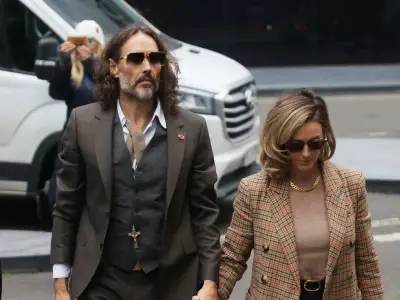
Russell Brand is being held at HMP Wandsworth after being convicted of rape and sexual assault. The comedian and actor, 51, was found guilty following a month-long trial of charges involving four women between 2004 and 2009, a period when he was at the height of his fame. The judge described Brand as a 'sexual predator' who told a 'series of lies' and displayed 'staggering arrogance,' adding that his entourage also 'indulged' his 'dreadful behaviour.'
After the guilty verdict on November 5, Brand was taken to HMP Wandsworth, where he was held over the weekend ahead of his sentencing. A judge handed him 10 years and six months, and he was then transferred back to the prison after being sentenced.
A Category B prison with a troubled reputation
HMP Wandsworth is a Category B security prison built in 1851. It currently holds around 1,400 to 1,457 inmates, despite its 894-person capacity. The prison has been described as 'squalid, unsafe and overcrowded,' with alleged 'inhumane living conditions.'
According to the BBC, prisoners reportedly spend between 22 and 23 hours a day in their cells due to overcrowding and staff shortages. Inmates typically wake at 7.45am, have breakfast, and spend the rest of the day in their cells, except for a lunch break at 12.45pm and an evening meal at 4.45pm. Under UK prison rules, prisoners are entitled to 30 minutes to an hour outside in the open air each day, but at Wandsworth this is often disrupted by staff shortages and overcrowding.
Overcrowding, violence, and staff shortages
Brand spent his first night in prison in solitary confinement as he faced 'real danger' from other inmates. Roughly 80% of prisoners share single-occupancy cells, living in cramped conditions. An inspection in 2024 led Charlie Taylor, HM Chief Inspector of Prisons, to write to the then Secretary of State, invoking an urgent notification for improvement. The report stated living conditions were extremely poor, with damaged flooring and furniture, broken windows and leaking fixtures. Many cells had no screening around the toilet, despite holding two men.
The inspection uncovered over 900 outstanding jobs in its facilities log and recorded the prison as dirty with vermin problems. Rat faeces were found in the showers, and mouse droppings were located in food areas. While Brand's first night's prison food was reportedly 'inedible,' safety is likely a greater concern. The 2024 report noted 10 self-inflicted deaths since the last inspection, seven of which had taken place in the last 12 months. Additionally, 40% of emergency cell bells were not answered within five minutes, despite an increased rate of self-harm. More than half of prisoners said it was easy to get access to drugs.
Staff shortages are also significant. Roughly one-third of employees are regularly off or unavailable on any given day due to sickness, training, or other non-operational reasons, according to a 2022 report. In 2025, it was reported that HMP Wandsworth had the worst levels of staff sickness across major London prisons. Data showed Wandsworth had the fourth-highest outturn for staff sickness at 17.1%, compared with an average of 11.02% across England and Wales. The prison was often managed by fewer than 85 officers, meaning approximately one staff member for every 18 inmates.
Previous troubles and high-profile inmates
A 2022 report by Taylor found these issues are nothing new. Taylor stated that 'there were not enough staff to make sure prisoners received even the most basic regime,' and that the prison complex was 'crumbling and overcrowded.' He said: 'Prisoners could often go several days without a shower. Despite efforts to control vermin, there was still a major problem with rats, mice and pigeons.'
On September 6, 2023, former British Army soldier Daniel Khalife escaped from HMP Wandsworth. The now-25-year-old strapped himself to the underside of a food delivery truck and left the prison kitchen using a makeshift sling made from kitchen trousers. His escape triggered a nationwide manhunt, but he was recaptured 75 hours later. In November 2024, Khalife pleaded guilty to escaping custody and was found guilty of spying for Iranian intelligence. In February 2025, he was sentenced to 14 years and 3 months in prison. His escape exposed deep vulnerabilities, including CCTV cameras that had been broken for over a year and vehicle-search procedures that were skipped or poorly executed.
Brand is not the only high-profile individual held at HMP Wandsworth. Boris Becker, the former tennis star, spent time there in 2022 following his conviction for hiding assets during bankruptcy proceedings. WikiLeaks founder Julian Assange was also held at Wandsworth during parts of his legal and extradition battles. In November 1956, Ronnie Kray was sent to the prison to serve a three-year sentence for a pub assault. Ronnie Biggs of the Great Train Robbery fame was an inmate in 1963 but escaped in 1965 using a rope ladder. Disgraced pop singer and convicted sex offender Gary Glitter was remanded in custody at HMP Wandsworth in February 2015 following his conviction for historical child sex offences, before being transferred to another prison a month later. Oscar Wilde was transferred to Wandsworth in 1895 following his conviction for gross indecency.