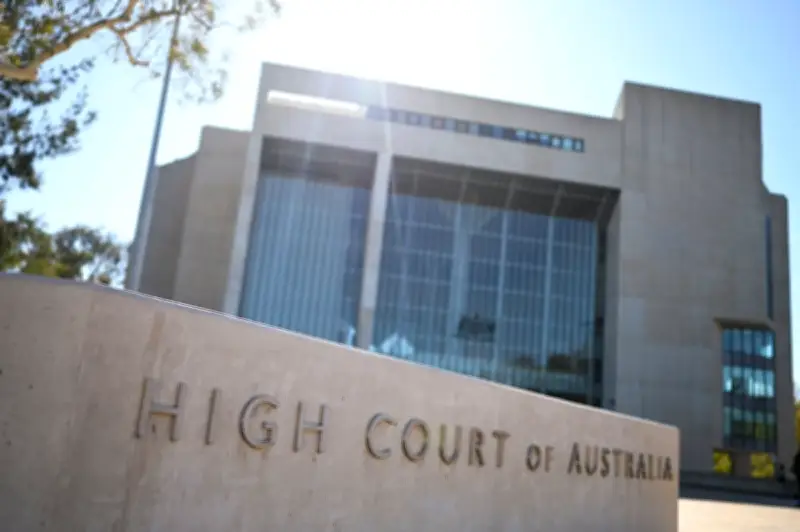
Justice Robert Beech-Jones of the High Court of Australia has accused the Samuel Griffith Society of attempting to stack the court with conservative judges, drawing parallels to US-style judicial politicization. Speaking at the North Queensland Law Association Conference in Townsville, Beech-Jones criticized the society for what he described as a sustained effort to influence judicial appointments and decision-making.
Allegations of Cultural Appropriation
Beech-Jones argued that the society has appropriated the legacy of Sir Samuel Griffith, a former Queensland premier and the first Chief Justice of the High Court, for ideological purposes. He stated that Griffith had been 'remade and repackaged' as a warrior in the 21st-century culture wars. The justice expressed concern over the society's promotion of student chapters at universities and its founding 'obsession' with the Mabo native title case, including hosting speakers who made derogatory remarks about Aboriginal people.
Criticism of US-Style Tactics
The justice warned against replicating the US Supreme Court model, where decades of conservative appointments have led to controversial rulings. He cited a case striking down restrictions on firearm sales to young adults, calling it a predictable outcome of a politicized appointment process. Beech-Jones declared, 'If anyone thinks this particular US style of court-stacking and judicial decision-making is a good idea, then go and live there.'
Response from the Samuel Griffith Society
Allan Myers KC, president of the society, dismissed Beech-Jones's claims as false and urged him to 'just do your job as a judge.' Executive director Mia Schlicht argued that the justice's speech confirmed the society's long-standing view that the High Court has a political dimension. The society has previously invited former High Court justices and conservative figures to its conferences.
Research on Judicial Ideology
Research from the Australian National University indicates that judges appointed by right-wing governments tend to make right-leaning decisions, and vice versa. However, Patrick Leslie, one of the researchers, noted that the High Court exhibits less dissent and more collegiality than the US Supreme Court. Whether Beech-Jones's speech signals a partisan rift remains to be seen.
A former federal court judge, speaking anonymously, expressed concern that the Samuel Griffith Society's political aims are not transparent, unlike left-leaning groups such as Labor Lawyers. While most appointments appear merit-based, some attorneys general may be 'tapping people on the shoulder.' The former judge hopes the Australian judiciary never becomes as politicized as in the United States.