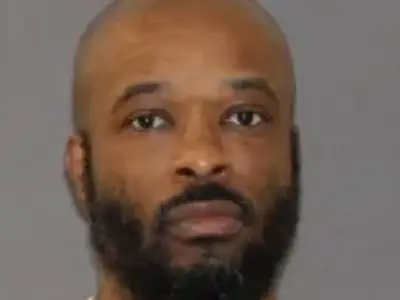
A 2002 murder in Oxfordshire led to a forensic first that changed British criminal investigations and put the killer behind bars. Frail 91-year-old Edwin Hiles was stabbed to death in his home by Paul Weedon, a 24-year-old former slaughterhouse worker who cut the pensioner's phone line to stop him calling for help.
Weedon, who worked in the 'gut room' of Mutchmeats' slaughterhouse in Witney, attacked Mr Hiles in 2002 after trying to rob the widower when he refused to give him money for rent. Mr Hiles' body was discovered in the front downstairs living room of his semi-detached home by a neighbour who had called in to see him. There was no sign of the killer.
Community generosity linked to murder
Mr Hiles was known in his community for small-scale money lending to those in hard times. Detectives immediately linked his murder to his generosity and the possibility that he may have had cash at his house.
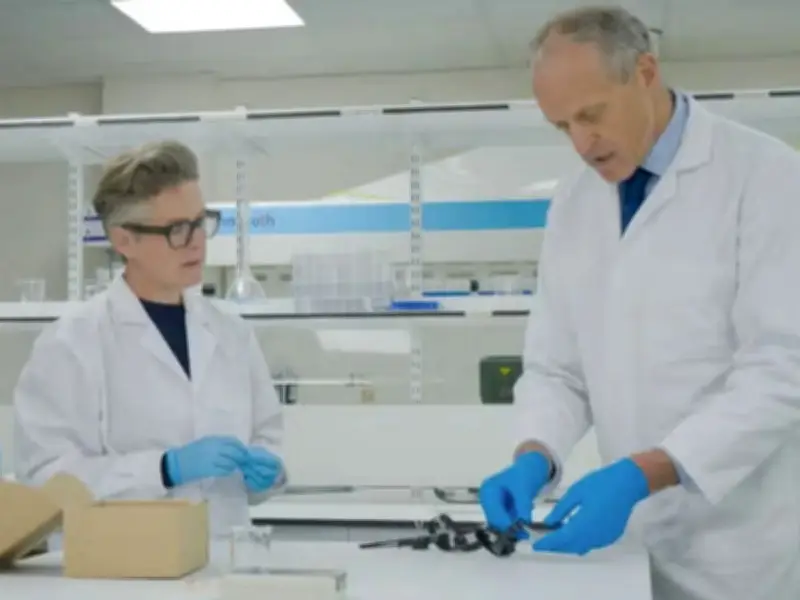
What followed changed British forensic science forever. To catch the killer, investigators pioneered a breakthrough technique known as "fibre-taping" for the first time in the UK. It linked the victim's body directly to bloodstained clothes Weedon had stashed in nearby woodland close to where he was living in Chipping Norton.
Rather than just gathering loose fibres to see if the two people had interacted, investigators used a complete, grid-indexed tape on both the killer's clothing and Mr Hiles' body to reconstruct their positions during the attack.
Trial and changing stories
During the trial in 2003, Weedon changed his story multiple times, even claiming to have seen drug dealers kill the elderly widower, according to the Oxford Mail. He also claimed he had been deliberately framed by an acquaintance who had had dealings with Mr Hiles.
Later, he said he stabbed Mr Hiles in the throat after the pensioner came at him with a kitchen knife to stop the robbery. In mitigation, Julian Baughan, defending, said: "This wasn't pre-planned. It was intended possibly as an application for a loan which turned into a robbery which went wrong."
Documentary series showcases the breakthrough
The breakthrough forensic testing from 2003 will be shown and explained on the new documentary series UK Forensic Breakthroughs on the True Crime channel. Spanning 10 episodes, each instalment focuses on its own murder case where scientific breakthroughs and microscopic evidence secured justice for grieving families.
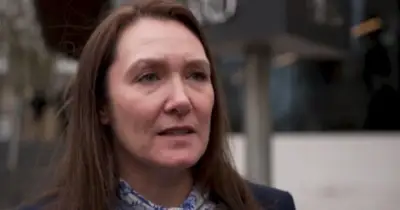
Forensic scientist Jo Millington gives exclusive access to the experts behind the investigations, including the case of Edwin Hiles, set to air on September 27. Millington has been a forensic scientist for over 30 years, even working behind the scenes on BBC's Silent Witness.
Speaking of the new documentary, Millington said UK Forensic Breakthroughs stands out from other crime shows: "The first difference is that it puts forensic science at the heart of the show, which normally sits on the periphery in the shadow. Over a 10 part series, we're using the programme to kind of assure a spotlight on forensic science. And more importantly, the scientists that do forensic science, every single day."
Forensic science principles explained
Millington explained how forensic evidence is not just about fingerprints and bloodstains. Speaking to the Mirror, she said: "Forensic science is based on the principle that every contact leaves a trace and that's exactly what people do when they commit a crime. Every interaction, every step has the potential to leave material in the crime scene or take it away.
"The challenge sometimes is finding the evidence in the first place, but once forensic scientists do find it then they can start to interpret it and put it into the context of an investigation. The evaluation of the science is really important. For example, finding my DNA in a place where I live or work is unlikely to unlock a case, but if investigators find my fingerprint in the blood of the person that has been injured, then that is like a timestamp. It tells you I was there when the person was bleeding – that contextual evaluation is vital – and in that particular example, I would have questions to answer."
Millington also aims to tackle a common misconception about her job. She added: "The thing about forensic science is it's mostly a process – things need to happen in a particular order in line with a particular method and the results need to be checked and double checked by people who are trained and competent. The chain between the evidence that is collected from a crime scene and the scientific findings that are presented to the court, and the jury, needs to be water-tight. That level of diligence and checks takes a longtime."
TRUE CRIME is available on Sky, Virgin Media, Freeview, Freesat and Freely as well as for streaming via TRUE CRIME UK (FAST), accessible on platforms including Prime Video, Rakuten TV, Pluto TV, Plex, LG Channels, Samsung TV Plus, ITVX and 5.