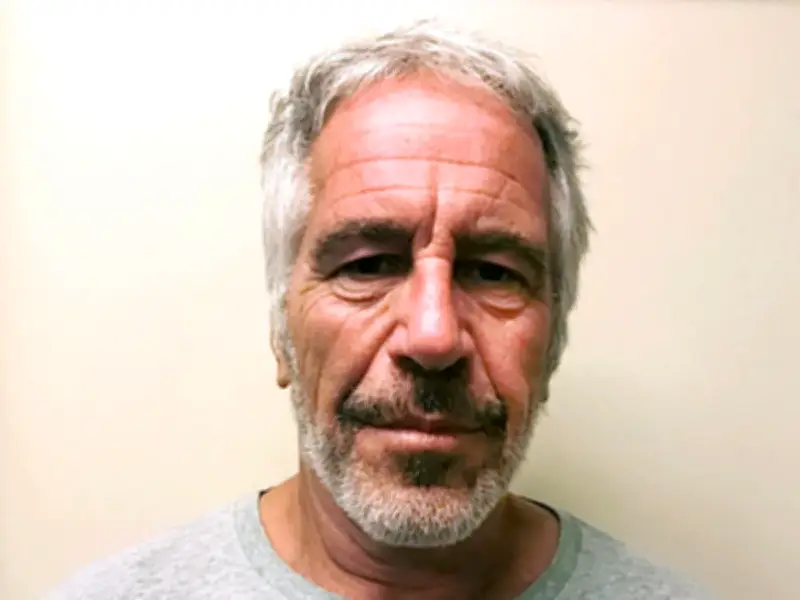
A lawyer representing several of Jeffrey Epstein's victims has called for an independent investigation after a leading forensics expert claimed the financier died as a result of murder, not suicide.
Epstein was found dead in his New York prison cell in August 2019 while awaiting trial on charges of sex trafficking minors, in what was officially ruled a suicide. Dr Michael Freeman, a fellow of the Royal College of Pathologists in London, has now claimed Epstein was strangled to death from behind and left hanging from his bed.
Lawyer demands scrutiny
Spencer Kuvin, who represents a number of Epstein's victims, told the Mirror: "These findings deserve serious, independent scrutiny. Epstein’s victims deserve answers grounded in evidence, and authorities should explain how this analysis fits—or conflicts—with the official conclusions.
"His death deprived survivors of the chance to confront him at trial, but it must never become an excuse to stop investigating those who may have enabled his abuse."
Forensics expert's claims
Prison guards discovered Epstein, 66, hanged by the neck using a strip of orange material tied to his bunk bed in his cell at the Metropolitan Correctional Center. Dr Barbara Sampson, then New York City's chief medical examiner, ruled the death a suicide. But Dr Freeman claims Epstein had injuries "consistent with an assault and a struggle" and that his death could have been "staged" as a hanging.
He claimed numerous injuries pointed to "blunt force trauma". He said: "By exclusion of the impossible ... homicide is the only remaining explanation for the pattern of injuries, given what we know." He added there is "a zero per cent chance of suicide, given the circumstances accepted by the medical examiner's office".
Autopsy review
The scientist, who has two doctorates in epidemiology and forensic medicine, explained his findings at a talk in London on Monday night after spending a year examining Epstein's autopsy file. He started the review at the request of Epstein's brother Mark, who like jailed associate Ghislaine Maxwell has repeatedly claimed the financier did not take his own life. Dr Freeman, who did not see Epstein's body, said when he first saw the autopsy photos: "Wait a minute, that doesn't look like a hanging mark."
He explained that hanging injuries are typically characterised by a smooth, consistent line that slants to a peak on the neck, while Epstein's neck bruise was deep, ragged and branched into a Y-shape on one side. He said the evidence was most consistent with strangulation using a ligature, which was likely then used to suspend the body from the bunk bed. He added that there appeared to be fingernail marks above the ligature mark on Epstein's neck which "would be consistent with strangulation, particularly from behind. And the attempt by the victim to try to remove the ligature from the neck".
Epstein's autopsy file had reportedly been kept away from third-party investigators, but as next of kin Mark was given access and handed it to Dr Freeman in November 2025. Dr Freeman, who has previously served as a cause-of-death expert to attorneys-general in the US for death in police custody cases, including George Floyd in Minnesota, said his analysis is independent and that he was not paid by Mark Epstein.
He reportedly reached his conclusion with the help of cognitive neuroscientist Itiel Dror and forensic pathologist Anders Eriksson. Their research has not been peer reviewed. When asked who might have killed Epstein, Dr Freeman said he had "no idea", adding: "That is not something I have an opinion about. That isn't any part of any investigation that I've done."
Official findings questioned
Challenged whether his views veered into conspiracy theory, he said: "I have the luxury of being able to say, don't take my word for it, let everybody look at it. If you think I'm still a conspiracy theorist because I'm looking at something that looks like a strangulation and say, I think it is a strangulation and I don't think it could be a hanging, show me where I got it wrong."
"I'm wide open to that. I'm an academic. I'm quite happy to hear people's theories on things that are informed," he added. Epstein, who had a previous conviction for soliciting prostitution from a minor and was facing new charges of running a network of underage girls for sex, had been under suicide watch before his death after reportedly showing a pattern of behaviour that suggested a desire to kill himself. Authorities also recovered an apparent suicide note.
The official findings have been dogged by conspiracy theories that he was silenced by other powerful figures after security cameras outside his cell reportedly malfunctioned, with footage showing a mysterious "flash of orange" moving towards Epstein's cell shortly before his death. The two guards responsible for monitoring him also reportedly fell asleep and failed to check on him for three hours. In 2023, the Department of Justice concluded there had been 'job performance failures' by prison officials, but maintained Epstein had died by suicide.
Dr Barbara Sampson has previously said: "I stand firmly behind our determination of the cause and manner of death for Mr. Epstein." She has declared that Epstein's injuries were more consistent with a suicide by hanging rather than homicide by strangulation, adding there was no evidence of defensive wounds consistent with what is seen in victims of strangulation.