
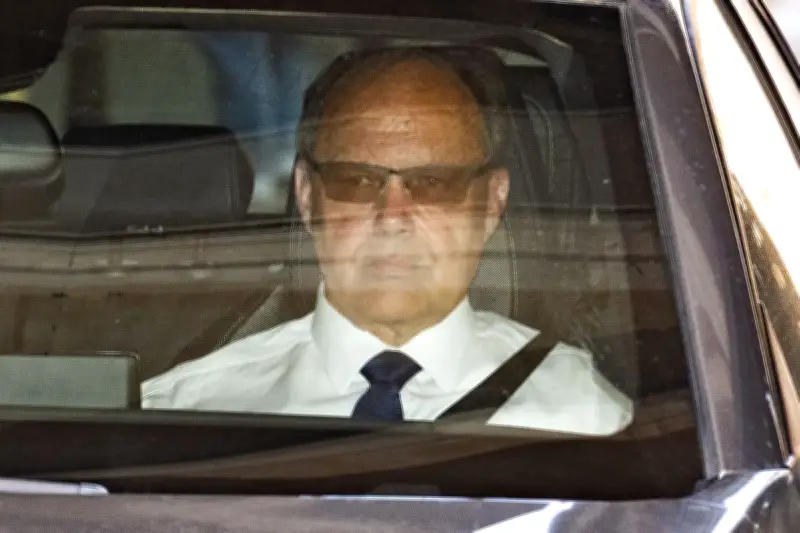
Catherine Razzell has said her confidence in the Parole Board has been undermined after its decision that her father could be released was overturned at the High Court. Her mother Linda was murdered in 2002, with her estranged husband Glyn Razzell jailed for life with a minimum term of almost 16 years in 2003.
High Court quashes release decision
The Parole Board deemed he could be released on licence in April despite him never revealing the location of Mrs Razzell’s remains. On Friday, the High Court quashed the decision after the Ministry of Justice (MoJ) referred the case.
In a ruling, Mrs Justice Cheema-Grubb found Razzell, who can apply for parole again in future, is “fundamentally dishonest” and had a “propensity to violence against women”, which meant he remained a danger.
Family's relief and concerns
Speaking to the Press Association following the ruling, Catherine Razzell said she and her family felt “very relieved” and “ultimately, that justice has been done”, as it was “patently clear” her father should remain behind bars. But she expressed concern that families in similar positions may not be able to proceed with legal challenges against Parole Board decisions.
She said: “He had undertaken little to no risk reduction work in custody, obviously has demonstrated no insight through his continued denial, which continues to harm us, and of course, he continues not to tell us what he did with our mum’s body.”
“Those factors together really make it very difficult to see how he could, as a convicted murderer, with a history of coercive control and domestic violence, be eligible for release.”
She continued: “It’s difficult to say how it couldn’t undermine your confidence somewhat in the Parole Board’s ability to make decisions about how risky a certain prisoner is. I think it’s very clear that risk can be measured in different ways.”
She later said: “I would hope that this decision sets a higher bar for what’s expected of offenders of this nature for other victims and their families.”
Background and legal context
Razzell, of Crewkerne, Somerset, has always denied being responsible for the murder and opposed the bid to block his release at a hearing earlier this week. He was previously denied parole three times from 2019, with a Parole Board panel finding in 2023 that he “does not want to lose his desired status of being a ‘wrongly convicted murderer’”.
In its April decision, a Parole Board panel said it had “serious doubts” about Razzell’s honesty and that there was a “very significant” risk in the context of relationships. But it continued that this risk was “not imminent” and that Razzell would comply with licence conditions as he was “strongly motivated not to return to custody”.
The Parole Board also considered Helen’s Law, named after Helen McCourt, who vanished on her way home from work in 1988, which requires it to consider a killer’s refusal to disclose where they hid their victim’s body.
The MoJ can refer a Parole Board’s decision to release a prisoner to the High Court if it believes the release would undermine public confidence in the parole system, and the court must be satisfied that imprisonment is no longer necessary for the protection of the public.
Mrs Justice Cheema-Grubb previously urged Razzell to disclose the location of Mrs Razzell’s body, stating in her ruling she was “satisfied that he continues to withhold information that he could deliver up”.
Ms Razzell, 38, said her father’s refusal to provide the information was “an unforgivable thing to hold over your own children”. She continued this meant they “are never free of this crime”, and that the harm caused by it was “very real”, while stating there “needs to be some giving up of that control” if her father wished to be eligible for release.
She also said it prevented her from remembering her mother as she would want, and that she felt “guilty that you were so powerless”.
She said: “I think the decision today and my decision to take a more active role and a more empowered role in challenging what was so clearly a highly controversial decision to release, in a strange way, it brought me some kind of peace. I don’t feel ashamed, and I don’t feel guilty. I actually feel proud of what I’ve achieved, and I know that my mum would feel proud too.”
She added: “I feel today that this is a testament to her memory, that we’ve successfully challenged it.”




