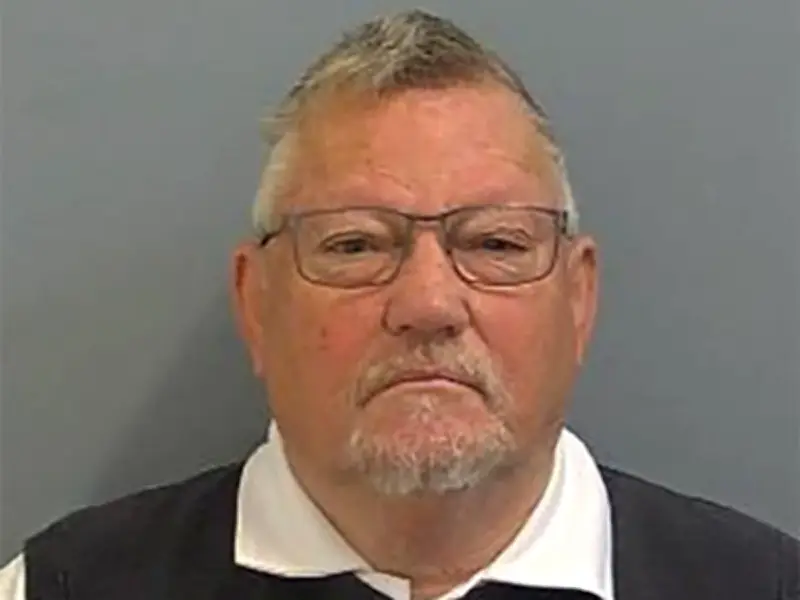
Allen Morgan, jailed for conspiring to murder his wife Carol Morgan in 1981, has lost a bid to appeal against his conviction at the Court of Appeal in London.
Morgan was found guilty of conspiring to murder Carol Morgan at Luton Crown Court in 2024, a case that featured on Netflix's The Real Unforgotten. He was handed a minimum term of 22 years.
Background to the murder
Ms Morgan, 36, was discovered brutally killed at the pair's corner shop in Linslade, Bedfordshire, on August 13, 1981. Throughout the trial, jurors heard Morgan arranged for someone to murder his wife so he could pursue a relationship with Margaret Morgan, formerly known as Margaret Spooner, and utilise proceeds from Ms Morgan's life insurance to settle business debts.
The perpetrator has never been identified owing to insufficient evidence to charge anyone in relation to the killing at the time of her death.
Challenge to the conviction
Morgan's legal team mounted a challenge at the Court of Appeal, contesting his conviction on grounds that the jury at his criminal trial was permitted to consider evidence deemed "inherently unreliable".
During Wednesday's hearing, Colin Aylott KC submitted to the court that Mr Justice Spencer, who oversaw the 2024 trial, committed a "grave error" in allowing evidence from Janet Wheatley. In a 1983 statement, Ms Wheatley informed police she was at a pub with her husband around the time Ms Morgan was killed when she overheard a man boasting that he had just "done a job" in the vicinity in exchange for "500 to 1,000 fags and £500".
She claimed the man drove the same vehicle that police had connected to Ms Morgan's unidentified killer, and that she'd encountered him with Morgan twice – on one occasion prior to the killing and another afterwards.
Court dismisses appeal
Mr Aylott argued this evidence ought to be treated as "hearsay", pointing out that documentation indicated police were themselves "sceptical" of Ms Wheatley's account at the time. He informed the court Ms Wheatley described Ms Morgan as a "casual friend" to police yet failed to give a statement until 15 months following her death.
Mr Aylott stated this was because Ms Wheatley maintained she hadn't learned of Ms Morgan's murder until late 1982. "We submit that was patently untrue and on any analysis absurd," Mr Aylott said, highlighting that Ms Wheatley had relatives in Linslade whom she regularly visited.
He contended there was a "national hunt" for the car thought to have been driven by Ms Morgan's killer and Ms Wheatley would have been aware police were searching for a green Vauxhall Victor. Mr Aylott additionally noted Ms Wheatley's husband, who presumably would have also heard the same exchange, wasn't interviewed by police after her testimony and officers never pursued her evidence with Morgan.
"What she is saying is that the contract killer was operating under the nose of the police," the barrister said, a notion that "descends into the arena of the absurd".
However, in a ruling on Wednesday, three judges at the Court of Appeal dismissed the appeal bid. Lady Justice May, presiding alongside Mrs Justice McGowan and Judge Andrew Lockhart KC, conceded that Mr Justice Spencer had expressed being "troubled" by the evidence in 2024, yet concluded that he "did not err" in permitting the jury to deliberate over it. "In our view it is not arguable that the judge reached an unreasonable decision," Lady Justice May said.
Morgan participated in the hearing via video-link from prison.