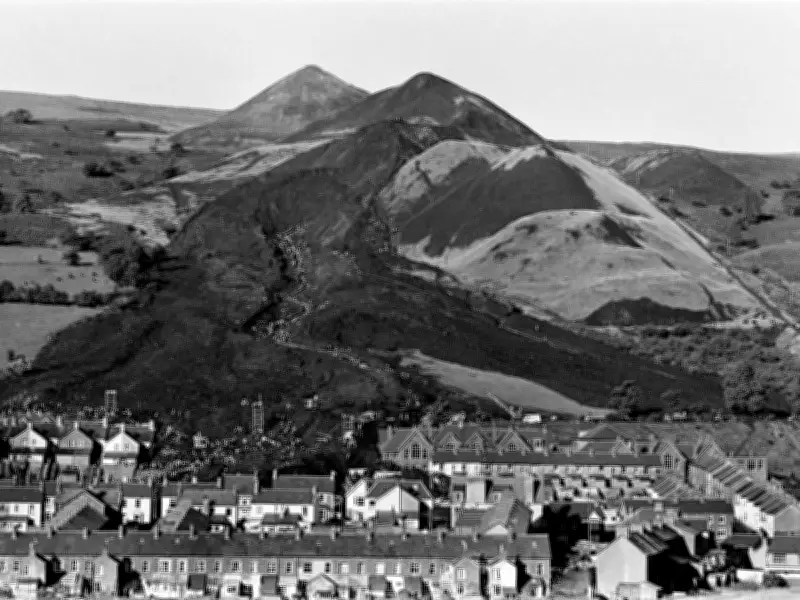
The Aberfan disaster was not a natural disaster. The inquiry into what happened and the village's fight for compensation revealed institutional failings, ineptitude and a lack of humanity.
Today marks the anniversary of the deaths of 116 children and 28 adults, including five teachers, in the colliery spoil tip slide at Aberfan.
The corporate failings that were responsible for the deaths should not be forgotten, just as certainly as the rain that undermined tip number 7, perched precariously above the village on top of a natural spring.
Inquiry findings
The Aberfan Tribunal Report, published a year after the disaster, concluded: "The Aberfan disaster is a terrifying tale of bungling ineptitude by men charged with tasks for which they were totally unfitted, of failures to heed clear warnings and a total lack of direction from above."
It added: "Our strong and unanimous conclusion is that the Aberfan disaster could and should have been prevented."
The state-owned National Coal Board (NCB) was responsible for the tips after nationalisation in 1947. In the immediate aftermath, there was no effort from those in charge, including chairman Lord Alfred Robens, to understand what had happened or take responsibility.
Professor Martin Johnes of Swansea University described suggestions that Aberfan wasn't foreseeable as "laughable". He said: "People had been saying these tips are not safe, and pointing out the fact that they were above the school."
Ignored warnings
At a public inquiry, Desmond Acker, counsel for the victims' families, revealed letters sent to the NCB entitled "Danger from coal slurry being tipped at the rear of the Pantglas School". The first was sent more than three years before the disaster.
On July 24, 1963, DCW Jones, the council's Borough and Waterworks Engineer, wrote to T Ritchie, the District Public Works Superintendent: "Councillor Mrs Williams has advised me that the NCB appear to be taking slurry similar to that which was deposited and gave so much trouble in the quarry at Merthyr Vale, up on to the existing tip at the rear of the Pantglas Schools."
He later wrote to the NCB: "You are no doubt well aware that the tips at Merthyr Vale tower above the Pantglas area and if they were to move a very serious position would accrue."
Tip seven, which collapsed, was 100 feet tall and piled on top of a water spring. The Powell Memorandum, guidelines drawn up after a tip slide at Cilfynydd Common in 1939, banned tipping over water or on steep hillsides above communities and set a maximum tip height of 20ft. These provisions were not enforced.
Professor Johnes said: "The tip should never have been there in the first place. The coal board did have some limited regulations about what kind of place you should put tips, and that hadn't been followed. That was the first failure."
He added: "Those complaints, which came from the council and from the school as well, were kind of brushed aside by the National Coal Board and were not taken seriously."
No accountability
Despite the tribunal laying blame at the NCB, the verdict at the victims' inquests was accidental death. A bereaved father told the court: "I want it recorded: 'Buried alive by the National Coal Board.' That's what I want to see on the record."
No NCB employee was ever demoted, sacked or prosecuted, and the board faced no corporate sanctions. Lord Robens was not made to step down and was later appointed to chair the government's review into workplace health and safety.
Professor Johnes said: "It would have been perfectly acceptable and expected that when a massive organisation commits what could maybe be called a crime like this, the leader resigns because it happened under their watch." He added that the government allowed Robens to stay because of the state of the coal industry and the risk of strikes.
Compensation battle
The Aberfan Disaster Fund raised £1.75 million for the community, over £20 million in today's money. The NCB initially offered £50 in compensation per family who lost a child, later increased to £500, which the NCB called "a generous offer".
The Charity Commission sanctioned only £500 of a proposed £5,000 payment to bereaved families, advising that "before any payment was made, each case should be reviewed to ascertain whether the parents had been close to their children and were thus likely to be suffering mentally".
One man who lost two children was arrested after displaying a banner reading "Bereaved afraid to say anything about the fund" and spent a night in the cells.
Fight to remove tips
The NCB said it would cost £3m to remove the tips, while a local contractor said it could be done for less than £1m if reusable coal was sold. A briefing note prepared for the minister said the reason for not accepting the offer was that it would undercut the NCB.
Alderman Tom Lewis, leader of the Aberfan delegation, told Welsh Secretary George Thomas: "Secretary of State, I never thought to hear such words fall from George Thomas' lips. I thought you understood the problems of Aberfan. That tip is a nightmare for our people."
In July 1968, Thomas wrote to Prime Minister Harold Wilson saying the tips had to be removed. The letter read: "I believe they have worked themselves into an irrational state of mind on this issue but we have to contend with the intensity of their feelings, whether these are logical or not."
The Aberfan Fund contributed £250,000 towards the removal cost, later reduced to £150,000, equivalent to £2 million today. Work to remove the tips began three years after the disaster.
By 1997, there wasn't enough money left in the fund for cemetery upkeep. After 30 years, the government returned the £150,000, and a decade later the Welsh Government paid a further £2 million with inflation.
The hills overlooking Aberfan have now reverted to their natural state, with a memorial garden on the site of Pantglas school remembering the 144 who were killed.
Speaking in 2006, Jeff Edwards, the last pupil rescued from Pantglas, said: "New generations need to know what Aberfan was all about, if nothing else so that such a thing is never allowed to happen again."