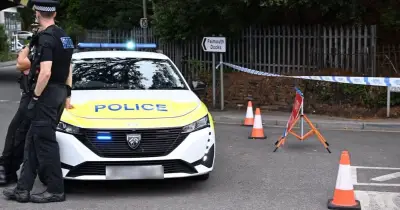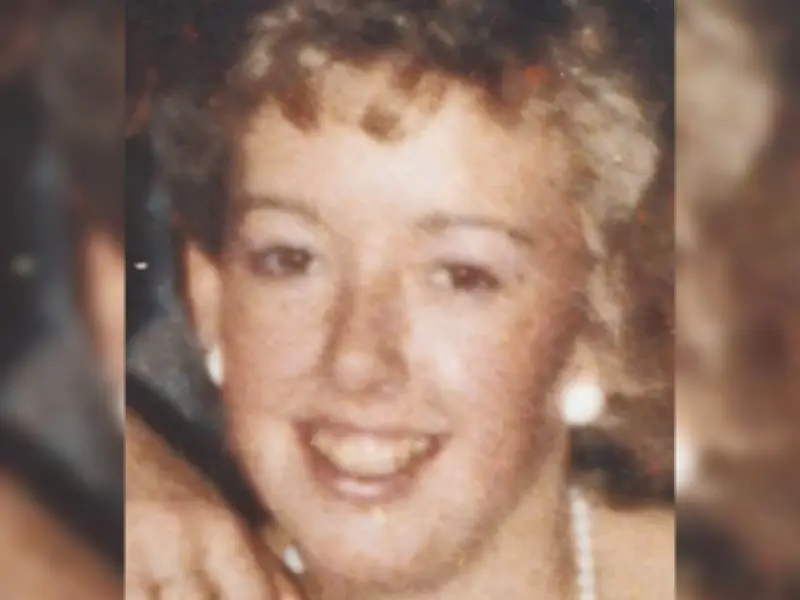
Diane Sindall, 21, was sexually assaulted and murdered in the early hours of 2 August 1986. A florist who also worked part-time at the Wellington pub in Bebington, she left work in her blue Fiat van but ran out of petrol on Borough Road in Birkenhead. Witnesses saw her walking along the road between midnight and 12.20am that Saturday morning. Her body was found several hours later by a member of the public in an alleyway off Borough Road. The cause of death was a cerebral haemorrhage.
The case became known for the man dubbed "The Beast of Birkenhead". Peter Sullivan, now 68, served 38 years for the murder of the bride-to-be, but last year the Court of Appeal overturned his conviction after DNA evidence was re-examined using scientific advances. The DNA was confirmed not to be a match for Sullivan, who had long protested his innocence and alleged he was beaten in his cell and interviewed without appropriate legal advice. He is now a free man, and the Independent Office for Police Conduct is investigating his allegations of police abuse.
New investigation focused on DNA
Detective Superintendent Rachel Wilson, who is leading the new investigation into Ms Sindall's murder, told the ECHO that the key to getting justice lies in the killer's DNA profile. To date, the force has eliminated 575 people, with 32 currently under review. Police can trace and request a DNA sample from any person they suspect, or even from a relative if they have died or emigrated.
"We have a DNA profile which was found on Diane, which belongs to a man, and I believe that man is responsible for Diane's murder," Det Supt Wilson said. "We've currently got 32 profiles in with our forensic partners. We wait for the results of that. This is a continuous process in terms of gathering DNA, submitting it to our forensic services partner, and they will have to do the checks and then come back to us to say whether they were actually eliminated or not."
She added she could not put a timescale on the process, and is keen for anyone with information about what happened that night or who the killer might be to contact police or Crimestoppers anonymously.
A woman in yellow
Asked whether police were investigating possible links to other attacks in the area, Det Supt Wilson referred to a woman dressed in yellow clothes who was sexually assaulted on the same night Diane was killed.
"There was a young female who was sexually assaulted just prior to Diane being sexually assaulted and murdered on Borough Road," she said. "That was part of the original inquiry. She gave us an account at the time. She doesn't remember much else. We do look, as part of the investigation, about what other offences have taken place that were reported at the time, so that is part of the inquiries."
Man and woman arguing on Borough Road
Another part of the original enquiry was the sighting of a man and woman, believed to be Diane, arguing on Borough Road on the night she was killed. The road is a major route through the centre of Birkenhead, connecting the town to Bebington in the south, Wallasey to the north, Prenton to the east and Liverpool to the west via the flyover to the Birkenhead Tunnel. It is used by several bus routes and is also the location of Birkenhead Central Station, Central Library and the Pyramids Shopping Centre, which was under construction in 1986.
Birkenhead had a busy nightlife in the 1980s, and at the time of Diane's murder many people would have been leaving pubs and clubs in the area. Det Supt Wilson said: "At about quarter to midnight, she left the pub where she worked in Bebington. The blue van that she gets out of and leaves on Borough Road is quite distinctive. Diane was a florist. People knew that blue van. That's left parked up. (Borough Road) was a thoroughfare through the Birkenhead town centre. Lots of people may have been getting off the train or leaving the pubs."
"We did have original witnesses at the time, the bus driver and taxi driver, who think they've seen a couple arguing. I believe potentially that could be Diane with the offender."
Blood on the killer's clothes
Det Supt Wilson also highlighted the blood that would likely have been on the killer's clothes when he returned home. "When Diane was left on Borough Road, there was lots of blood. I think the person responsible may have gone home with blood on them," she said. "Then the clothing was taken away from the scene and found on Bidston Hill a couple of days later on fire, so someone stored that clothing somewhere."
"Any concerns at all about anyone, whether it's a family member or it's a friend, or someone you knew in the street you weren't happy with, or you've seen them come back that evening and they've got some blood on them which is unaccounted for - I know it's 40 years ago, it's a long time, but given the significance of Diane's sexual assault and murder, I think it's something that sticks in people's minds. When I'm out and about people still talk about the murder of Diane, how horrific it was. So I'm hoping that will generate people's minds, even if it's 40 years on."
Fire on Bidston Hill
During the original trial, the prosecution argued that on 2 August 1986 smoke was seen from a fire at Bidston Hill, about two miles from the murder scene. The following afternoon, walkers on Bidston Hill passed the site of a fire and saw a handbag, the back pocket from a pair of jeans and a bank paying-in slip in Diane's name. Other items of her clothing, including the green high-heeled shoes she had been wearing, were never found. At the time, police said Mr Sullivan also matched the witness description of a man seen near Bidston Hill, although he was not picked out of an identity parade.
Det Supt Wilson said: "Someone stored that clothing somewhere and got it in the early hours of Friday, August 2, so I do think potentially someone knows what's happened. So I would really urge them to come forward and speak to us." On whether more information had emerged on this line of enquiry, she added: "We've had people call in with names. But we're still really keen to understand how that clothing was taken to Bidston Hill and who left it - was it more than one person? The information we've got now from original witnesses is still documented, but what we really need now is to identify that DNA profile."
Asked if police were still searching for the missing items of clothing, Det Supt Wilson said: "Our active line of inquiry concentrates around that DNA profile, which is found on Diane, and belongs to a man. We need to identify who that man is."
Repeat offender who could have moved abroad
Given the brutal nature of the murder, Det Supt Wilson is open to the possibility that it may not be the killer's first offence. "I'm keeping an open mind. We know that the DNA profile of the man is not on the database," she said. "But given the severity of the horrendous assault and murder, I keep an open mind as to whether he's done something like this in terms of maybe an assault or domestic abuse."
The profile has not appeared on the database in relation to other crimes. This suggests the man has not reoffended since, may have moved abroad, or could be dead. Det Supt Wilson said: "I'd like to reassure people that we are committed to keeping people safe. That's what we're all about at Merseyside Police. There is no suggestion that there is an increased risk to members of the public. There is potential that the offender could be deceased. They could have moved abroad. So with our National Crime Agency support, we are looking at inquiries across the country within the Wirral and internationally as in terms of identifying that profile."
Anyone with information should contact Merseyside Police's social media desk via X or Facebook @MerPolCC, report information via the Merseyside Police website, or call 101. Alternatively, contact independent charity Crimestoppers anonymously on 0800 555 111, or pass information including video footage to police via the Major Incident Police Portal - Public Portal.