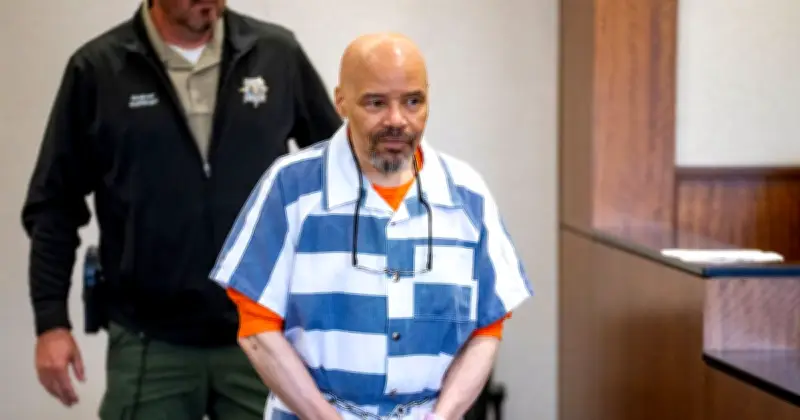
Douglas Stewart Carter, 71, has been released on bail after newly analysed DNA evidence failed to match him to material recovered from the scene of a 1985 murder. A judge ordered his release while he awaits a new trial.
Carter was convicted of killing Eva Olesen at her home in Utah, US, 41 years ago. Ms Olesen was stabbed several times before being shot in the back of the head at her home, around 45 miles south of Salt Lake City.
DNA evidence rules out match
New DNA analysis carried out earlier this month ruled Carter out as a possible match to blood found on a doorknob and genetic material recovered from the handle of the knife believed to have been used in the killing.
No physical evidence originally linked Carter to the crime scene. His conviction instead relied heavily on a confession and testimony from two witnesses who claimed Carter had bragged about killing Ms Olesen, who was the aunt of a police chief. Both witnesses later changed their accounts.
Legal battle and new trial
Carter has always maintained his innocence and said the confession he signed was coerced after police threatened him. His release follows a long legal battle over the conviction. Last year, the Utah Supreme Court ordered a new trial after finding “multiple instances of intentional misconduct” by investigators.
Judge Derek Pullan said the new DNA evidence further weakened the case against Carter, although he said a reasonable jury could still conclude that Carter was responsible for the killing.
Release conditions and family reaction
Carter walked out of Utah County Jail after a judge ordered his release on bail. He will be required to wear a GPS monitor while on bail and is expected to stay in accommodation close to the family of his son, Tyler Anger.
Mr Anger was adopted by another family as an infant and did not learn about his father's conviction until years later. Carter's defence attorney Neal Hamilton said his client will need therapy to deal with the effects of spending so many years behind bars.
“If the state of Utah had their way, he would have been executed 15, 20 years ago before we discovered the misconduct,” Mr Hamilton said.
Mr Anger said his father's release would be difficult after so many years in prison. “It is going to be a lot for him,” he said. “I want Doug to put his feet on the grass. He hasn't done that in 40 years.”
Concerns from victim's family
However, Ms Olesen's family has expressed concerns about Carter's release. Theresa Olesen, Ms Olesen's daughter-in-law, said the family had “serious concerns” about the decision.
“We were hoping for a concrete match,” she said of the DNA analysis. “It doesn't mean he wasn't there.”
“We just want justice for Eva. And if he had any part of it we want that to be known.”
Utah County prosecutor Erwin Petilos told the judge that reassessing Carter's bail was “necessary and fair” while prosecutors continue to examine the evidence.
Carter was living with his mother in Utah when Ms Olesen was killed on February 27, 1985. He was suspected of killing her during a robbery and later fled the state after believing he had become a suspect in an unrelated assault case.
He was eventually arrested in Tennessee, where he signed a confession. Carter later claimed police had coerced him into admitting the killing. He was initially convicted and sentenced to death. Following a 1992 retrial, he was again sentenced to death, while numerous appeals were rejected by Utah courts.
A major development came in 2011 when the two witnesses from his original trial were located in Mexico. They alleged they had been pressured to give evidence against Carter and had received money and gifts from police. They also claimed investigators threatened them and their son with deportation if they did not implicate Carter.
Carter's lawyers have also argued that witnesses saw a white man fleeing the crime scene and that investigators suppressed evidence pointing towards other potential suspects, including Ms Olesen's husband, Orla Olesen. Mr Olesen, who died in 2009, told police he had discovered his wife dead at their home, partially undressed and with her hands tied behind her back.
The latest DNA findings do not determine who killed Ms Olesen, and Carter still faces a new trial.