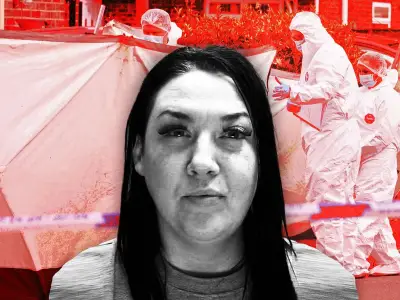
On July 29, 2024, a century-old secret was unearthed above a pizza takeaway in Fore Bondgate, Bishop Auckland. Builder Peter Moody, renovating a flat above the shop, found the tiny skeletal remains of a newborn wrapped in pages of The Umpire newspaper, dated June 1910. He later told an inquest: "You could still see the skull and the little feet."
Century-old homicide investigation
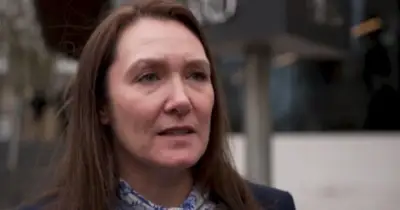
After Moody called the council, police were brought in. Detective Chief Inspector Mel Sutherland, who led the investigation for Durham Constabulary, knew immediately that this was unlike any case he had handled. "It was immediately clear that it would be an extraordinary investigation," DCI Sutherland told the Mirror. "It's very rare for us to investigate cases that are more than a century old. Both myself and the team understood the challenges and the responsibilities involved. It had an emotional impact on everyone, despite the passage of time."
Without CCTV or living witnesses to question, DCI Sutherland's team relied on a mix of modern forensic examination and historic research. Despite immense hurdles, it was possible to determine some facts: the remains were of a little boy, between 50-60 inches long, born at full term. A length of brown twine was found looped and tightly knotted around his throat.
Coroner's ruling and historical context
On September 17, Crispin Oliver, area coroner, ruled that 'Baby Auckland', as he was named by locals, was the victim of a homicide in 1910. "The most likely explanation for this is that a person in a position to care for him... took the decision to end his life by means of strangulation using the twine as a garrote," Mr Oliver said.
Reflecting on the era, DCI Sutherland noted how different life was when the crime occurred. "In 1910, Bishop Auckland was a thriving mining town, built on really strong working-class communities filled with hard-working people," he said. "But it was also a time before modern welfare provisions, healthcare, and modern policing. Vulnerabilities and tragedies like this could remain hidden from view, whereas in today's society, they may not."
Historical records and DNA dead ends
Historian Tom Hutchinson found details of who was living in the property at the time. Archive records show that in 1911, the census recorded Number 27 Fore Bondgate as a shop and refreshment room. Three people lived in the eight-room dwelling above: 53-year-old café owner Elizabeth Adamson, listed as married and head of the household, with her son, 14-year-old apprentice Earnest Adamson, and 22-year-old Mary Walker, a single woman who worked as a domestic servant.
Census records showed Mary remained at Number 27 for decades, working as a servant and cook until after World War Two. She never married, spent her entire life in Bishop Auckland, and died in 1975 at the age of 87. Police pursued every potential genetic lead, testing DNA against living individuals in the area whose ancestors lived at the address. All results came back negative.
"A person living at a particular address doesn't necessarily mean that they were involved in the crime," DCI Sutherland said. "I pursued DNA lines of enquiry in relation to people we thought maybe potentially related to the people who were living there at the time, people who are still alive today, and we did do DNA searches against those people, but they came back negative."
Dignified funeral and lasting impact
Having exhausted every avenue, the formal police investigation is now closed. "We've answered some significant questions, including establishing the period in which Baby Auckland lived and died," DCI Sutherland said. "Whether we can ever answer all the questions, I think, is uncertain."
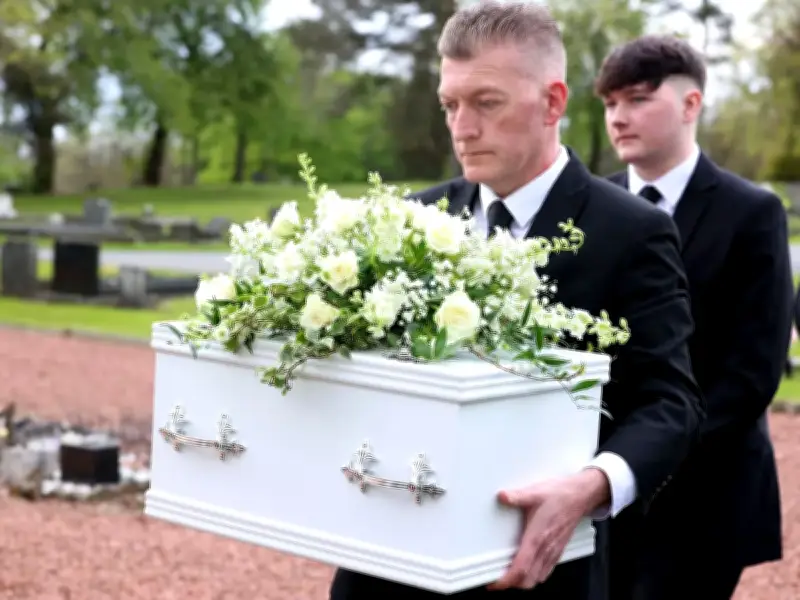
On April 27, 2026, the infant was laid to rest at the Town Cemetery, carried to his grave in a tiny white coffin topped with flowers. Durham Constabulary led the service in partnership with Durham County Council, and officers in mourning clothes stood by as the child's coffin was lowered into the ground with a blue ribbon. Celebrant Gemma Dobson told attendees: "Today, Baby Auckland is not alone."
DCI Sutherland was struck by how people came together to ensure the funeral had a personal touch, recalling: "I did a reading, the registrar wrote a poem, used a poem I think she wrote for her grandson that had sadly passed away as well, so people drew real personal connections to somebody that was over 120 years old, or would have been."
"Whatever happened in 1910, Baby Auckland was a child and a victim," he added. "Providing him with a dignified funeral recognised his humanity and ensured he was treated with the respect that everyone deserves." For the DCI, the case is one that will stay with him forever. "Over the course of my career, I've dealt with a number of child deaths, and every one of them leaves a lasting mark," he reflected. "You inevitably carry them with you, both professionally and personally. I've never forgotten any of the children whose deaths I've investigated, and Baby Auckland will be no different."