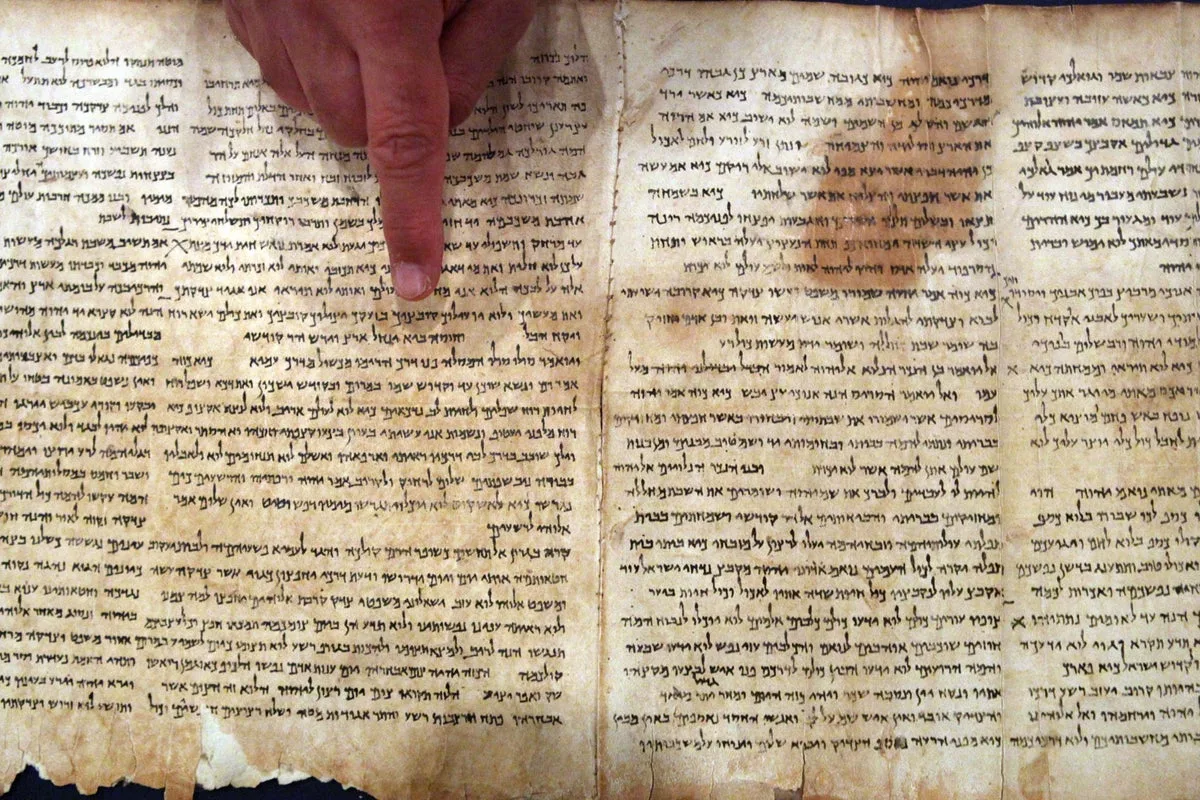
A study into one of the best-preserved Dead Sea scrolls has raised new questions after researchers found it had been treated with minerals not native to the region. The Temple Scroll, an eight-metre-long text describing an unbuilt Jewish temple and religious practices, was discovered among the Dead Sea scrolls in caves near the salt lake.
Researchers from the Massachusetts Institute of Technology (MIT) found that the scroll was coated with a continuous layer of glauberite and thenardite, sulphate minerals uncommon in the Dead Sea area. The findings, published in the journal Science Advances, suggest the text may have been produced elsewhere, prompting “intriguing questions on the provenance of the Temple scroll”.
The Dead Sea scrolls, a collection of ancient Jewish texts mostly in Hebrew, were first found in 1947 by Bedouin shepherds. Subsequent excavations in 11 caves uncovered some of the most well-preserved ancient texts ever discovered. The Temple Scroll is among the largest and best preserved of the 900 texts found in jars.
Dr Ira Rabin of the Federal Institute of Materials Research and Testing and Hamburg University, who was involved in the study, said the discovery has implications beyond the Dead Sea scrolls. “It shows that at the dawn of parchment making in the Middle East, several techniques were in use, which is in stark contrast to the single technique used in the middle ages,” she told MIT’s news department.
The parchments found in the caves were divided into three types: leather, brown tanned parchments typical of eastern cultures, and untanned, ivory white parchments typical of western practices. The Temple Scroll, made from a thin sheet of material possibly split from an animal skin, is among the untanned texts but is the only one preserved with sulphites from outside the region.
Researchers hope the discovery will aid future preservation, as the salt base makes the scroll sensitive to humidity changes. Dr Rabin warned: “There could be an unanticipated sensitivity to even small-scale changes in humidity. The point is that we now have evidence for the presence of salts that might accelerate their degradation.”