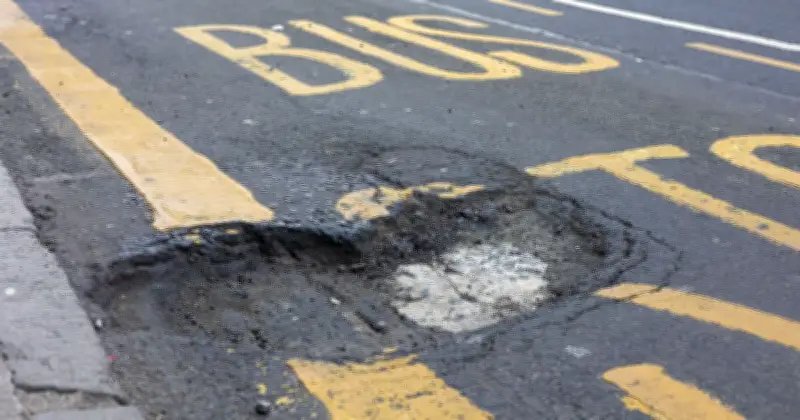
Potholes are a common nuisance on UK roads, and they can cause significant damage to vehicles. But who is responsible for the damage, and can drivers claim compensation? Liability generally falls on the authority responsible for maintaining the road surface, often the council under the Highways Act 1980.
Why potholes are dangerous
Potholes form when water seeps through small cracks in the tarmac, weakening the base layer and causing the road to collapse under the weight of traffic. Asphalt degradation from age or poor construction can accelerate this damage, and continued vehicle traffic adds more stress to the road.
For cars, hitting potholes repeatedly can damage tyres, suspension and the steering system. For cyclists, they pose a real danger and can cause serious injuries. According to Cycling UK, 15% of the cyclists it helps after being injured in a crash were involved in an incident involving road defects.
Who is to blame for potholes?
Lawyers at Slater and Gordon state that liability for potholes lies with whoever is responsible for maintaining the road surface, which is often the council under the Highways Act 1980. If utilities companies have dug up the surface as part of their repair or maintenance work, they may also be partly to blame. If the pothole is on private land such as a car park, it is up to the owner to protect the area.
Can drivers claim for pothole damage?
Drivers can put in a claim, but they need evidence. Legal experts at Lyons Davidson say that you must prove the council neglected to take care of the road. For example, you need to show that the council either found a pothole during a road inspection or was informed of it and failed to repair it within a reasonable time. You must also show that the pothole directly caused damage to your vehicle and that you suffered a financial loss as a result.
Evidence you will need includes photos of the pothole and its measurements, repair bills, police reports or witness statements if you have them. However, the lawyers warn that it is not simple to have a claim approved. They said: "Councils generally seek to argue that they were not aware of the pothole or they had a reasonable inspection regime in place. They will often seek to show this by providing records and proving that the pothole was not there at the time of the last inspection."
The lawyers advise that if the council rejects the claim, you should ask to see details of their road inspection reports, records of reports from the public, and the council's road repair policy. If you are satisfied that the council was negligent, you can appeal the decision by seeking legal advice with a view to taking the claim to a small claims court.