
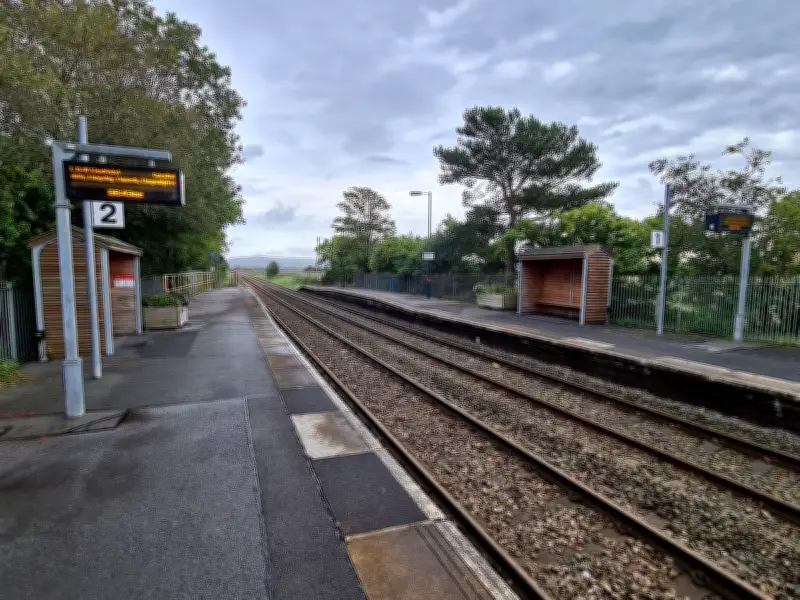
A new report highlights the powerful economic benefits of railway stations, supporting calls for more stations in Wales. The report, titled "Growing Places – Railway Stations: Engines of Economic Growth," was produced by Development Economics and illustrates the impact of stations on the Great Western main line, including Carmarthen.
Economic Impact of Stations
Carmarthen, a medium-sized station handling nearly half-a-million entries and exits annually, has seen its rail passenger market grow by 21.5% compared to pre-Covid levels. The report also examines stations like Moreton-in-Marsh and Okehampton, which are similar to Llandrindod or Llandovery on the Heart of Wales Line (HoWL).
Bristol Parkway is cited as a parallel to the proposed new station at Felindre on the Swansea District Line (SDL), north of Swansea at M4 junction 46. High-frequency, reliable train services at Bristol Parkway have attracted over 4,000 houses to date, with a further 12,000 expected over the next 10 years.
Jobs and Development
Employment generated at the 12 stations analyzed in the report has reached 3,600 over the past five years, with estimates of 20,000 by 2040. The report also highlights expected future developments in housing and offices near stations, particularly where land is available, as at Felindre.
Moreton-in-Marsh, with its historic origins and mid-nineteenth century railway station, has features similar to Carmarthen and Llandrindod, with tourism and agriculture as their economic core. Good train services and modernized stations would make HoWL stations and those west of Swansea more attractive to longer-distance visitors from Manchester, London, and south-east Wales.
Parallels for Wales
The development of 4,000 houses at Newquay is being significantly enhanced by the Mid-Cornwall Metro and an upgraded Newquay station. The Duchy of Cornwall, behind the scheme, states: "Strengthening rail connections will open up new opportunities for residents and businesses, attract investment and re-enforce Cornwall’s position as a well-connected and vibrant place to live and work. Developments such as the Newquay suburban site will support local business, encourage sustainable travel and create a thriving local economy."
While the scale at Felindre and the six stations in south-east Wales may not match Bristol Parkway's 2.25 million passengers, the principles are the same. Railway stations can provide faster home-to-business and business-to-business movements, particularly to city centres. Bristol Parkway provides a parallel to the proposed Felindre station as an access point from Swansea and west Wales into the Cardiff jobs market, avoiding the congested M4.
Adjacent government-owned land on the old Felindre tinplate works site could provide housing and a source of commuters, with local economic benefits. Felindre Parkway and the enhanced SDL route as the Swansea Metro (using heavy rail) would provide a more efficient means of reaching tourism centres in Carmarthenshire and Pembrokeshire, saving up to 22 minutes in rail journey times.
The arguments in the Development Economics report show the importance of railway services and stations in economic development, leading to increased jobs and wealth. These arguments have been put forward many times in the Wales in Motion column, particularly regarding rural, less densely inhabited parts of Wales and the electrification of the north Wales and south Wales main lines.




