

UK Government Drafts Contingency Plans to Lower Speed Limits Amid Oil Supply Fears
In response to escalating tensions in the Middle East, the UK government is actively developing contingency strategies to reduce national oil consumption. Among the proposed measures is a significant reduction in motorway speed limits, a move designed to mitigate potential fuel shortages triggered by global supply disruptions.
Sources within the Department for Transport have confirmed that officials are collaborating with the Department for Energy Security and Net Zero to analyse a range of demand-curbing actions. While there is currently no fuel shortage in the UK, the proactive planning aims to preempt any future crises.
International Energy Agency Urges Emergency Measures
The International Energy Agency has issued a stark warning to its member states, including the UK, recommending a suite of emergency protocols reminiscent of Covid-era restrictions. These include promoting remote work, encouraging shared transportation, and implementing lower speed limits on roads.

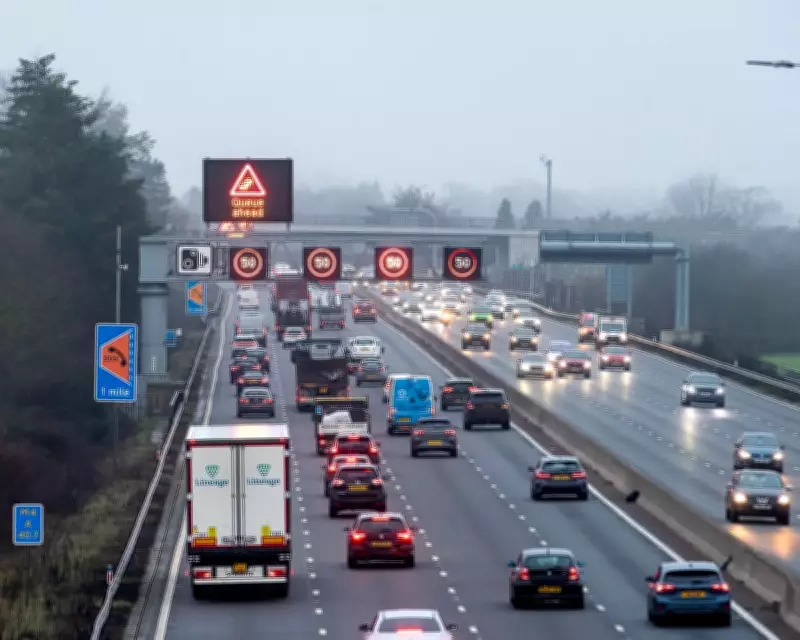
The agency emphasised that reducing vehicle speeds could substantially decrease fuel consumption, with technical assessments suggesting that slowing traffic by up to 10mph on motorways could be swiftly enacted using electronic signage systems.
Existing National Emergency Framework for Fuel Shortages
The UK's national emergency plan for fuel shortages, last updated in 2024, outlines severe measures such as petrol rationing and restricted filling station hours. Under this framework, priority would be given to critical service vehicles and public transport, while private motorists could face limits on fuel purchases per visit.
In extreme scenarios, the government retains the authority to allocate crude oil and imported petroleum products across the country. However, the newly proposed speed limit reductions are intended as a preemptive step to alleviate demand before supplies are critically threatened.
Political and Practical Implications of Speed Reductions
Lowering speed limits has previously been employed in parts of England to combat pollution, such as the 60mph restriction on the M6 near Birmingham. The UK's extensive network of traffic cameras provides the technical capability to enforce such schemes, though any implementation would likely spark political debate.
Labour's shadow transport secretary, Richard Holden, criticised the proposals as "eco zealotry", arguing that the focus should be on boosting domestic energy production rather than restricting public behaviour. Conversely, Green party transport spokesperson Siân Berry highlighted the UK's vulnerability to energy shocks due to its reliance on fossil fuels.
Economic Pressures and Industry Responses
Fuel prices have already surged since the onset of the Middle East conflict, with petrol up 9% and diesel 17%, adding significant costs for drivers. The RAC predicts further increases, potentially pushing unleaded petrol to 150p per litre by Easter.
Business sectors, particularly manufacturing, have expressed reluctance to adopt remote working policies unless mandated by official government guidance. Employers are cautious about reinstating Covid-era arrangements that could create workplace disparities and legal complexities regarding commuting expenses.
David D'Souza of the CIPD noted that organisations are assessing short-term flexibility while preparing for more pressing challenges. The Department for Energy Security and Net Zero continues to monitor the situation, assuring the public that fuel supplies remain robust and imports are proceeding normally.






