

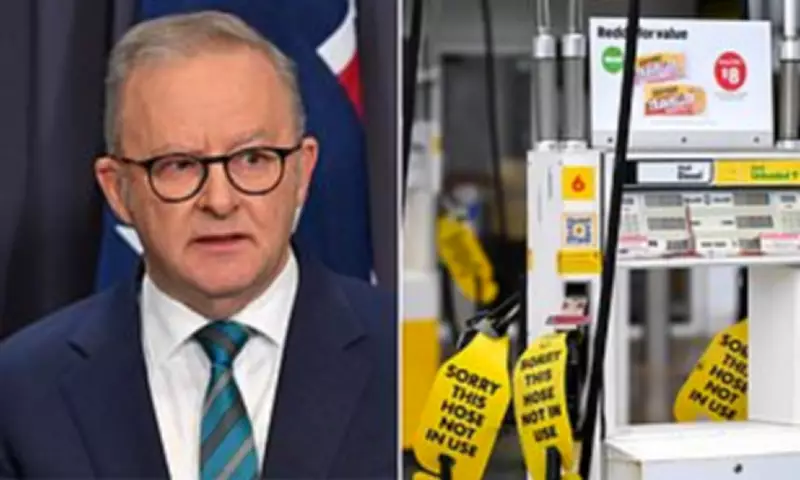
Transport Industry Demands Emergency Aid Amid Fuel Crisis Triggered by Iran War
Transport companies across Australia are urgently seeking emergency financial payments and a significant reduction to the heavy vehicle road user charge as part of a coordinated nationwide response to severe fuel shortages caused by the ongoing conflict involving Iran. The crisis has sent shockwaves through the industry, with operators facing unprecedented financial pressures.
Soaring Fuel Prices and Government Response
Australia's consumer watchdog reported on Friday that average diesel prices in the five largest cities have skyrocketed to 303.5 cents per litre, marking a dramatic increase of 27.8 cents in just one week. Meanwhile, unleaded petrol prices have climbed to 252.2 cents per litre, adding to the mounting economic strain on both businesses and consumers.
Prime Minister Anthony Albanese has pledged a comprehensive national response to the escalating fuel crisis, with specific supply-related measures expected to be unveiled on Saturday. The government has indicated that new cargo shipments have already replaced six fuel deliveries to Australia that were either cancelled or deferred due to global market disruptions.

Industry Calls for Immediate Action
The National Road Transport Association has outlined three critical 'urgent' actions required to support the struggling sector. These include emergency financial support payments for affected transport businesses, a six-month moratorium on heavy vehicle equipment loan repayments, and a complete suspension of the road user charge.
Chief executive Warren Clark emphasized the necessity for a consistent, nationwide approach to ensure operators are not confronted with a confusing patchwork of measures and can access uniform support regardless of their location. 'These are practical, short-term measures that would deliver immediate cashflow relief and help keep trucks on the road,' Mr Clark stated.
Political Debate Over Relief Measures
The coalition has advocated for a reduction in the fuel excise to provide much-needed relief to motorists, with Opposition Leader Angus Taylor specifically proposing halving the current 52.6 cents per litre excise along with the heavy vehicle road user charge. However, Mr Clark argued that such reductions alone would be insufficient to address the magnitude of the current crisis.
'The government's response has fallen well short of what industry urgently needs,' he declared. 'Operators are crying out for help, yet the government continues to be largely absent at a time when decisive intervention is critical.'
Broader Context and Future Steps
The US-led war on Iran has severely disrupted one of the world's most vital oil corridors, causing global oil prices to skyrocket and creating widespread supply chain challenges. Despite the turmoil, the Labor government has repeatedly asserted that Australia maintains adequate fuel reserves, attributing current shortages primarily to panic-buying behavior among consumers.
Prime Minister Albanese is scheduled to meet with state and territory leaders on Monday to coordinate a unified national cabinet response, aiming to develop a cohesive strategy that addresses both immediate relief and longer-term stability for the transport industry and the broader economy.






